


Sepia Tone Landscape Painting
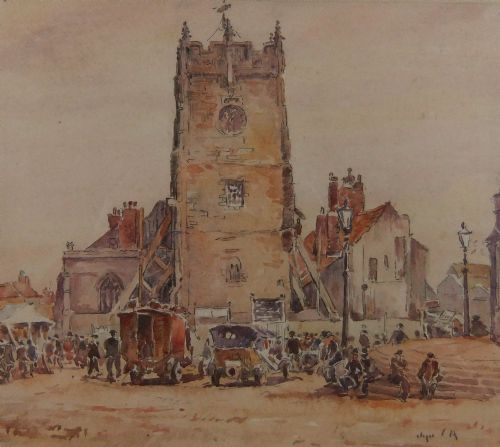
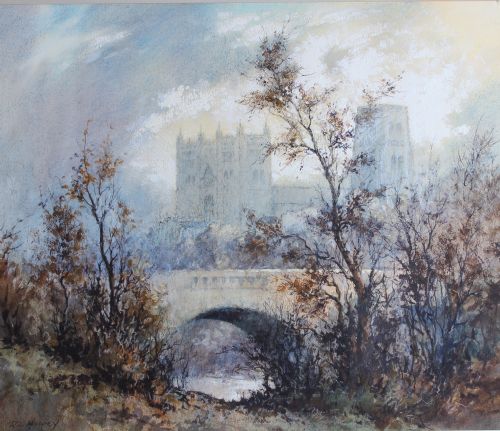
These sepia tone landscape painting examples capture British topography and townscapes across two centuries in monochrome pigments.
Sepia Tone Landscape Painting
A sepia tone landscape painting presents topographical views, cathedrals, and rural scenes through restrained monochrome pigments on paper. These works span from the Georgian and Victorian eras into the twentieth century, recording British scenes from Norfolk to Yorkshire.
The pieces on this page include watercolour paintings, ink drawings, and pencil studies by named artists and regional British schools. Buyers encounter architectural studies like Durham Cathedral and Leicester Square alongside river valleys and country mills.
Earlier examples emerge from the eighteenth and early nineteenth centuries, while later pieces reflect Edwardian and mid-century British art movements. Each work relies on tonal gradation rather than bright hues to define depth and light.
Materials and technique
Artists create these works using watercolour paint, watercolour pigments, and ink applied directly to paper supports. Pencil underdrawings frequently establish the architectural and topographical framework before washes are laid down.
The monochrome palette depends entirely on the dilution and layering of sepia or brown pigments to achieve shadow and perspective. Watercolour drawing combines precise linear ink work with softer painted washes.
Materials span paper, watercolour, ink, and pencil across periods from the eighteenth century to the mid-twentieth century.
Assessing quality and execution
Quality rests upon the sureness of the brushwork, the precision of the pencil underdrawing, and the control of tonal contrast across the paper. Finer examples demonstrate an assured handling of architectural perspective and atmospheric light.
Works by established practitioners command attention through their compositional balance and deft execution of fine details in townscapes and rural views. Anonymous school pieces vary according to the individual hand's confidence in managing wash and line.
John Smith Atherton·Robert Leslie Howey·Charles James Lauder·Fred Lawson·J.D. Walker·John Thirttle
The Sepia Tone Landscape Painting Glossary
- Watercolour painting
- A work executed with water-soluble pigments on paper. It forms the primary medium for these landscape and architectural studies.
- Topographical
- Depicting specific real places, buildings, and towns. This describes the accurate recording of locations such as Richmond and Leicester Square.
- Wash
- A thin, fluid layer of diluted pigment spread across paper. This technique creates skies, shadows, and open water in monochrome compositions.
- Townscape
- A painting or drawing depicting urban architecture and streets. Examples include views of Lincoln and London.
Sepia Tone Landscape Painting: Frequently Asked Questions
What periods do these paintings cover?
The selections span from the eighteenth century through the Victorian and Edwardian periods into the mid-twentieth century.
Most items reflect British schools active across these eras, capturing changing architectural and rural subjects.
How should I frame a watercolour?
Watercolours require conservation framing behind glass with acid-free mounts to protect the paper and pigment.
Keeping works away from direct sunlight preserves the monochrome tones against fading over time.
Are these works signed by artists?
Several pieces feature signatures from named British artists such as Fred Lawson or Charles James Lauder.
Other examples originate from regional English schools without individual attribution.
What subjects appear in these works?
The compositions focus on British landscapes, country churches, river valleys, and urban townscapes.
Notable locations include Yorkshire, Durham Cathedral, and London street scenes.