


Sepia Portrait Sketch
A sepia portrait sketch captures likeness and character through monochrome tones, offering a direct window into past lives.
Sepia Portrait Sketch
A sepia portrait sketch brings historical figures, artists and subjects into focus through works on paper, framed drawings and original artwork. Buyers exploring this category encounter pieces spanning from the seventeenth century through the Art Deco period, capturing everything from titled nobility to personal acquaintances.
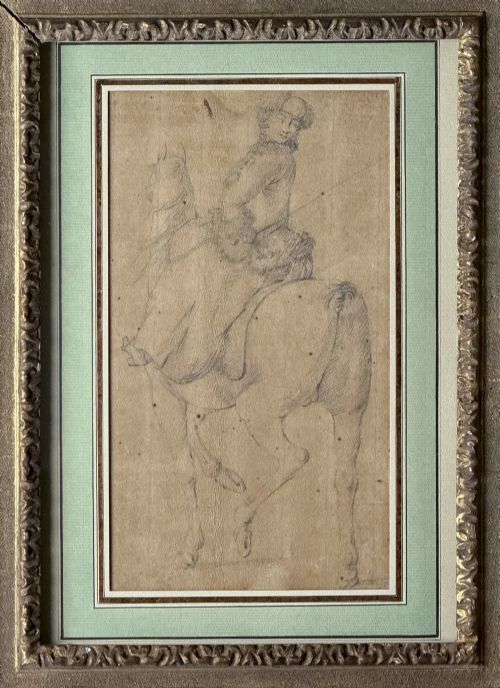
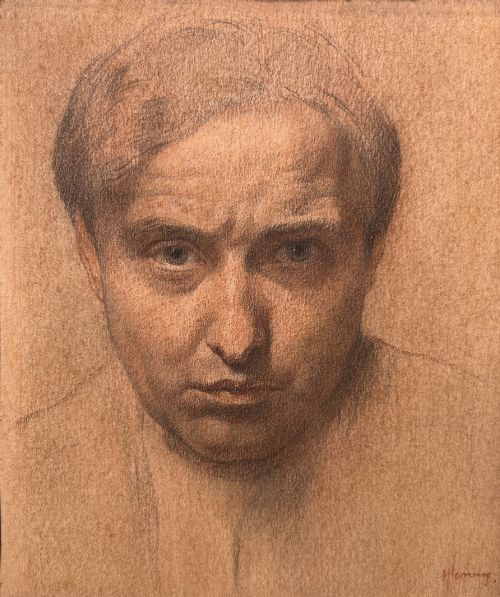
The selections on this page range from early eighteenth-century Northern European school drawings to mid-nineteenth-century pencil studies and early twentieth-century works. These framed drawings preserve the immediate hand of the artist, whether recording a gentleman during the Bourbon Restoration or a young boy in a mid-nineteenth-century study.
Subjects vary from specific historical personages like James, Duke of York, and George IV's mistress Mrs Jordan to anonymous sitters such as a young man from the African School. Works often utilise monochrome palettes of ink, chalk and graphite to render expression and form directly on paper.
Materials and technique
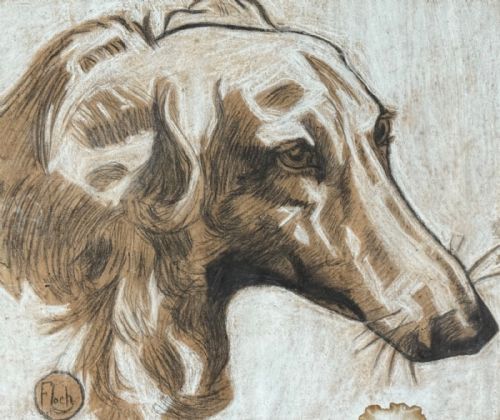
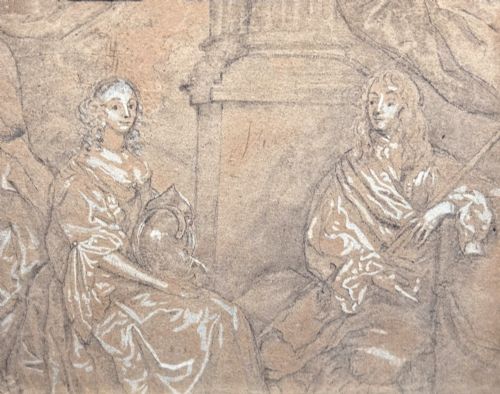
Artists executed these works on paper using media such as ink, chalk, charcoal, pencil and graphite. Buff paper often provides a warm mid-tone ground that complements monochrome applications, while gouache and watercolour occasionally heighten specific details.
Listings feature works spanning from the seventeenth century to the twentieth century, utilising paper, glass, ink, wood, chalk, charcoal, pencil and graphite.
Assessing quality
Quality rests upon the confidence of the line and the precision of anatomical observation, where skilled draftsmanship conveys personality and presence instantly. Stronger examples demonstrate a confident handling of shadow and light, creating volume and expression with minimal hesitation.
The condition of the paper surface and the preservation of the delicate mediums, whether charcoal, chalk or graphite, influence the integrity of the piece. Works that retain their original tonal contrast without excessive fading or staining offer a clearer view of the artist's original intent.
Herbert Johnson Harvey·Dame Laura Knight·THEOBALD CHARTRAN·Henri Josephe Hesse·George Richmond
The Sepia Portrait Sketch Glossary
- Monochrome
- Having a single colour or hue, often utilising shades of brown, sepia or black to model form and shadow without full polychromatic pigment.
- Gouache
- An opaque water-based paint used to add highlights and solid areas of tone over preliminary pencil or ink sketches.
- Graphite
- A form of carbon used in pencils that leaves a grey or black mark, allowing for fine lines and subtle tonal gradations in portraiture.
- Buff paper
- A pale brownish-yellow paper stock that provides a neutral mid-tone background for chalk, charcoal and ink drawings.
- Works on paper
- A category encompassing drawings, sketches, prints and watercolours executed on various paper supports.
Sepia Portrait Sketch: Frequently Asked Questions
What is a sepia portrait sketch?
A sepia portrait sketch is an original drawing on paper that utilises brown monochrome tones to capture the likeness of a subject. These works range from quick preparatory studies to finished portraits executed in pencil, ink or charcoal.
They offer a direct record of historical likenesses, preserving the immediate hand of the artist without the intervention of full colour.
How should I frame and hang these drawings?
Paper drawings require conservation framing with UV-filtering glass and acid-free mats to protect the delicate media from light damage and humidity. Keeping them away from direct sunlight preserves the integrity of antique paper and soluble inks.
Display them on interior walls where environmental conditions remain stable, avoiding areas with excessive temperature fluctuations.
How do I identify the period of a sketch?
Dating relies on stylistic clues, costume details, sitter identification and paper characteristics observable within the work. Signatures, inscriptions and framing materials often provide corroborating evidence for the date of execution.
Comparing the draftsmanship and handling of mediums with documented works from specific eras helps narrow down the century or decade.
What mediums were commonly used in these portraits?
Artists utilised materials such as graphite, charcoal, chalk, ink and occasional touches of watercolour or gouache. These mediums were typically applied to paper supports, including tinted or buff paper that enhanced tonal contrast.
The combination of dry drawing materials allowed artists to build shadow and highlight efficiently.