


Sepia Paper Watercolour Painting
A sepia paper watercolour painting captures historic maritime scenes and landscapes through tonal wash and ink.
Sepia Paper Watercolour Painting
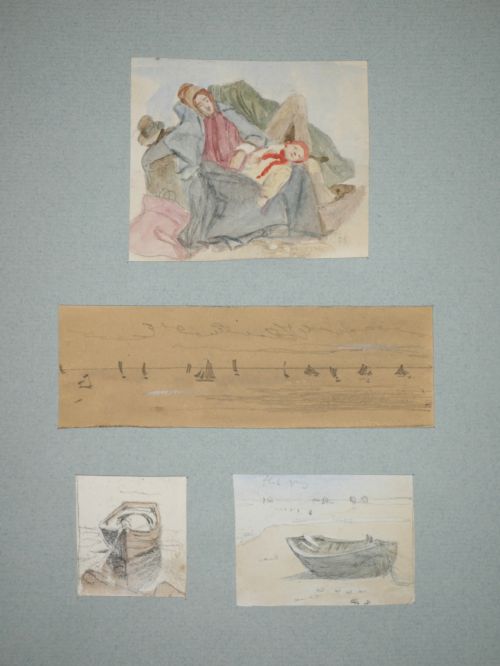
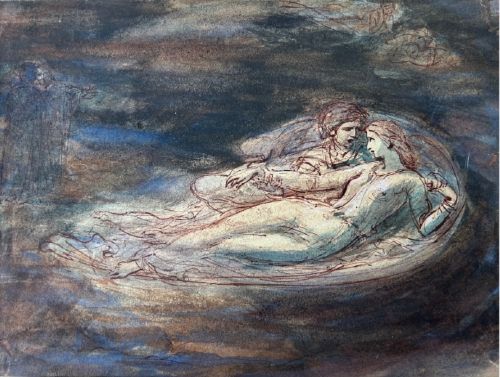
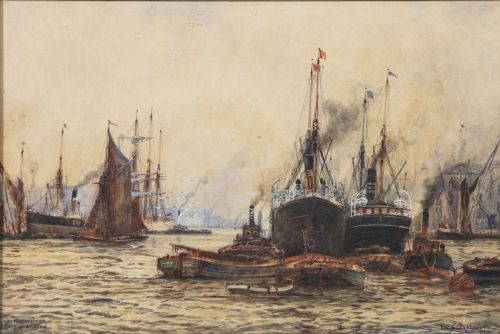
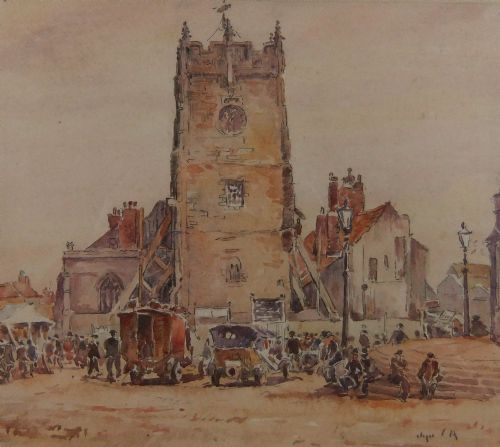
A sepia paper watercolour painting brings together British and European topographical views, maritime scenes, and figurative sketches spanning from the eighteenth century into the twentieth century. These works frequently appear on paper support framed behind glass, documenting landscapes, townscapes, and historical subjects.
The selections on this page range from early Georgian compositions to later Victorian, Edwardian, and mid-twentieth-century examples. Buyers encounter works by named artists alongside pieces by uncredited British schools working in monochrome or restricted tonal palettes.
Materials and construction
These works utilise watercolour pigment, ink, and wash applied directly onto paper supports, often mounted within wooden frames beneath protective glass. Artists combined pen lines with fluid pigment to build depth and atmospheric perspective.
Support materials consist primarily of traditional papers handled with water-based pigments and occasionally gouache over pencil underdrawing. The physical medium relies on the absorbency of the paper to hold delicate washes and sharp ink details.
Several artists captured bustling docks and quiet laundries with equal enthusiasm, proving history happens between chores.
Distinctions in quality
Quality rests upon the certainty of the brushwork, the precision of the ink or wash handling, and the preservation of the paper support over time. Stronger compositions demonstrate confident draughtsmanship and controlled tonal transitions.
Condition varies according to how well the paper and pigments have survived exposure to light and moisture beneath the glass. Pieces retaining crisp line work and stable paper tone stand apart from faded examples.
James Smetham·Frank William Scarbrough·John Smith Atherton·William Frederick Settle·Charles James Lauder·John Augustus Atkinson·George Arthur Fripp·Frederick William Booty·Leslie Rackham·William Wyld·Henry Barlow Carter·Hercules Brabazon Brabazon·W Tatton Winter·Thomas Clavering Alder·Arthur Netherwood·Fred Lawson·Dame Laura Knight·George De Paris
The Sepia Paper Watercolour Painting Glossary
- Watercolour
- A paint consisting of a pigment suspended in a water-soluble vehicle. It provides translucent washes that allow the white of the paper to reflect light back through the pigment.
- Sepia
- A brown pigment traditionally derived from the ink sac of the cuttlefish. It became widely used for monochrome drawings and tonal watercolour washes.
- Wash
- A thin, fluid layer of diluted watercolour pigment spread evenly across paper. It creates smooth backgrounds or atmospheric effects in landscapes and architectural views.
- Gouache
- An opaque water-based paint made from pigment combined with a binding agent and white filler. It allows artists to add opaque highlights over watercolour and ink layers.
Sepia Paper Watercolour Painting: Frequently Asked Questions
How do I care for these watercolours?
Keep works on paper away from direct sunlight to prevent the watercolour pigments and paper support from fading.
Maintain stable indoor humidity levels and ensure the framing behind glass remains properly sealed against moisture.
What subjects do these paintings feature?
The subjects include coastal harbours, maritime shipping scenes, urban streetscapes, and rural British landscapes.
Historical narrative scenes and architectural studies from the eighteenth and nineteenth centuries also appear frequently.
Are these works signed by the artists?
Many pieces carry visible artist signatures or studio inscriptions, while others represent the work of regional British schools.
Attributions rely on recorded signatures, contemporary documentation, and stylistics consistent with the listed periods.
How are these paintings framed?
Most works arrive protected behind glass within traditional wooden frames suited to their period.
The framing protects the delicate paper and pigment surface from dust and physical handling.