

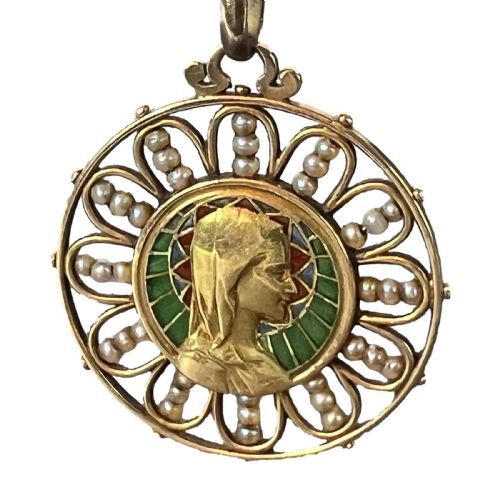
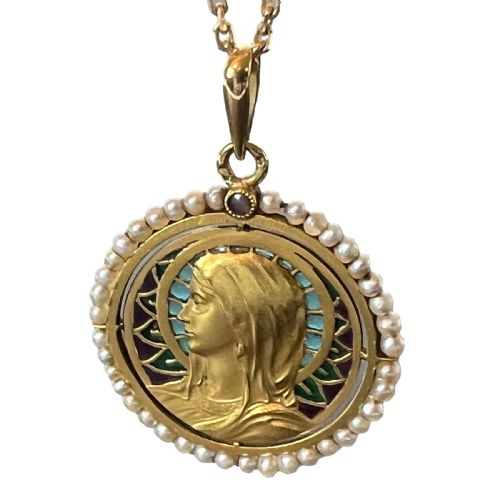


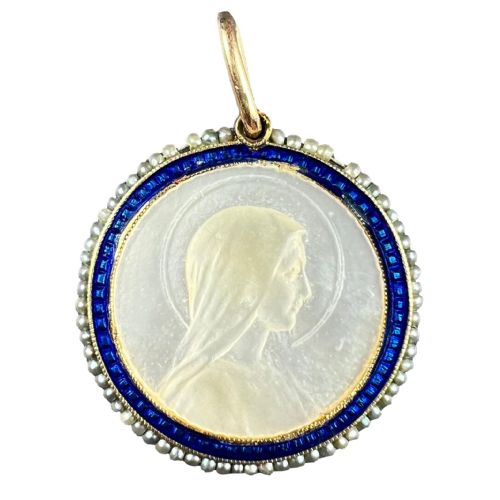
Seed Pearl Medallion
A seed pearl medallion is a delicate piece of wearable history, prized for its intricate wirework and luminous tiny pearls.
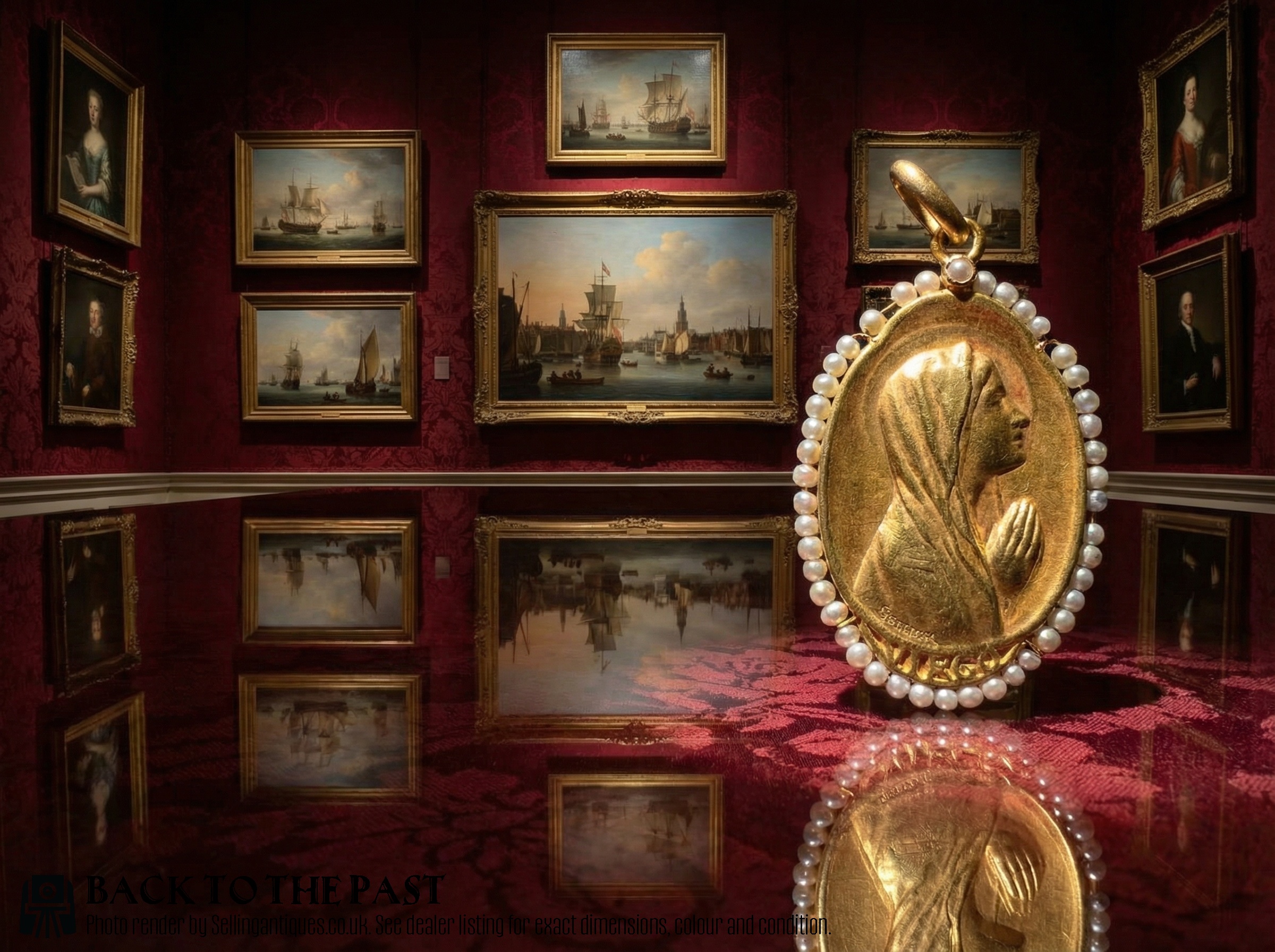
Seed Pearl Medallion
These pieces frequently incorporate sacred motifs, such as the Virgin Mary, framed by fine precious metals and lustrous pearls. Collectors encounter a mix of British Victorian designs and French workshop pieces featuring devotional imagery.
The primary forms available are pendants and lockets designed to be worn on a chain close to the neck. Their survival in such detailed condition makes them appealing to those who appreciate early twentieth-century devotional and sentimental jewellery.
How they were made
Craftsmen built these medallions using high-carat yellow gold, specifically 15ct and 18K gold, providing a rich warm backdrop for the pale gems. Artisans meticulously wired or set tiny seed pearls by hand to trace borders, halos, and decorative motifs across the surface.
Vitreous enamel and plique-a-jour techniques added vibrant colour, often creating translucent stained-glass effects behind figures of the Virgin Mary or floral patterns. Master jewellers occasionally accented these enamelled and pearled compositions with small diamonds, peridots, or amethysts.
Seed Pearl Medallion Retail Price Guide 2026
Typical asking prices for seed pearl medallion among the pieces listed under this phrase on Sellingantiques today, from the lower quarter to the upper quarter. They describe what is for sale here now, not the wider market.
Listings feature yellow gold standards of 15ct and 18K alongside decorative elements like mother of pearl and diamonds.
What varies in quality
The standard of a seed pearl medallion rests heavily on the precision of the goldsmithing and the intactness of the delicate enamel work. Pieces featuring translucent plique-a-jour demand exceptional technical skill, and the best examples show no cracking or loss in the coloured glass panels.
The uniformity and secure setting of the tiny pearls also dictate the piece's refinement. Higher quality examples maintain every single pearl tightly aligned in its setting, preserving the intricate pattern without visible glue or clumsy restorations.
Sellier
The Seed Pearl Medallion Glossary
- Seed Pearl
- A very small, naturally occurring or early cultured pearl, typically under two grains, prized for delicate Victorian and Edwardian clusters. These tiny gems are laboriously hand-drilled and secured with fine wire or thread.
- Plique-a-jour
- An enamelling technique where the enamel is applied without a backing, resembling miniature stained glass that lets light shine through. This method requires immense skill to prevent the delicate metal cells from warping during firing.
- Victorian
- Relating to the reign of Queen Victoria, spanning the mid to late nineteenth century, known for sentimental and symbolic jewellery. Pieces from this era often employ high-carat gold and rich gemstones.
Seed Pearl Medallion: Frequently Asked Questions
What is a seed pearl medallion?
A seed pearl medallion is a small pendant or locket decorated with tiny natural or early cultured pearls, frequently set in high-carat yellow gold.
These pieces often date from the Victorian era or the early twentieth century and frequently incorporate devotional imagery or enamelling.
How were these pendants worn?
Owners typically wore these medallions suspended from fine gold chains around the neck as both personal talismans and decorative accessories.
Locket variants also served a sentimental purpose, holding small photographs or locks of hair hidden beneath the decorated cover.
How do I care for antique pearl jewellery?
These delicate pieces require gentle handling because seed pearls are sensitive to acids, perfumes, cosmetics, and harsh cleaning chemicals.
Store your medallion in a soft pouch away from other jewellery and wipe it gently with a dry microfiber cloth after wearing.
How can I tell Victorian from Edwardian pieces?
Victorian pieces often lean towards heavier, highly symbolic goldwork and sentimental motifs, whilst later items from around 1900 to 1910 adopt flowing Art Nouveau lines.
French Belle Epoque pieces from the early twentieth century frequently showcase translucent plique-a-jour enamel alongside the traditional seed pearls.