



Seed Pearl Lavalier
A seed pearl lavalier captures the delicate grace of early twentieth-century jewellery, offering buyers a pendant design defined by suspended gemstones and shimmering natural pearls.
Seed Pearl Lavalier
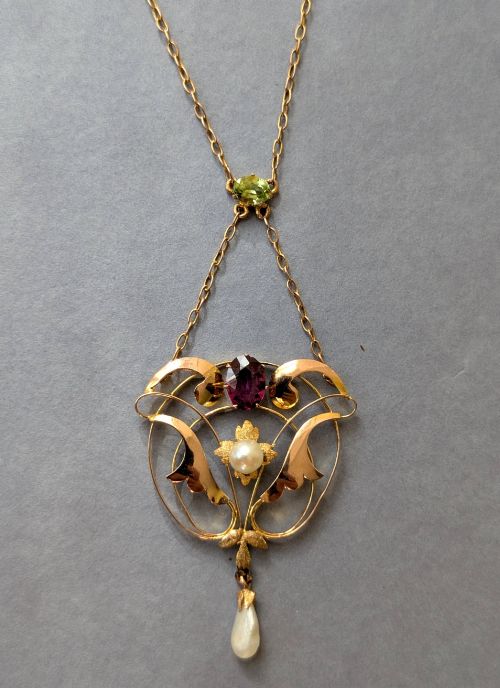
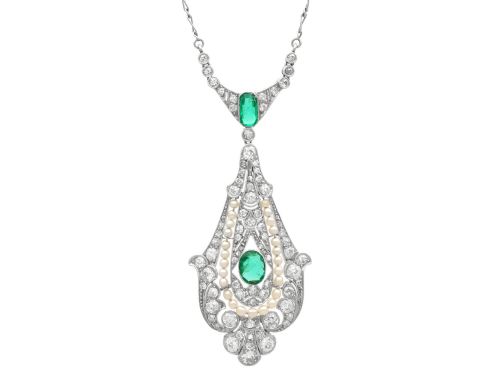
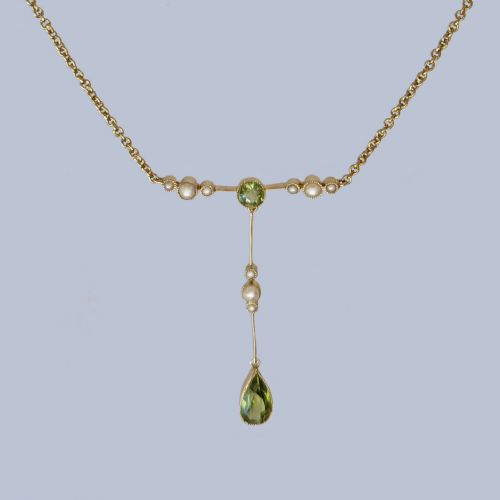
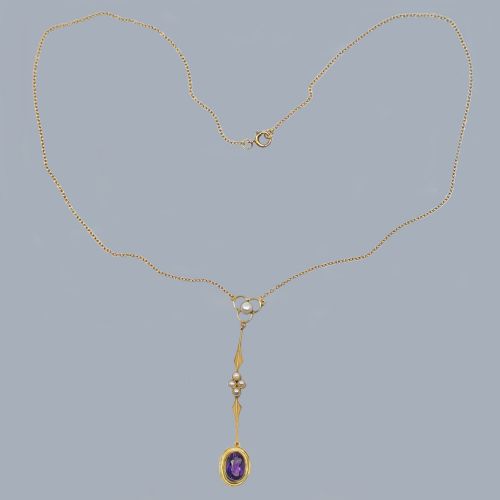
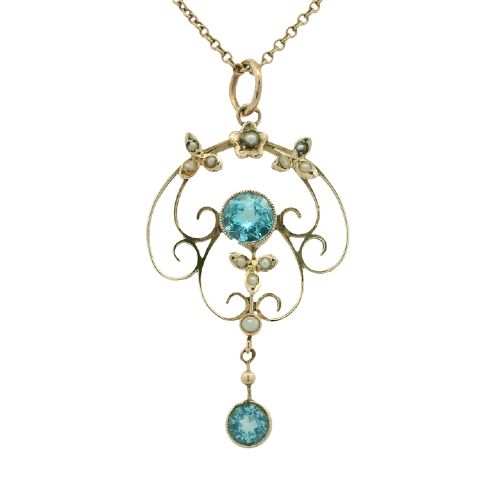
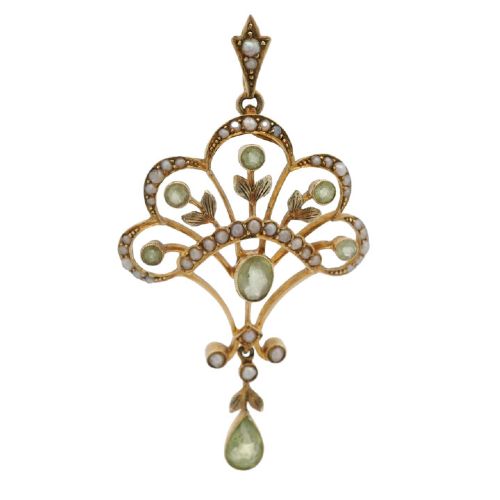
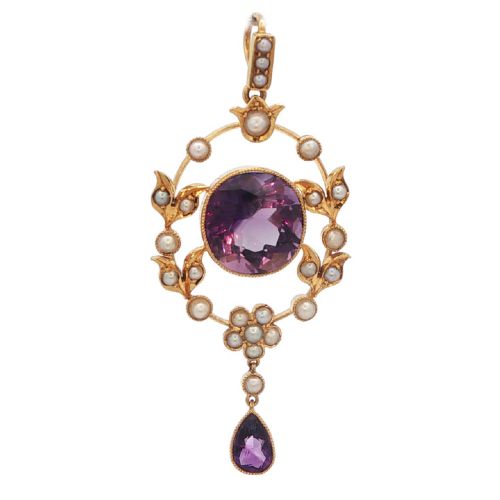
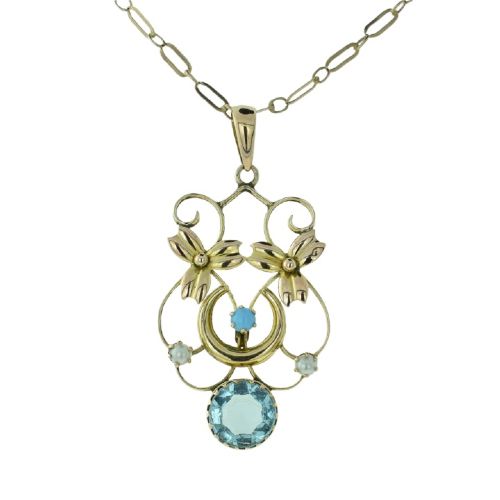
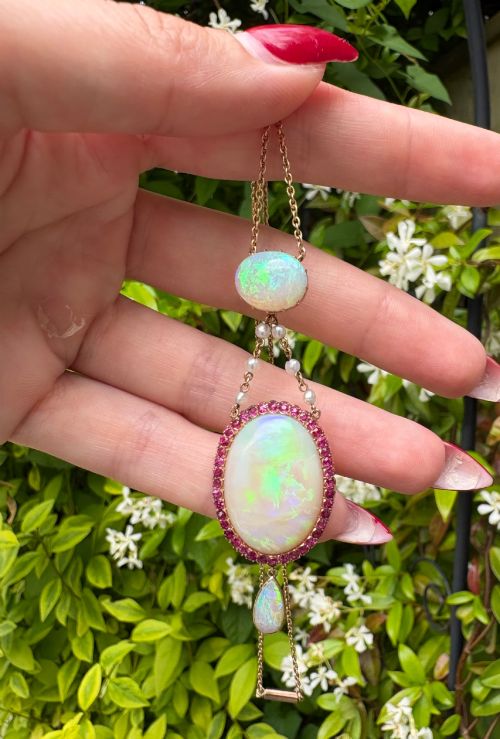
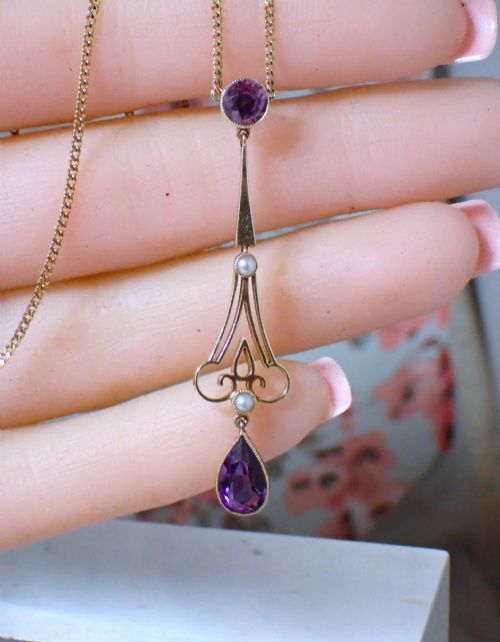
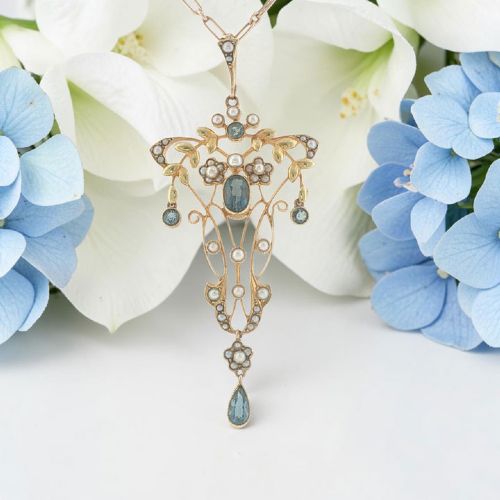
A seed pearl lavalier is a pendant necklace featuring a central drop design, most commonly found from the Victorian, Edwardian, and Art Nouveau periods. These pieces bring together intricate wirework and cascading gemstone drops that swing freely as the wearer moves.
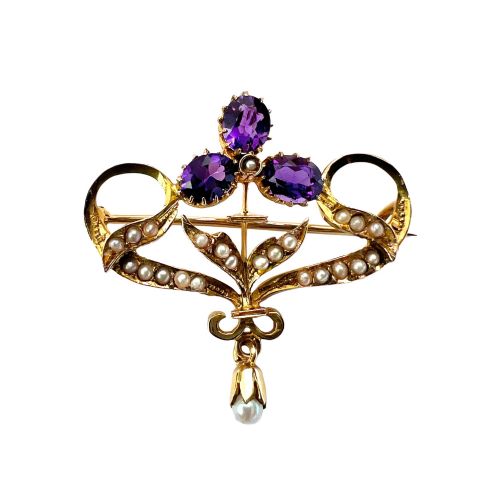
The versions most frequently met on this page combine tiny, perfectly matched pearls with collet-set coloured stones such as amethyst, peridot, or aquamarine. Makers arranged these minute pearls to trace flowing floral or geometric motifs typical of the early twentieth century.
Many examples double as brooches, featuring a pin mechanism tucked discreetly behind the pendant frame. This dual functionality reflects the practical versatility demanded by Victorian and Edwardian wardrobes.
Materials and construction
Craftsmen built these pendants using either nine-carat or fifteen-carat gold, occasionally incorporating silver or platinum settings to enhance the brilliance of mounted diamonds. The warm tone of yellow or rose gold provides a traditional backdrop for the bright white lustre of natural seed pearls.
Goldsmiths utilised fine wirework, collet settings, and delicate chain drops to construct the characteristic lavalier silhouette. Individual seed pearls were meticulously drilled and secured onto tiny pins or threaded onto silk, creating flexible articulated sections that catch the light from every angle.
Seed Pearl Lavalier Retail Price Guide 2026
Typical asking prices for seed pearl lavalier among the pieces listed under this phrase on Sellingantiques today, from the lower quarter to the upper quarter. They describe what is for sale here now, not the wider market.
Listings span the late Victorian, Edwardian, and Art Nouveau periods, alongside mid-century examples featuring old-cut diamonds.
Judging the work
Quality rests upon the uniformity and secure setting of the seed pearls, alongside the clarity and cut of the accompanying coloured gemstones. Superior pieces display tightly graded pearls with matching lustre, free from discolouration or replacement gaps within the delicate framework.
The complexity of the metalwork also distinguishes better examples, where hand-pierced scrolls and balanced fluid lines demonstrate the maker's skill. Solid construction in fifteen-carat gold, accompanied by original fitted boxes or maker stamps, elevates the standing of an individual lavalier.
S. Blanckensee & Son·Hamilton & Co
The Seed Pearl Lavalier Glossary
- Seed Pearl
- A tiny, naturally occurring pearl harvested from pearl oysters, measuring under two millimetres in diameter. These small spheres form the shimmering texture of Edwardian clusters and foliate drops.
- Lavalier
- A pendant necklace featuring a suspended central drop or secondary stone that sways beneath the main mounting. The style gained immense popularity during the late nineteenth and early twentieth centuries.
- Art Nouveau
- An international decorative style characterised by sinuous asymmetric lines, flowing organic forms, and natural motifs. In jewellery, this translated into whiplash curves framing pearls and coloured gems.
- Collet Setting
- A collar of metal that encircles the edge of a gemstone to hold it securely in place. This technique creates a clean, flush border around amethysts or peridots in period pendants.
- Foliate
- Ornamentation shaped like leaves or plant foliage, frequently seen in Victorian and Edwardian goldwork. These botanical motifs twine around central pearl settings to soften the geometric lines.
Seed Pearl Lavalier: Frequently Asked Questions
How do I wear a antique lavalier daily?
Pair your pendant with simple necklines that allow the cascading drop to rest directly against fabric without catching. Because seed pearls are organic and softer than gemstones, protect them from perfumes, hairsprays, and harsh cosmetics.
Store the necklace flat in a lined box to prevent the delicate gold chains from tangling or kinking. Regular gentle cleaning with a dry microfibre cloth keeps the gold and pearls bright without damaging the antique mounts.
Were these pieces worn as brooches too?
Many examples feature a hinged pin and safety catch affixed to the reverse, allowing the pendant to transform into a brooch. This versatility was common during the Victorian and Edwardian eras when jewellery served multiple styling purposes.
When wearing the piece as a pendant, ensure the pin is securely locked so it does not snag on clothing. Collectors value pieces that retain their original conversion mechanisms in working order.
How do I distinguish Edwardian from Victorian styles?
Victorian pieces often display heavier gold weights, deeper gemstone hues, and more robust geometric or sentimental motifs. The materials frequently include fifteen-carat gold alongside rich amethysts, garnets, or turquoise.
Edwardian and Art Nouveau designs shift towards lighter constructions, incorporating platinum, nine-carat gold, and airy openwork frames. Peridots, aquamarines, and pastel stones dominate alongside whiplash curves and naturalistic floral arrangements.
Are original chains common with these necklaces?
Original chains accompanying these pendants are occasionally preserved, though many pieces survived through the decades separated from their first mountings. When an original chain is present, it matches the gold purity and colour of the pendant frame.
Replacement chains of a complementary Edwardian style are entirely acceptable for daily wear. Ensure any replacement matches the delicate gauge appropriate for lightweight period drops.