



Sectional Lawyer Cabinet
A sectional lawyer cabinet is a modular bookcase built to protect heavy volumes behind lifting glass doors.
Sectional Lawyer Cabinet
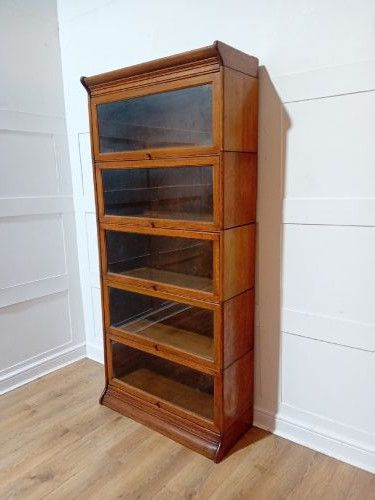
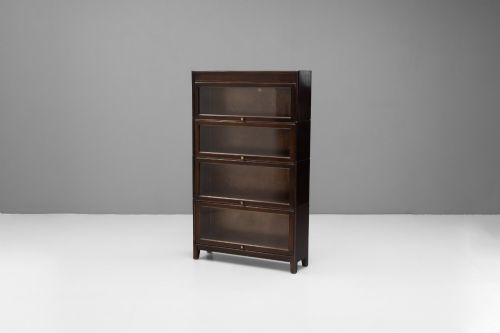
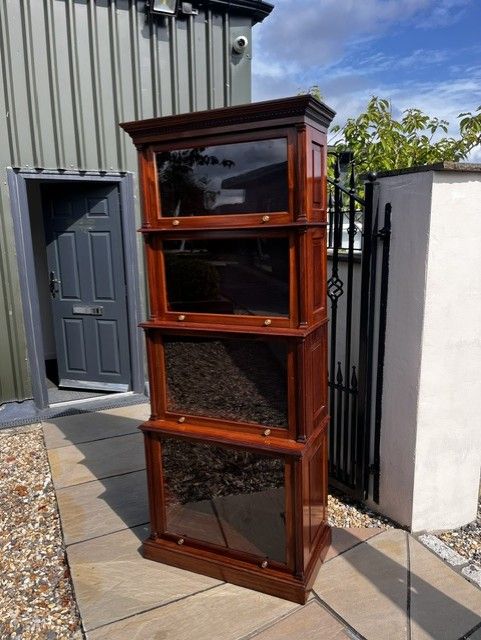
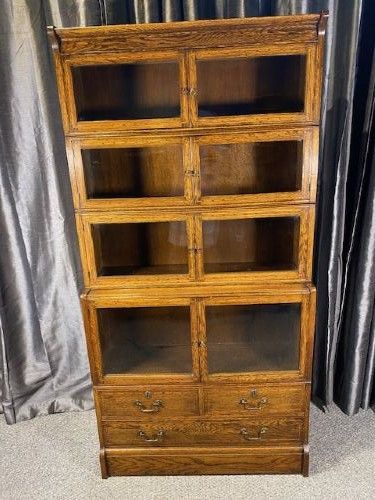
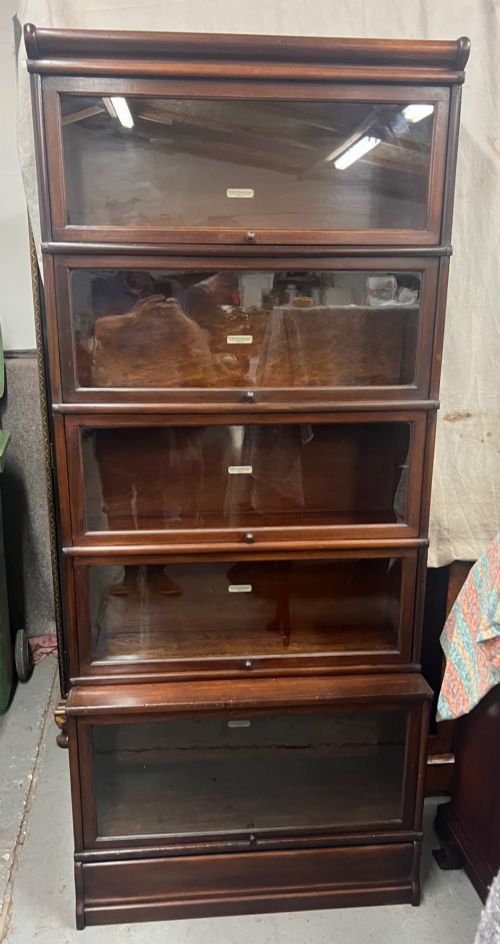
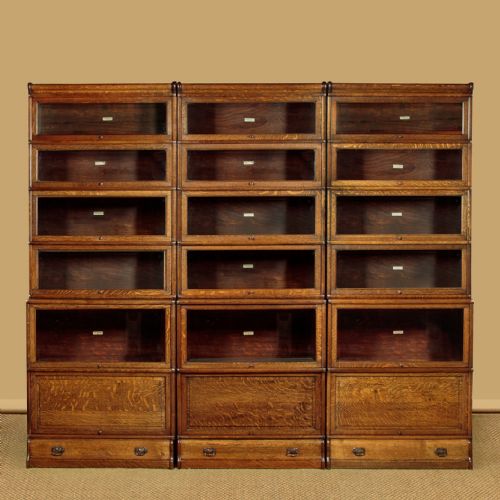
A sectional lawyer cabinet is fundamentally a stacking bookcase, divided into distinct horizontal tiers that rest one upon another without permanent fixings. When people search for a sectional lawyer cabinet, they encounter modular office furniture designed primarily during the Edwardian period and the early twentieth century.
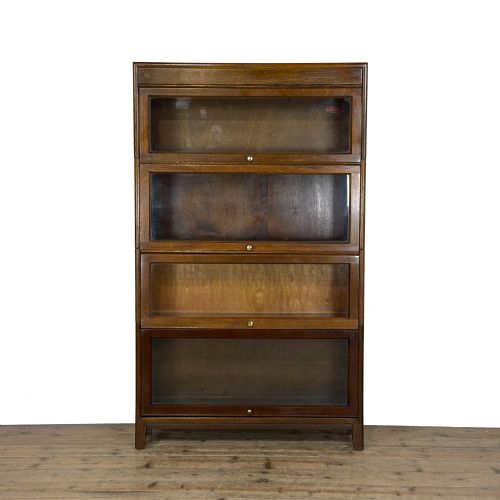
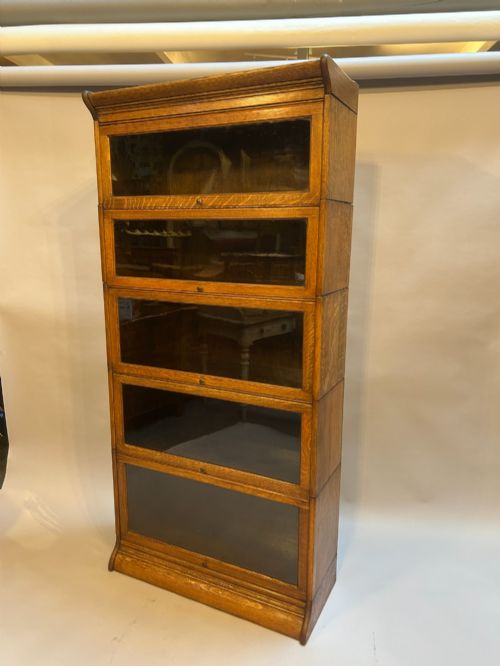
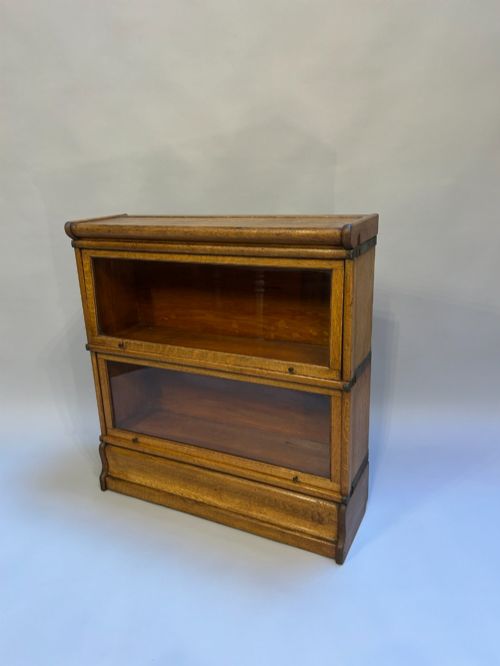
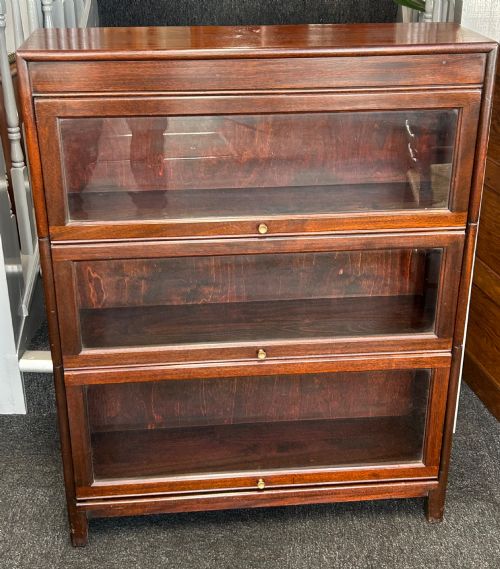
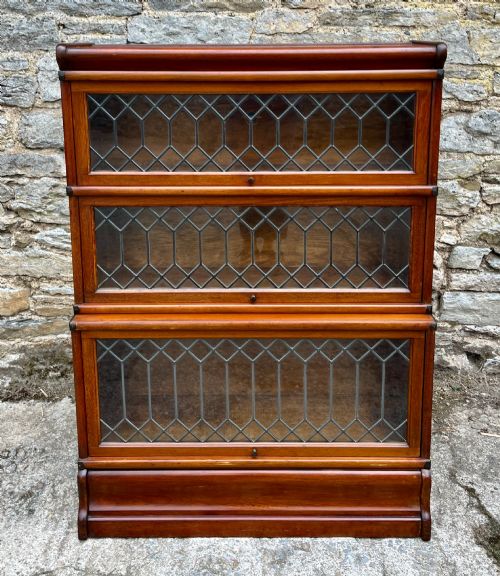
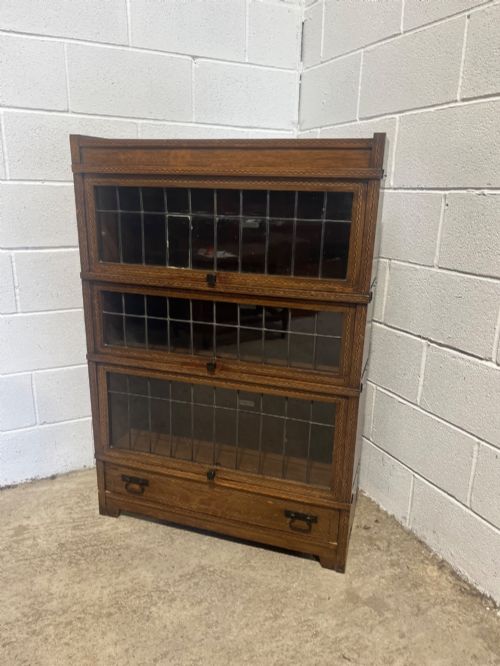
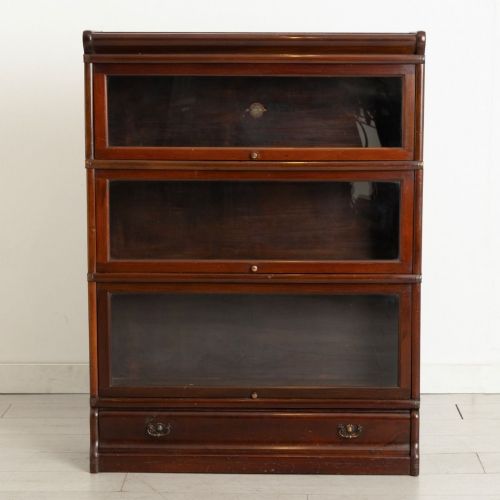
The standard version met on this page is a tiered oak or mahogany bookcase featuring glazed lifting doors, often built by makers such as Gunn or Globe Wernicke. These bookcases allowed offices and studies to expand their library shelving simply by adding another tier to the top or bottom.
Materials and Construction
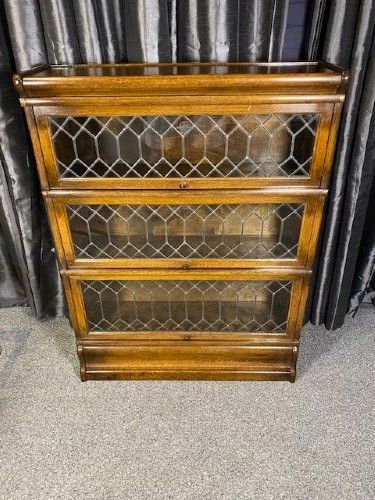
These cabinets rely principally on solid oak and mahogany, timber selected for strength and finished with a warm polish. The shelves and sides are joined with precision, housing glass panels held by timber frames or lead.
The defining mechanical feature is the upward-lifting glass door, which slides smoothly into the recess above the books on a brass or metal mechanism. This clever hardware protects volumes from dust while allowing effortless access to individual tiers.
Sectional Lawyer Cabinet Retail Price Guide 2026
Typical asking prices for sectional lawyer cabinet among the pieces listed under this phrase on Sellingantiques today, from the lower quarter to the upper quarter. They describe what is for sale here now, not the wider market.
Early lawyers favoured these stacking cases because they could expand their library upwards without buying entirely new furniture.
Distinctions in Quality
Quality in a sectional lawyer cabinet rests on the timber selection and the integrity of the modular stacking joints. Superior examples exhibit finely figured mahogany or golden oak with crisp mouldings that align seamlessly from tier to tier.
The mechanical action of the door guides separates standard production from finer cabinet work. Smooth, balanced movement in the brass and metal hardware indicates a well-preserved piece that has not suffered from warping or damp.
Gunn Furniture·Globe Wernicke·Warwick
The Sectional Lawyer Cabinet Glossary
- Tier
- A single horizontal section of a stacking bookcase containing its own shelf and door. Multiple tiers are stacked to form a complete cabinet.
- Glazed door
- A timber-framed door inset with glass that shields the contents of the bookcase. These panes are occasionally leaded.
- Sectional
- Built in separate, removable modules that can be taken apart for transport and rearranged or added to over time.
- Golden oak
- A bright, warm finish applied to oak furniture popular during the Edwardian period and the early twentieth century.
Sectional Lawyer Cabinet: Frequently Asked Questions
How do sectional lawyer cabinets come apart?
Each tier lifts away from the base once the cornice top is removed, as the sections simply rest upon one another through interlocking wooden lips.
This modular design allowed offices to transport large bookcases in manageable single parts and expand shelving capacity incrementally.
Can I mix oak and mahogany tiers?
The distinct timber species and depths across different makers mean that sections rarely interchange smoothly. Variations in dimensions and grain patterns prevent a cohesive appearance when mixed.
Matching the specific timber and manufacturer ensures that the stacked tiers align properly both structurally and visually.
How do the glass doors operate?
The glass door slides upward on internal metal or brass arms that guide the panel into the upper recess of the shelf. This movement keeps the door out of the way while books are selected.
When pushed closed, the mechanism drops the panel flush against the frame to protect the interior from dust.
Where were these bookcases originally used?
Lawyers, solicitors and professionals utilised these cabinets in studies and offices to store heavy reference volumes and legal texts. The enclosed glass protected valuable leather-bound books from soot and dust.
Today, the modular format suits modern homes for displaying book collections while maintaining a compact footprint.