




Sculptural Table Lamp
These sculptural table lamps combine illumination with figural or architectural form, offering a distinct focal point for a room.
Sculptural Table Lamp
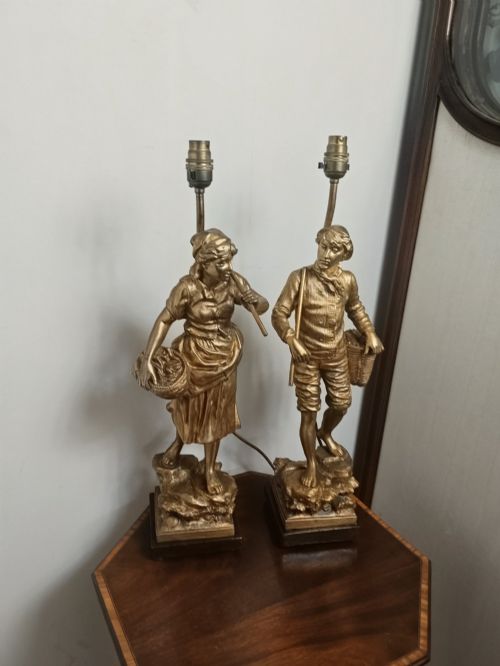
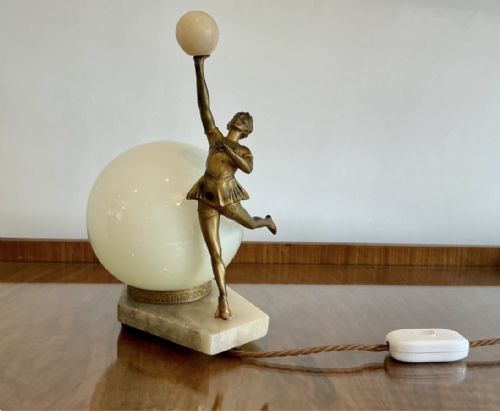
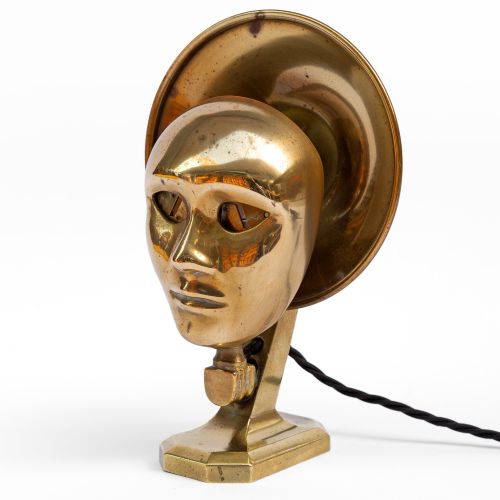
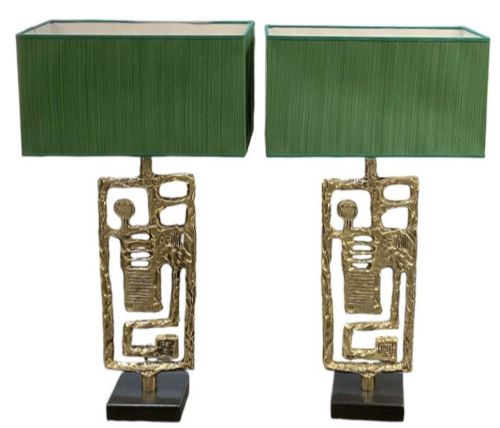
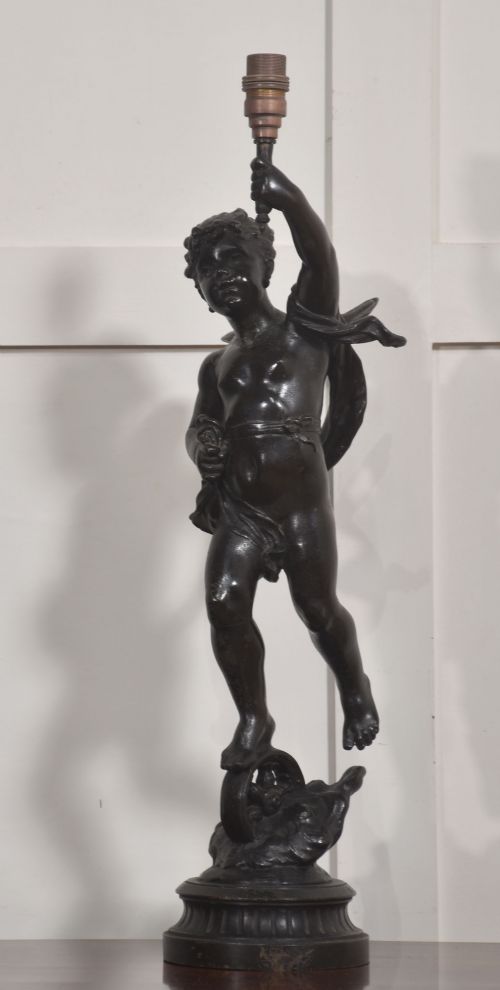
A sculptural table lamp merges functional lighting with distinct figural or architectural forms, creating a prominent decorative centrepiece. When exploring sculptural table lamps, expect to encounter figural bronzes, cinematic brass works, and geometric Art Deco designs.
The selection ranges from late nineteenth-century patinated bronze cherubs and mythological figures to mid-century monumental creations and 1930s lady lamps. These pieces draw heavily on Art Nouveau, Art Deco, and Renaissance Revival aesthetics.
How they were made
Maker studios utilised cast bronze, patinated spelter, and heavy brass to shape intricate figures, animals, and architectural motifs. Marble plinths frequently serve as stable bases for heavier bronze and metal compositions.
Gilding, silver plating, and hand-painted finishes were applied to enhance surface detail, particularly on figures depicting human forms, foliage, and avian subjects. Glass and fabric components complete the structural assemblies for functional illumination.
Sculptural Table Lamp Retail Price Guide 2026
Typical asking prices for sculptural table lamp among the pieces listed under this phrase on Sellingantiques today, from the lower quarter to the upper quarter. They describe what is for sale here now, not the wider market.
Listings span from the 1880s to the 1960s, featuring bronze, marble, spelter, and brass across Art Deco and Art Nouveau styles.
What varies in quality
Material composition and artist signatures also dictate distinction, with signed works by known modellers commanding greater visual and historical interest. The integration of quality secondary materials like alabaster and marble elevates the overall execution.
E Rousseau·Angelo Brotto for Esperia·L & F Moreau·Ivan Zaiec·P.Sega
The Sculptural Table Lamp Glossary
- Spelter
- A zinc alloy often used as a cost-effective alternative to bronze in figural casting. It is frequently painted or bronzed to simulate more expensive metals.
- Patinated bronze
- Copper alloy treated with chemical solutions to produce a controlled surface colour or aged finish. This technique highlights sculptural contours and protects the underlying metal.
- Art Deco
- A design style spanning the 1920s and 1930s characterised by sleek geometric lines, stylised figures, and modernist motifs. It dominates many of the figural lamp designs from this era.
- Art Nouveau
- An ornamental style prevalent around 1900 inspired by natural forms, plant tendrils, and flowing human silhouettes. This aesthetic heavily influences the figural lamp bases from the period.
Sculptural Table Lamp: Frequently Asked Questions
What periods do these lamps come from?
The pieces span from the late nineteenth century through the Art Nouveau and Art Deco periods into the mid-twentieth century.
They reflect shifting stylistic movements from classical revivals to modernist industrial cinema-inspired brass works.
Are these lamps signed by artists?
Certain examples bear signatures or foundry marks from notable modellers and makers active in France and Italy.
Signed works usually appear amongst the figural bronze and monumental glass pairings.
What materials are commonly used?
Makers predominantly utilised bronze, spelter, brass, and marble to construct the figural bases and structural supports.
Surface treatments include silver plating, gilding, and polychrome painted finishes paired with fabric or glass shades.