

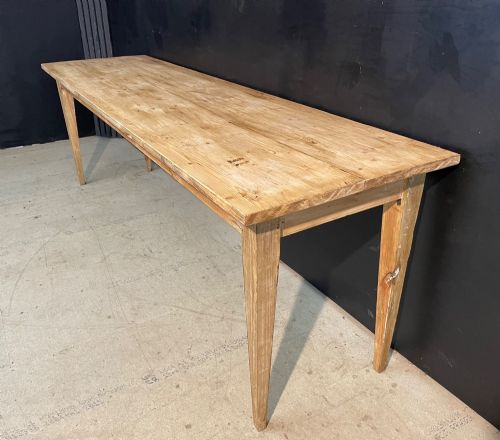
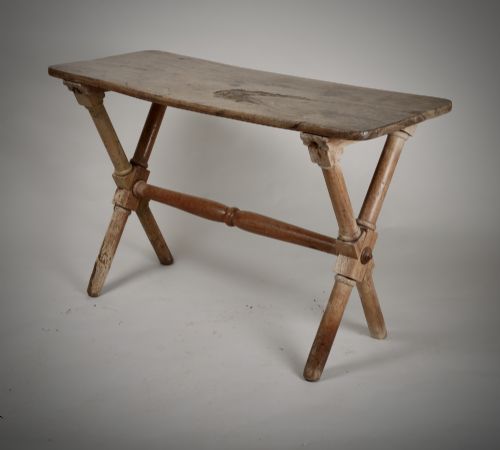
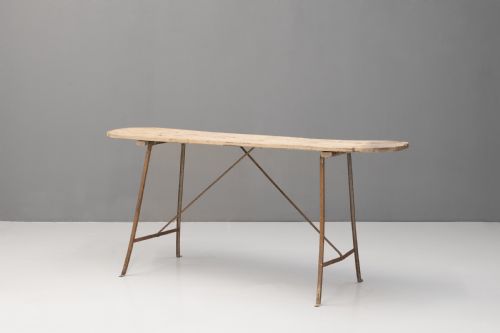
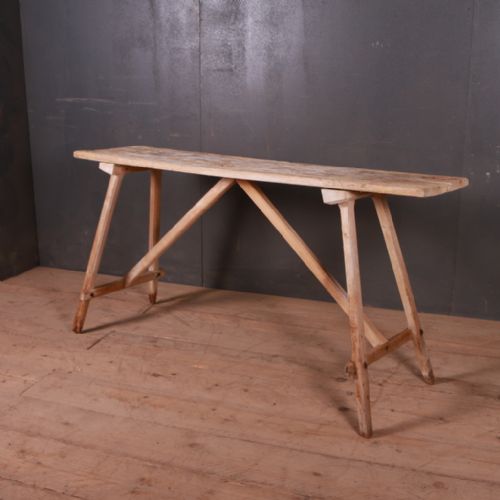


Scrubbed Wood Console Table
A scrubbed wood console table brings everyday utility and honest grain into a room.
Scrubbed Wood Console Table
A scrubbed wood console table is a utilitarian surface stripped back to its bare timber through vigorous cleaning over generations. When searching for a scrubbed wood console table, you encounter practical forms originally made for demanding domestic or commercial tasks such as laundry, dining, and preparation. These pieces span the nineteenth century, including specific dates from eighteen hundred through nineteen hundred and ten.
The primary forms on this page include console tables, trestle tables, tavern tables, dining tables, wash tables, and preparation tables. Many carry regional designations such as French Provincial, French Country, Rustic Country, Rustic Farmhouse, Scandinavian Country, and Rustic Primitive, alongside a Welsh example. They function well in modern hallways and living spaces where a narrow, long profile is required.
How they were made
These tables rely on solid domestic hardwoods and softwoods selected for hard-wearing practicality. The listings record timber, pine, sycamore, elm, oak, poplar, and ash, combined occasionally with wrought iron or traces of paint. Construction methods prioritise sturdy framing, often seen in the trestle supports and heavy top boards designed to withstand daily use.
The distinct scrubbed finish results from decades of scrubbing with water, sand, or soap to maintain hygiene in dairies, kitchens, and laundries. This mechanical cleaning process removes softer pulp between growth rings, leaving a tactile, weathered texture across the wood.
Scrubbed Wood Console Table Retail Price Guide 2026
Typical asking prices for scrubbed wood console table among the pieces listed under this phrase on Sellingantiques today, from the lower quarter to the upper quarter. They describe what is for sale here now, not the wider market.
Dairy tables occasionally retain the faint, honest scars of heavy cleavers and centuries of enthusiastic cheese-making.
What varies in quality
Quality in these tables depends upon the integrity of the timber and the depth of the patination earned through use. Pieces fashioned from harder timbers like sycamore and elm often display superior wear resistance compared to softer pine or poplar variants.
Proportion and structural honesty separate standard examples from finer ones. The pleasing balance of a trestle base or the straightforward construction of a tavern table dictates visual success in a contemporary setting.
The Scrubbed Wood Console Table Glossary
- Scrubbed finish
- A surface texture achieved by repeated washing and scouring that strips away old finishes and soft grain to reveal raw timber. This process highlights the natural growth rings and knots of the wood.
- Trestle table
- A table construction consisting of two or more upright supports connected by a horizontal beam or stretcher. This design allows for maximum legroom along the length of the top.
- Tavern table
- A sturdy, heavy-legged table historically used in public houses or domestic eating areas. These tables feature robust joinery designed to endure heavy public traffic.
- Preparation table
- A functional work table used in kitchens, dairies, or butcher shops for food handling. They typically feature thick timber tops able to withstand heavy cutting and chopping.
- Primitive
- A descriptive term for furniture made with basic tools and straightforward joinery, focusing entirely on function rather than decorative refinement. These items display direct, unpretentious craftsmanship.
Scrubbed Wood Console Table: Frequently Asked Questions
What is a scrubbed wood console table?
A scrubbed wood console table is a practical, narrow work table stripped down to bare timber through historical cleaning. They originate from utilitarian furniture types like laundry and preparation tables.
These pieces offer a weathered surface and straightforward lines that fit easily into narrow corridors and living areas.
How do I care for a scrubbed wood table?
Care involves dusting with a dry cloth and addressing spills promptly to prevent staining the unsealed grain. Avoid harsh chemical cleaners that strip the natural character of the timber.
Applying a clear wax can help protect the surface while maintaining the dry, matte appearance characteristic of scrubbed wood.
Where were these tables made?
The pieces listed originate from various European regions including France, Sweden, and Wales. Each region imparted subtle differences in timber selection and structural form.
Local workshop traditions determined whether pine, oak, sycamore, or elm was utilised for the construction.
Are these tables sturdy enough for daily use?
These tables were originally built for rigorous daily tasks in kitchens, dairies, and workrooms. Their solid timber construction and heavy frames ensure they remain robust.
Over the centuries, their joints have settled, leaving them stable and well-suited for modern domestic demands.