

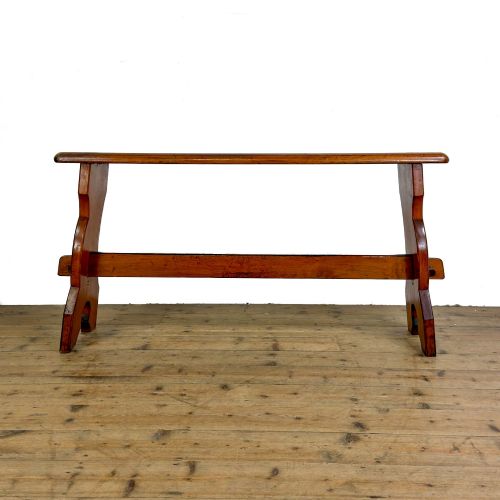
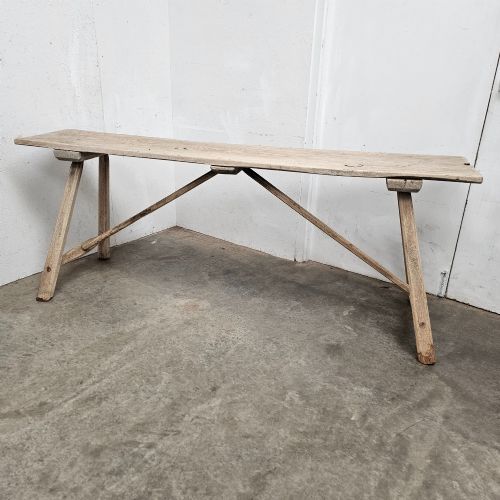
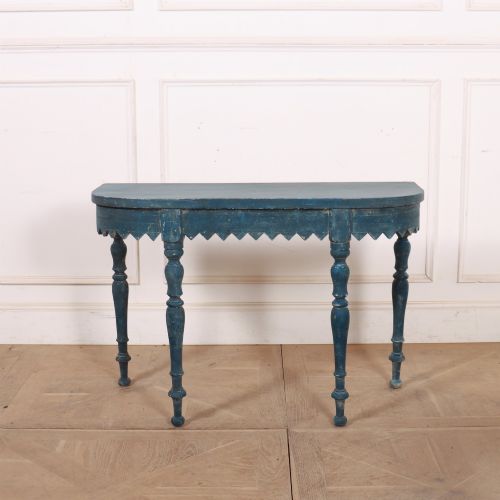
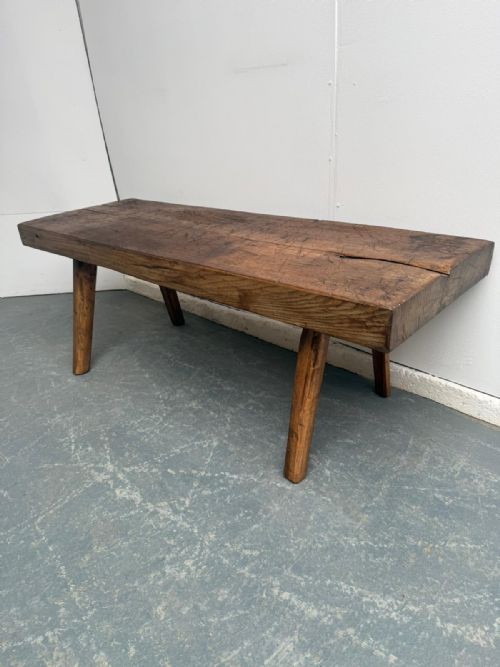


Narrow Rustic Wooden Table
These narrow rustic wooden table options bring honest utility and character to corridors and tight spaces.
Narrow Rustic Wooden Table
A narrow rustic wooden table offers a practical surface where floor space is limited, serving as a console, hallway stand or preparation bench. Buyers seeking a narrow rustic wooden table often look for slender proportions that fit comfortably against walls or behind seating.
The selection ranges from Victorian English designs and Edwardian painted pieces to French provincial trestle tables and Hungarian oak benches. Pine, oak and poplar dominate the forms, frequently showing scrubbed or bleached finishes acquired through decades of domestic use.
How they were made
Joinery relies on traditional carpentry methods suitable for everyday utility items, utilising solid timbers rather than veneered surfaces. Carpenters constructed these tables from regional woods such as pine, oak, poplar and sycamore, often joining boards with peg construction or simple framing.
Surfaces frequently show the physical evidence of past preparation work, laundry tasks or daily kitchen use. Scrubbed finishes and traces of original paint reflect generations of cleaning and maintenance with soap and water.
Several low oak benches in the collection served agricultural duties in Hungary before finding new life as coffee tables.
What varies in quality
Structural integrity separates daily work surfaces from lighter occasional stands, particularly in the joints where legs meet aprons. Tables retaining their original timber thickness without excessive board thinning command greater interest.
Surface preservation defines the character of each piece, distinguishing honest patination from heavy modern intervention. Examples with untouched scrubbed grain or authentic old paint layers offer the most reward.
The Narrow Rustic Wooden Table Glossary
- Scrubbed pine
- Timber cleaned repeatedly with water and stiff brushes until the soft grain wears down below the hard rings. This process creates a pale, textured surface characteristic of old dairy and laundry tables.
- Trestle table
- A board resting on two or more support frames rather than four distinct legs. This form allows maximum legroom along the length of the surface.
- Potboard
- A lower shelf fitted beneath a table or server, traditionally used for storing pots and heavy kitchen utensils. It adds stability to the frame while providing extra storage space.
- Pig bench
- A low, narrow wooden form historically utilised in agricultural settings. These sturdy benches now serve effectively as coffee tables or low display stands.
Narrow Rustic Wooden Table: Frequently Asked Questions
Where should I place a narrow table?
These slender surfaces suit narrow hallways, landings and compact dining spaces where standard furniture protrudes too far. They fit neatly behind sofas or against dead walls without obstructing movement.
Their restrained depth makes them useful as serving ledges or impromptu desks in smaller rooms.
How do I clean a scrubbed wooden top?
Maintenance requires little more than a dry cloth or a slightly damp sponge for occasional marks. Avoid harsh chemical cleaners that strip the natural oils and dry out the historic timber.
Applying occasional clear beeswax helps protect the porous surface from moisture rings and daily wear.
Are these tables suitable for daily kitchen use?
Many of these pieces began life as preparation tables, laundry benches or potboard servers designed for demanding environments. Solid pine and oak construction handles regular domestic activity without issue.
Using coasters and mats protects antique timbers from hot dishes and liquid spills.
How can I tell a Victorian pine table from a later copy?
Examination of the timber reveals tool marks, hand-cut joints and timber shrinkage consistent with nineteenth-century methods. Old pine develops a deep warmth and surface patina that modern reproductions struggle to replicate.
Hardware, screw types and general wear patterns further indicate the true age of the piece.