
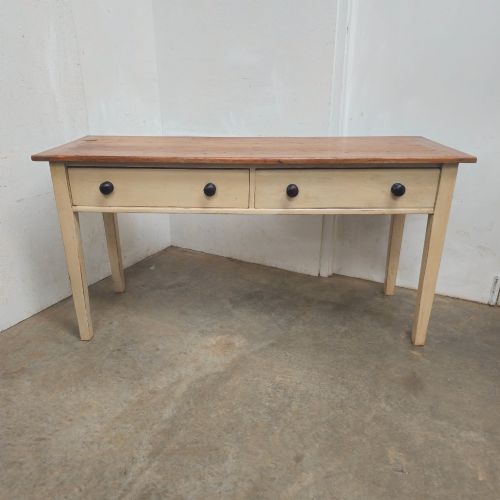
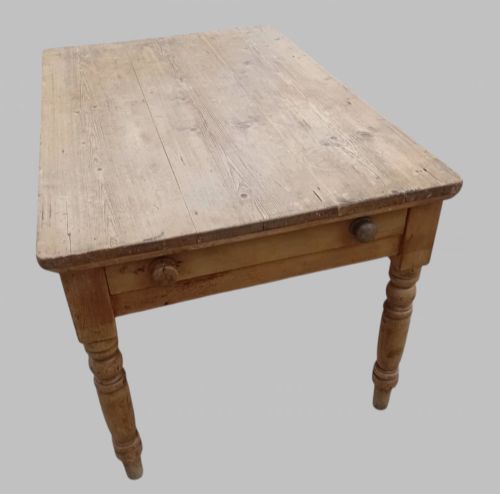
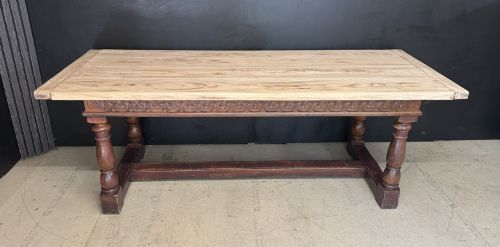
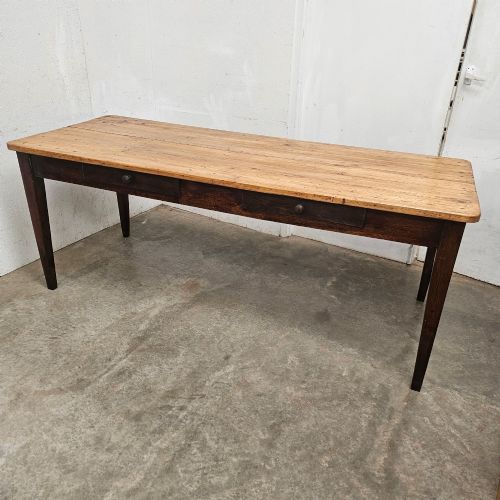



Scrub Top Pine Table
When you search for a scrub top pine table, you are looking at practical work surfaces built for heavy daily use in nineteenth-century kitchens, dairies and farmhouses.
Scrub Top Pine Table
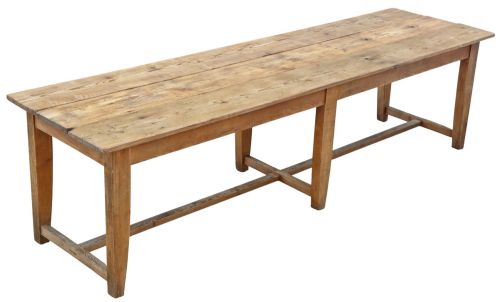
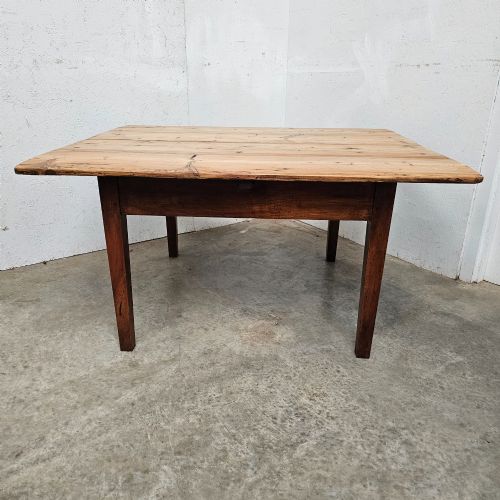
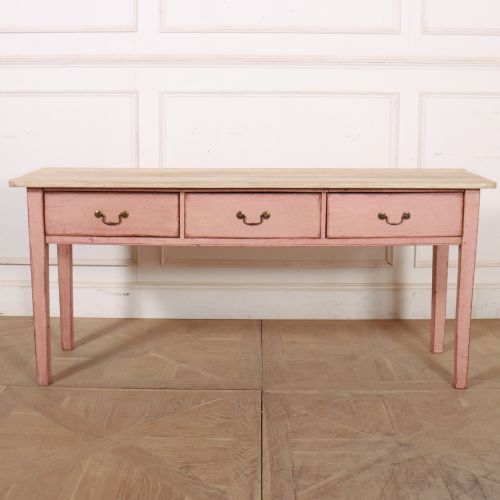
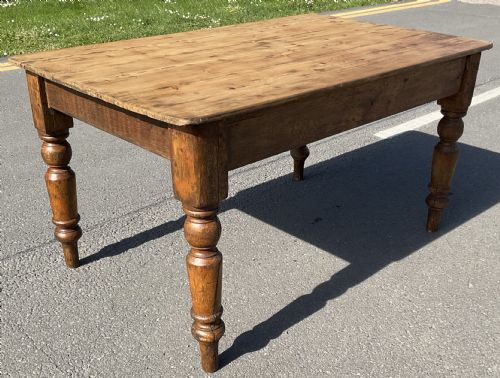
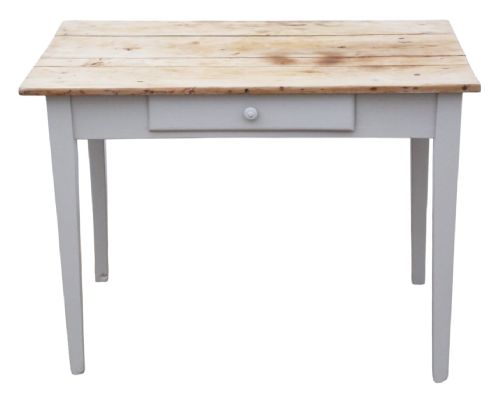
A scrub top pine table is a heavy utilitarian surface designed for rolling pastry, preparing dairy and managing daily domestic tasks. The defining feature is the unsealed timber top, which cooks and housekeepers scrubbed repeatedly with water and sand to keep hygienic.
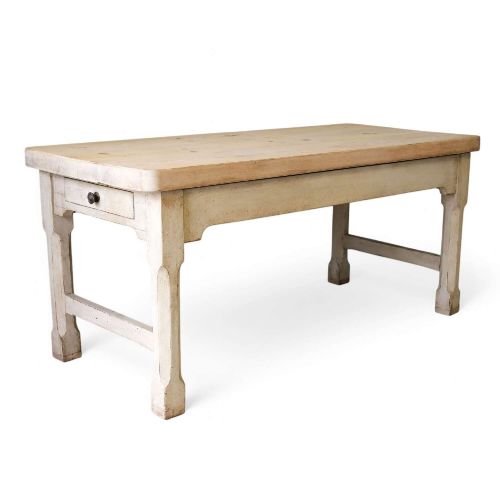
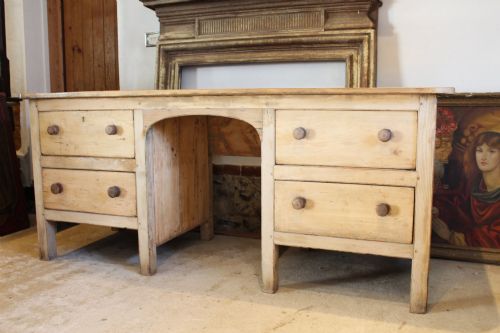
Most examples you encounter on this page date from the Victorian era and the nineteenth century, emerging from English, Welsh, French and Scandinavian rural workshops. These pieces range from modest kitchen and tavern tables to large refectory boards and prep tables fitted with single or double drawers.
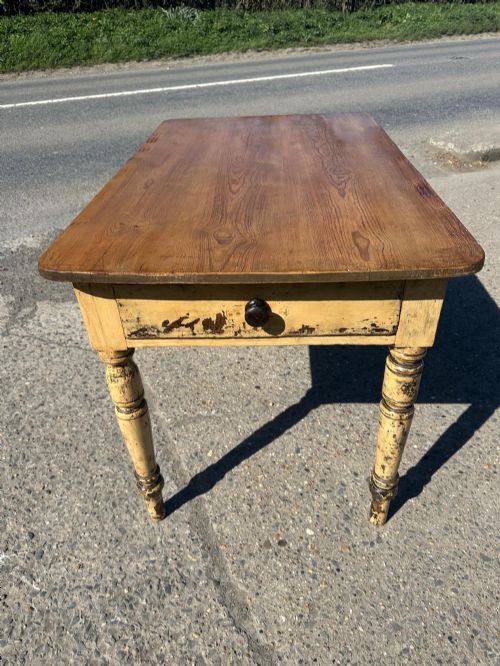
While pine forms the primary body of these tables, secondary timbers such as sycamore, oak, fruitwood and elm frequently appear in tops and framing. Many survive with their original painted bases, retaining layers of historic colour ranging from deep red to blue.
How they were made
Joiners constructed these tables using solid deal and pine planks for the top, fixed to sturdy turned or tapered legs using traditional pegged mortise and tenon joints. The scrubbed surface gained its pale, smooth texture through decades of vigorous scrubbing rather than modern sanding.
Bases were frequently painted or stained while the working top was left bare to prevent oils and fats soaking into finished wood. Secondary timbers like sycamore and fruitwood were utilised for hard-wearing prep surfaces, while oak and elm provided structural strength in trestle and refectory formats.
Listings feature 19th-century pine, painted wood, sycamore, oak and brass across farmhouse, tavern, refectory and cricket table formats.
What varies in quality
Quality in a scrub top pine table rests on the integrity of the original construction and the depth of timber figure in the scrubbed planks. Two-plank tops with tight grain and minimal splitting show greater substance than later assembled boards.
The survival of untouched surface finishes on the base, such as early red or blue paint and original castors or wooden knobs, elevates the standing of a piece. Proportion also dictates worth, as longer refectory formats and smaller tavern tables command distinct architectural presence.
The Scrub Top Pine Table Glossary
- Scrub top
- A bare wooden tabletop designed to be scoured clean with water and abrasive agents. This process leaves the grain raised and the wood pale and tactile.
- Deal
- A historical term for softwood timber, specifically pine or fir, commonly utilised for furniture carcasses and tabletops throughout the nineteenth century.
- Refectory table
- A long, narrow dining table traditionally built for communal dining halls. Examples in pine often served heavy domestic or institutional roles.
- Trestle table
- A table supported by two or more upright frames connected by a horizontal stretcher. This design allows maximum legroom along the length of the board.
- Dairy table
- A low or standard-height work table used in milk processing and cheese making. These surfaces often feature scrubbed softwoods resistant to moisture.
Scrub Top Pine Table: Frequently Asked Questions
Why is the top unpolished?
The top is left bare so that cooks could scrub the timber daily with coarse brushes and water without ruining a French polish or wax finish. This kept the wood hygienic for food preparation.
Over decades of scouring, the softwood grain wears down around the harder growth rings, creating the characteristic textured surface valued today.
How do I clean a scrub top?
You can clean the surface using warm water, a stiff bristle brush and natural soap. Avoid harsh chemical sealants that alter the historic dry touch of the pine.
Allow the wood to dry naturally after washing to prevent warping in the planks.
Were the bases always painted?
Many bases received coats of lead paint or milk paint to protect the timber and distinguish kitchen furniture from formal parlour pieces. Surviving traces of original red, blue or dark stain indicate the piece retains its early finish.
Some tables were stripped down entirely during later restorations, leaving both top and base bare.
How do I date a pine table?
Dating relies on construction methods, such as hand-cut square nails, pegged joints and the method used to join the tabletop planks. Tool marks left by pit saws or early woodworking machinery also point towards nineteenth-century origins.
Turned leg styles and the presence of historic drawer linings provide further clues to whether a piece belongs to the early or late Victorian period.