
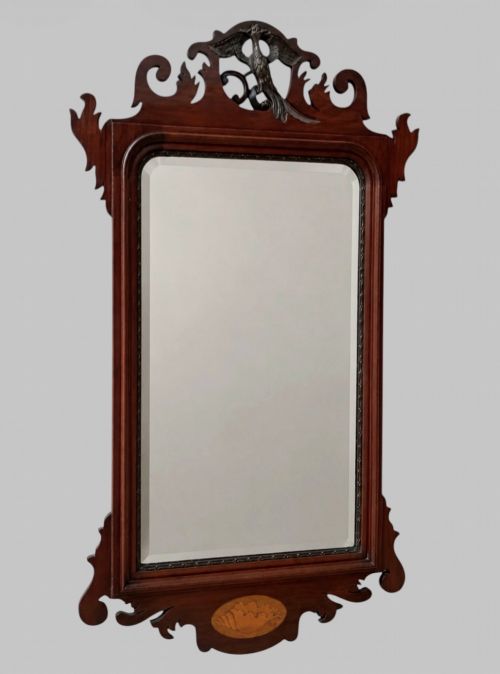


Scrollwork Wall Mirror
A scrollwork wall mirror brings fluid movement and light to a room, drawing the eye with carved wooden curves and gilded surfaces.
Scrollwork Wall Mirror
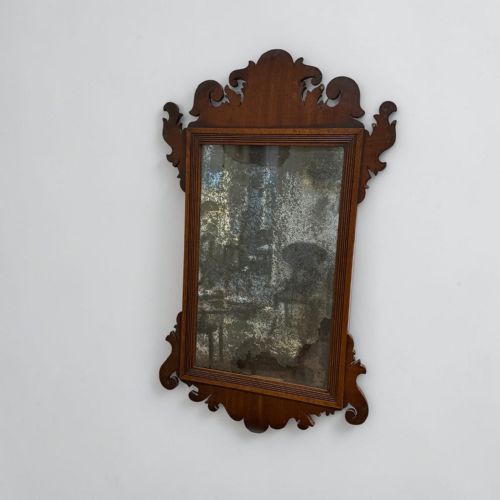
Scrollwork wall mirrors combine reflective glass with elaborate carved wooden frames defined by C-scrolls, S-scrolls, and asymmetrical flourishes. When you search for a scrollwork wall mirror, you encounter pieces originating from the eighteenth century onwards, with nineteenth-century revival interpretations appearing frequently.
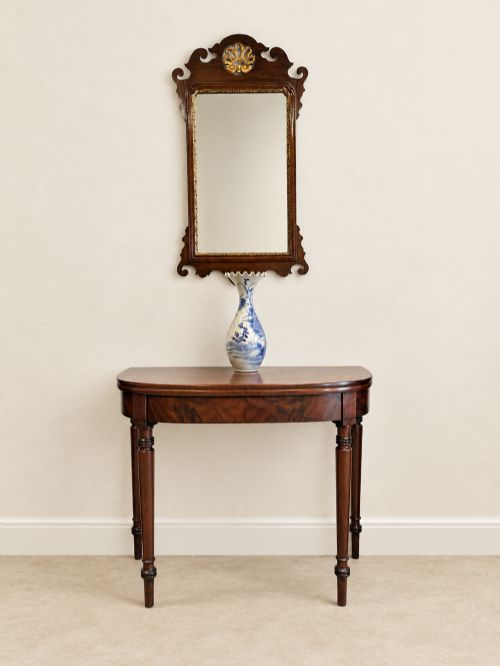
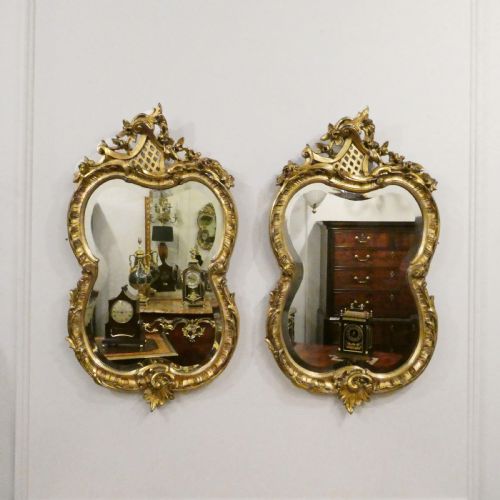
The forms range from compact Georgian fret-cut wooden frames to large Florentine and French giltwood overmantels designed to anchor a principal room. Makers of these pieces drew upon Rococo, Baroque, and Chippendale vocabularies to create dynamic outlines that break away from plain rectangular boundaries.
Examples on this page span walnut and mahogany timbers alongside heavily gilded gesso and cast brass, reflecting domestic tastes from across Britain, France, Italy, and Spain.
Materials and construction
Frames are constructed from foundational hardwoods such as mahogany, walnut, or padauk, which provide the structural strength needed for pierced fretwork and cantilevered carving. Artisans shaped these timbers using hand saws and chisels to achieve intricate pierced patterns and delicate silhouettes.
Giltwood and gesso pieces rely upon layers of liquid plaster applied over carved wood, smoothed and sealed before the application of delicate gold leaf. Brass alternatives utilise cast metal techniques, incorporating detailed masks and borders into solid frames.
Listings feature walnut, mahogany, and padauk alongside gilded gesso, brass, and glass across multiple European origins.
Assessing craftsmanship and design
Quality rests upon the depth and crispness of the carving, where superior examples display sharp undercut foliage and confident, flowing scrollwork rather than soft, shallow moulding. The choice of primary timber also dictates merit, with well-figured walnut and dense mahogany holding a sharper edge than lesser woods.
The application of the gilded surface reveals the standard of the workshop, with gold leaf exhibiting a warmer, burnished light compared to flat metallic paints. Original mirror plates possessing subtle bevels and age-related foxing further distinguish pieces retained in an unaltered state.
The Scrollwork Wall Mirror Glossary
- Fretwork
- Openwork carving produced by piercing thin boards with a saw to create geometric or organic patterns. This technique defines many eighteenth-century and Edwardian wall mirrors.
- Giltwood
- Timber coated with gold leaf over a prepared gesso base. This finish creates a luminous reflective surface favoured in formal reception rooms.
- Gesso
- A plaster mixture applied to carved wooden frames as a smooth ground for gilding. It allows craftsmen to model sharp decorative details before applying gold leaf.
- Overmantel
- A large mirror specifically proportioned to hang above a fireplace mantelpiece. These pieces often feature extended horizontal proportions and substantial decorative crests.
- Rococo Revival
- A nineteenth-century design movement resurrecting the asymmetric C-scrolls and naturalistic shell motifs of the eighteenth century. This style dominates many nineteenth-century gilt frames.
Scrollwork Wall Mirror: Frequently Asked Questions
Where should I hang a scrollwork mirror?
These mirrors suit principal reception rooms, hallways, and above fireplace mantelpieces where their reflective glass maximises natural light.
Ensure the wall fixings match the weight of the frame, particularly for heavy carved giltwood and overmantel examples.
How do I identify a Georgian scroll mirror?
Georgian examples typically feature mahogany or walnut veneers, fret-cut silhouettes, and restrained architectural proportions.
Look for period construction methods in the secondary wood backing boards to confirm the era.
Are brass scroll mirrors authentic?
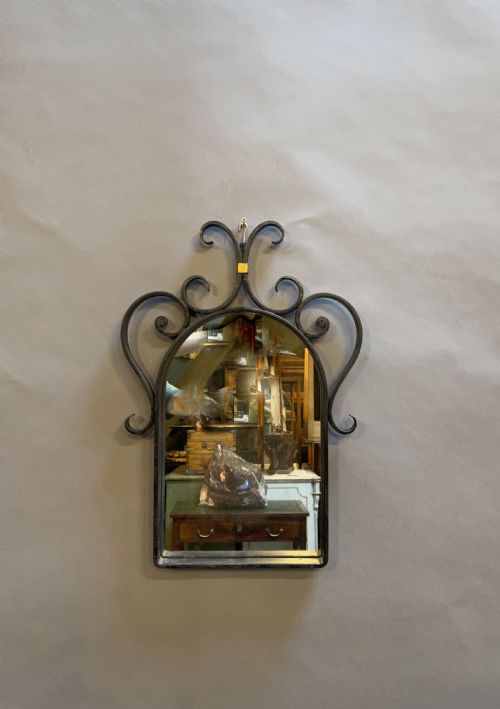
Cast brass wall mirrors appear in Victorian and Edwardian interiors, often incorporating decorative motifs like masks or floral crests.
These metal frames offer a distinct alternative to carved wood while maintaining ornate scrollwork outlines.
What is Florentine carved giltwood?
Florentine mirrors originate from workshops in Italy, known for dense, highly ornate carved foliage and rich gilding.
These pieces often present deep relief work and substantial frames designed to command attention in grand spaces.