
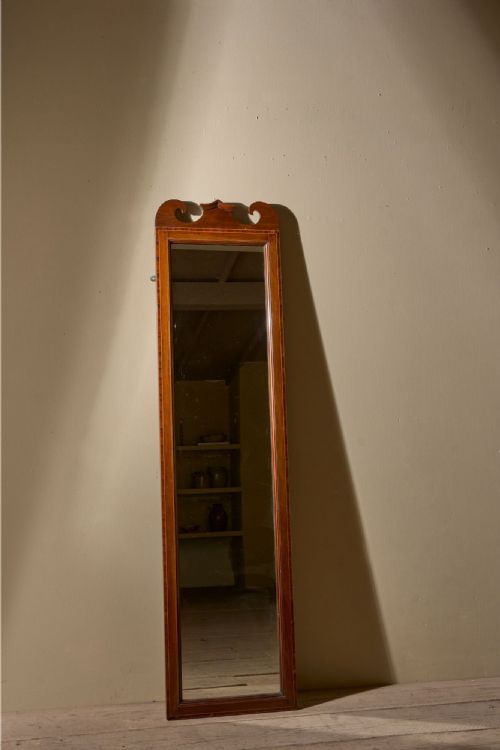
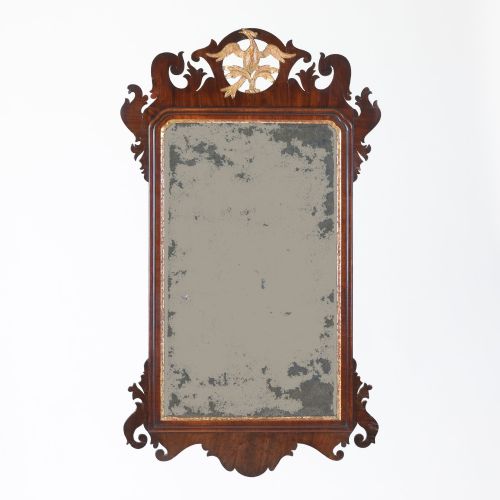
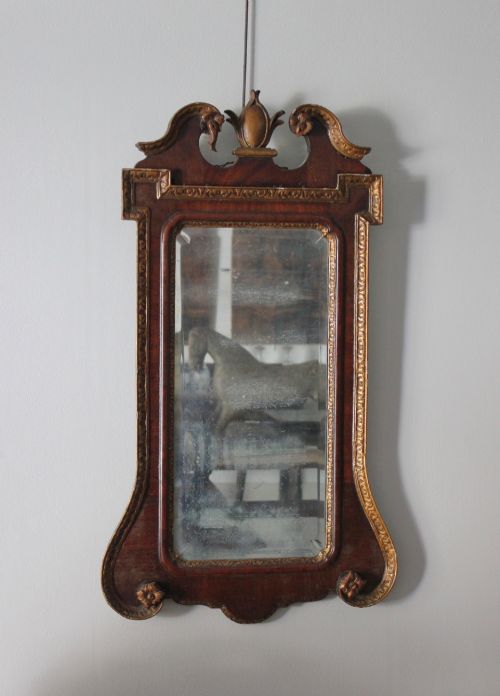
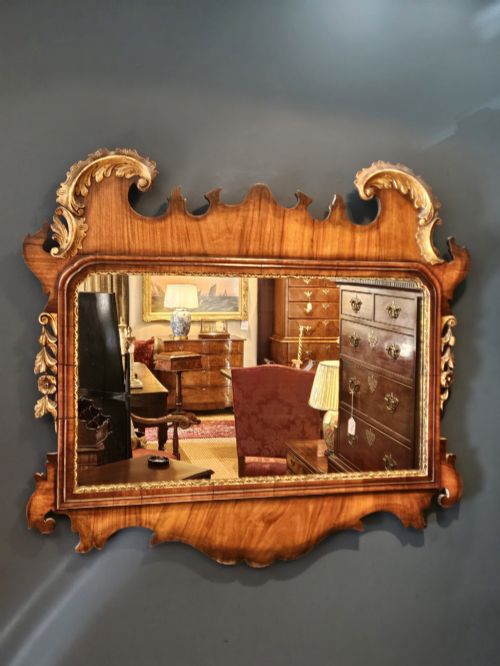


Scrolled Mahogany Wall Mirror
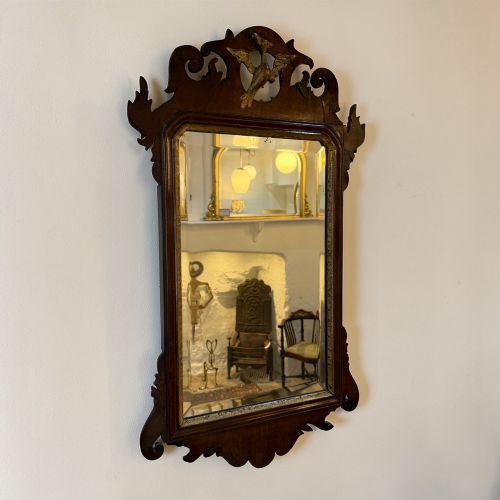
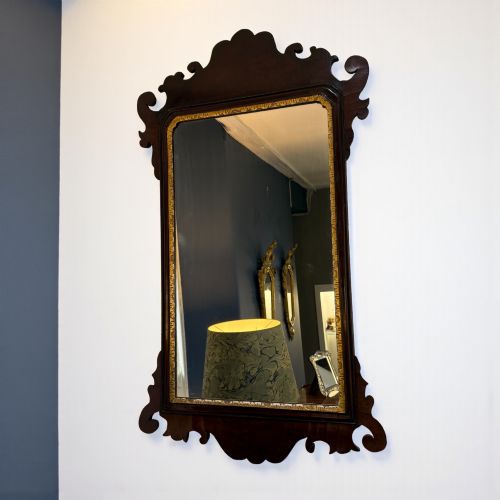
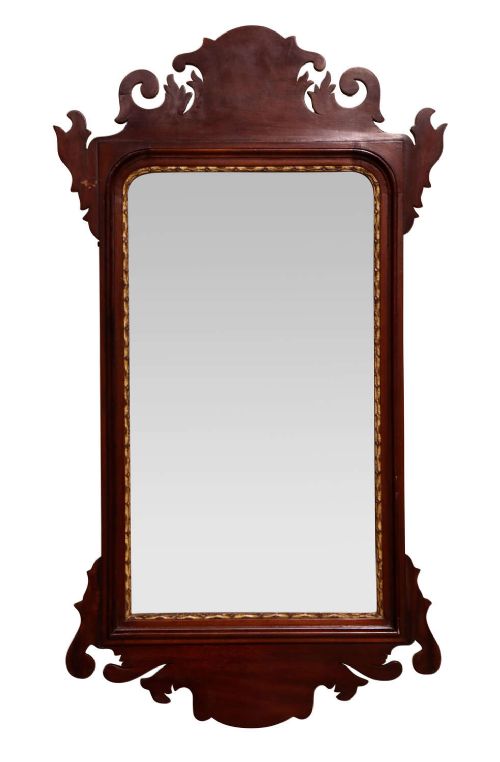
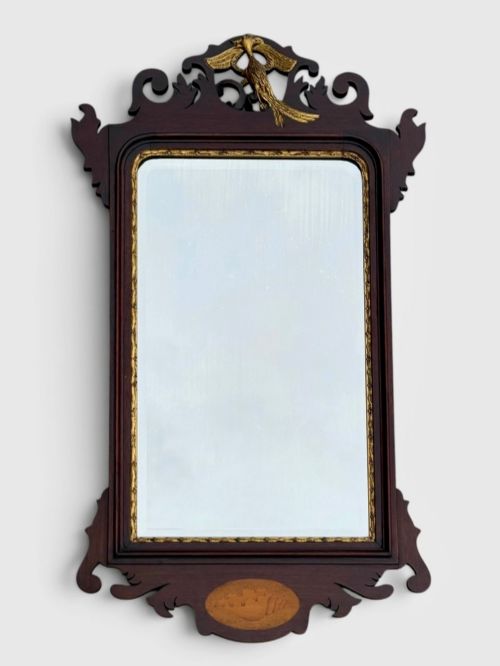
A scrolled mahogany wall mirror brings the clean depth of Georgian fretwork and gilt detail straight into a hallway or reception room.
Scrolled Mahogany Wall Mirror
A scrolled mahogany wall mirror is a traditional hanging glass panel framed in rich timber with scrolled ears and fret-cut outlines. These pieces span periods from the mid-eighteenth century up to Edwardian revivals, carrying the distinct influence of George III and Chippendale designs.
The versions most commonly met here range from authentic eighteenth-century examples to later Victorian and Edwardian interpretations. Makers of these later periods closely imitated earlier styles, often incorporating gilt wood highlights and classic motifs like the Ho-Ho bird.
Wall mirrors and larger pier mirrors dominate the selections, serving both functional dressing roles and decorative placement in morning rooms. Their proportions vary from compact vanity sizes up to tall landscape formats designed to anchor a room.
Materials and construction
Craftsmen built these frames using dense mahogany, frequently shaping the outer edges with intricate fret-cut scrolls using a fretsaw. Timber inlay in boxwood often added delicate contrast along the inner borders of the frame.
Giltwood details and gold leaf were applied to carved elements such as the crest and ears to catch the light. Original mirror glass, including Vauxhall plates, was set into the wooden rebate behind the fretted border.
Listings span Georgian, Victorian, and Edwardian periods, utilising solid mahogany, boxwood inlay, and gilt wood.
Markers of distinction
Quality rests in the crispness of the fretwork and the depth of the mahogany grain visible across the scrollwork. Finer pieces display hand-carved details with sharp relief on the crests and distinct feathering on the birds.
Original untouched surfaces hold greater interest than later stripped finishes, retaining the warm patina built over centuries. The presence of period bevelled glass and early gilding elevates an example above later revival copies.
The Scrolled Mahogany Wall Mirror Glossary
- Fretwork
- Thin wood panels cut through with decorative scroll patterns using a fretsaw. This technique defines the outer silhouette of many eighteenth-century frames.
- Ho-Ho bird
- A stylized Chinese phoenix frequently carved onto the crests of Chippendale style mirrors. It adds an exotic flourish to standard Georgian designs.
- Pier mirror
- A tall vertical glass designed to hang on the wall space between windows. These tall formats suit narrow architectural gaps.
- Vauxhall glass
- Early mirror plates named after the London glasshouse, often featuring a distinct bevelled edge. They provide historical context for eighteenth-century pieces.
- Giltwood
- Timber coated with gold leaf or metallic paint to highlight carved decoration. It brightened dark rooms by reflecting candlelight.
Scrolled Mahogany Wall Mirror: Frequently Asked Questions
How do I hang a heavy mahogany mirror safely?
These frames require secure wall fixings distributed across the timber backing to support the weight of the wood and glass safely. Heavy mirrors benefit from professional bracket placement into solid wall studs.
Avoid hanging them in areas subject to damp or direct strong sunlight to protect the fragile mahogany veneer and original gilt highlights.
What is a Chippendale style mirror?
A Chippendale style mirror draws on the furniture designs published by Thomas Chippendale during the eighteenth century. They feature elaborate fret-cut scrolls, asymmetrical motifs, and often a carved bird at the summit.
Victorian and Edwardian makers later revived these exact patterns, creating pieces that mirror the eighteenth-century aesthetic.
How do I clean an antique mirror frame?
Dust the carved mahogany gently with a dry, soft brush to protect the delicate fretwork from breakage. Keep moisture away from the gilded sections and unsealed wood.
Apply glass cleaner sparingly to a cloth rather than spraying the plate directly, preventing liquid from seeping behind the antique glass.
How can I tell an 18th-century mirror from a Victorian copy?
Eighteenth-century examples show hand-cut joinery, oxidized pine or mahogany backing boards, and subtle irregularities in the timber grain. The hand-carved fretwork usually displays softer wear patterns.
Later Victorian revivals often utilise machine-cut precision, heavier modern backing screws, and standardised pine secondary woods that lack early patination.