

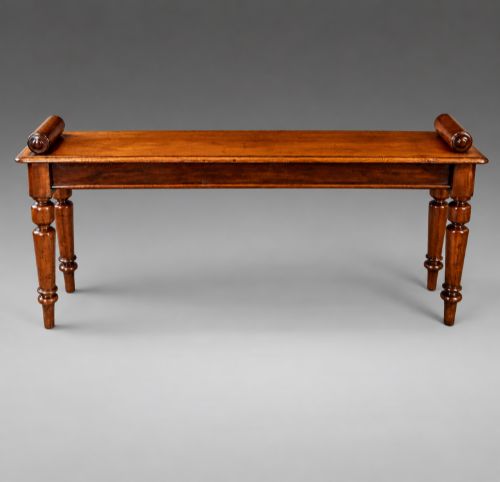
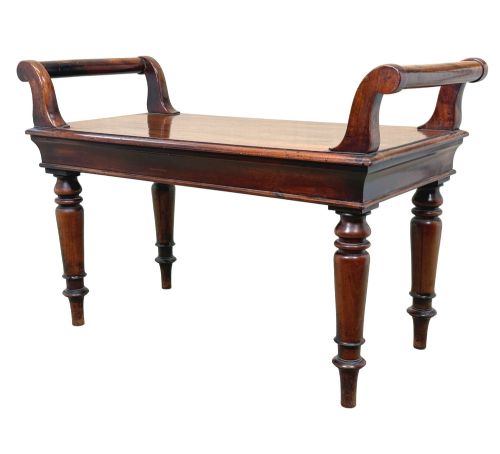


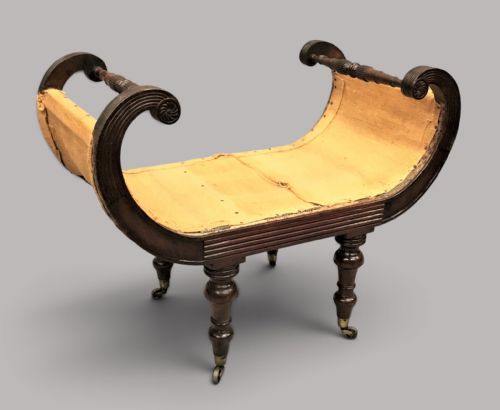


Scrolled Hall Bench
A scrolled hall bench provides a distinct seating option for an entranceway, combining sturdy timber frames with decorative scrollwork.
Scrolled Hall Bench
A scrolled hall bench sits in an entranceway or beside a window, offering practical seating fashioned from timber. When searching for a scrolled hall bench, buyers encounter forms that double as window seats, hall chairs, and large hall sofas originating from the nineteenth century onward.
The pieces available span several eras, including Regency, Victorian, and Edwardian periods. Makers from these times utilised distinct regional aesthetics, ranging from English country house designs to nineteenth-century French walnut variations.
Forms vary from compact window seats and dressing stools to large carved oak and mahogany hall sofas. Many examples feature upholstered elements paired with exposed timber frames.
How they were made
Craftsmen built these benches primarily using mahogany, oak, walnut, and pine. Timber selection dictated the weight and grain pattern of each piece, with mahogany and walnut favoured for finer urban furniture and pine or oak appearing in country house settings.
Joinery techniques combined traditional wood framing with carved decorative details. Upholstered sections incorporate fabric and textile coverings, occasionally secured with brass elements.
Scrolled Hall Bench Retail Price Guide 2026
Typical asking prices for scrolled hall bench among the pieces listed under this phrase on Sellingantiques today, from the lower quarter to the upper quarter. They describe what is for sale here now, not the wider market.
Several pieces double as dressing stools, proving that Victorians multitasked long before the invention of the desk.
What varies in quality
The refinement of the carving separates standard output from superior examples. Skilled work appears in crisp, deep relief along the scrolled wooden elements rather than shallow, mechanical shaping.
The choice of primary timber influences the overall calibre of the piece. Dense, well-figured mahogany and quarter-sawn oak provide greater durability and visual depth than softer pine carcases.
Gillows
The Scrolled Hall Bench Glossary
- Mahogany
- A durable tropical hardwood prized for its rich reddish-brown colour and fine grain. It served as the primary material for high-status seating throughout the nineteenth century.
- Cabriole leg
- A furniture leg that curves outward and then tapers inward, inspired by the shape of an animal's leg. This form appears on select Regency window seats.
- Window seat
- A long, narrow form of seating designed to fit into the recess of a window. Many pieces catalogued under hall benches share this exact architectural format.
- Oak
- A strong, heavily grained temperate hardwood utilised in Victorian seating. Golden oak varieties display distinct medullary rays when quarter-sawn.
Scrolled Hall Bench: Frequently Asked Questions
Where should I place a scrolled hall bench?
These pieces suit narrow entranceways, hallways, or the base of a bedroom window. Their elongated form provides seating without obstructing movement.
Ensure the dimensions match the available floor space so the scrollwork remains visible rather than crowded by other furniture.
How do I clean the wooden frame?
Dust the timber regularly with a dry, soft cloth to prevent particulate buildup on the carved surfaces. Avoid silicone-based sprays that alter the finish.
Apply a microcrystalline wax periodically to nourish the mahogany or oak without attracting excess dirt.
Can I reupholster the padded seats?
Upholstered elements can be recovered using traditional methods that respect the era of the frame. Select textiles that complement the tone of the underlying wood.
Retain the original webbing and stuffing depth where possible to maintain the correct profile of the seat.
How do I identify a Regency period piece?
Regency items typically display classical restraint, classical motifs, and specific leg forms such as cabriole designs. Mahogany was the dominant timber during this era.
Compare the construction details and proportions against known examples from the early nineteenth century to confirm the period.