



Scottish Silver Bowl
A Scottish silver bowl brings centuries of Edinburgh and provincial craft to the table, taking the form of traditional two-handled quaichs, sugar baskets and handled vessels.
Scottish Silver Bowl
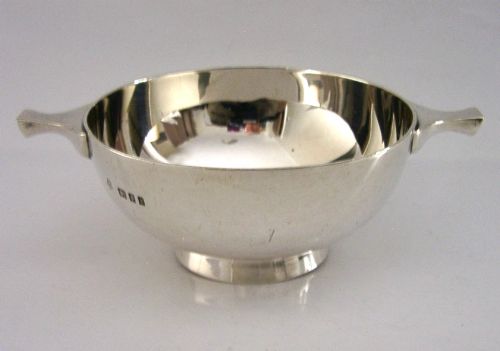
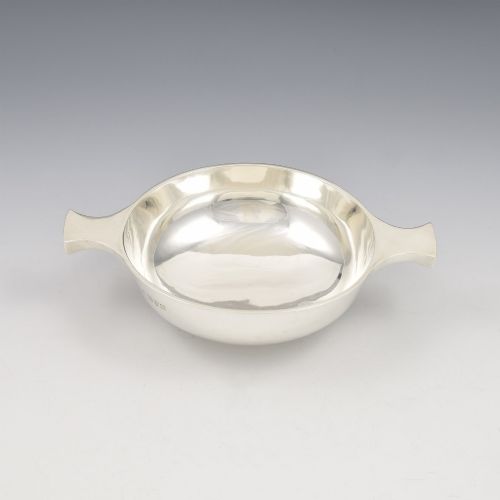
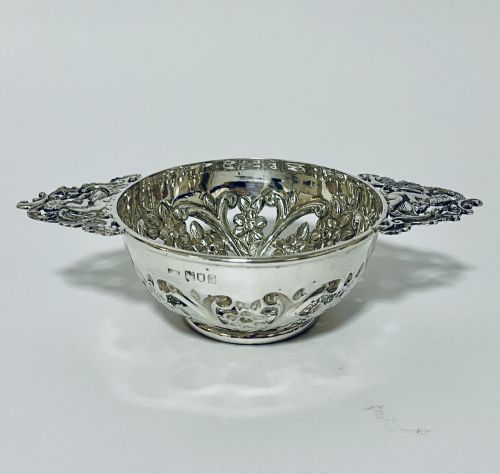
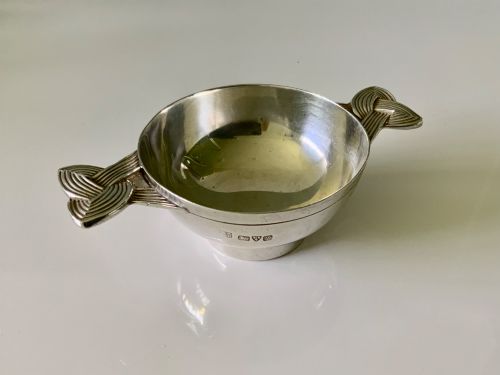
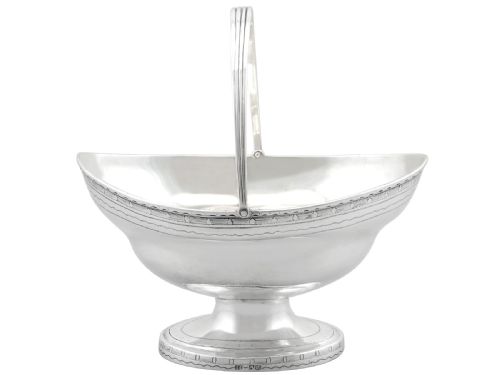
When you search for a scottish silver bowl, you encounter a distinct regional tradition spanning Georgian sugar baskets through Edwardian rosebowls and arts and crafts drinking vessels. The most frequent form on this page is the traditional quaich, a twin-lugged drinking vessel rooted in the highlands and adapted across periods in solid sterling silver.
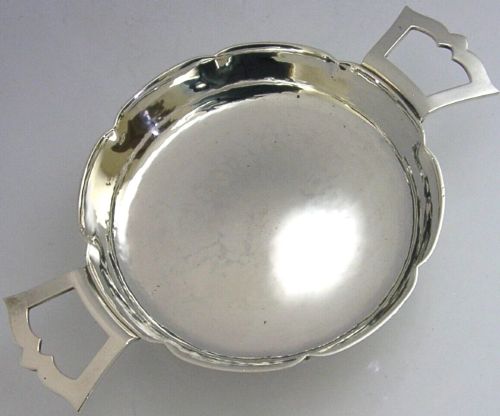
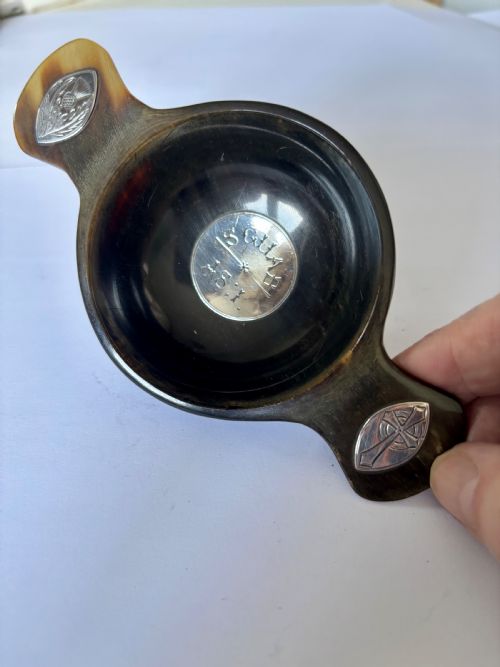
Beyond the quaich, the evidence reveals decorative fruit bowls, bread baskets, pedestalled rosebowls and twin-handled presentation pieces bearing Edinburgh hallmarks and provincial assay marks. Domestic items such as sugar basins and mounted horn vessels appear alongside larger ceremonial forms.
The objects cross several stylistic revivals, moving from eighteenth century neoclassical sugar baskets to nineteenth century chased Victorian centrepieces and twentieth century arts and crafts planished designs. Buyers select these pieces for their specific combination of regional maker marks, clan crests and characteristic native forms.
Materials and construction
Silversmiths constructed these bowls using sterling silver, silver plate on copper, and occasionally natural horn or whalebone mounts, employing hand-raising and hammering techniques that leave subtle tool marks across the metal surface. Arts and crafts examples frequently display planishing, where the silversmith deliberately leaves small hammer facets across the body to catch the light.
Earlier Georgian and Victorian pieces rely on casting for structural mounts, handles and pedestals, combined with hand-chasing, pierced work and engraving to render intricate foliage, crests and Celtic strapwork. Horn and glass components are integrated with silver rims and bases using traditional fastening methods.
One exceptional Victorian novelty piece takes the exact miniature form of a wooden barrel, complete with silver hoops.
Judging quality
Quality rests upon the crispness of the hand-chased ornament, the integrity of the maker marks and the weight of the metal relative to the vessel size. Superior pieces exhibit confident, deep hand-engraving of family crests and lettering rather than machine milling.
The balance of the handles on a quaich or twin-handled bowl dictates structural success, alongside the smoothness of the planished texture on arts and crafts pieces. Provincial marks and Edinburgh assay offices add distinct regional provenance to the evaluation.
R E Stone·Nathan & Hayes·Hamilton & Inches·John McDonald·John Kincard·Mackay & Chisholm
The Scottish Silver Bowl Glossary
- Quaich
- A traditional Scottish drinking vessel featuring a shallow circular bowl and two opposing handles called lugs. These handles allow the drinker to hold the vessel with both hands.
- Planishing
- A silversmithing technique involving systematic light hammering with a polished flat hammer to smooth and shape the metal while leaving a distinctive faceted texture.
- Lug
- One of the two flat handles projecting from the rim of a quaich. Early examples featured plain lugs while later Victorian and arts and crafts versions introduced Celtic knotwork.
- Assay mark
- An official stamp indicating the purity of the metal and the office of testing. Scottish silver typically bears the three-castle mark of Edinburgh or provincial town marks.
- Toddy ladle
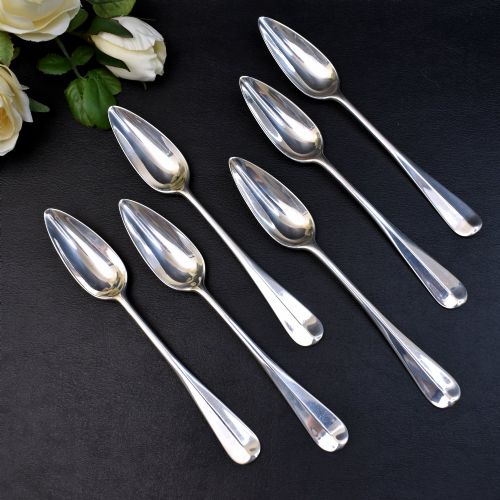
- A small spoon with a twisted whalebone or silver handle used for serving hot whisky toddies from a central bowl.
Scottish Silver Bowl: Frequently Asked Questions
How do I identify Edinburgh hallmarks?
Scottish silver hallmarking includes specific regional symbols alongside the standard standard mark and date letter. Edinburgh pieces commonly display a castle fortress mark representing the Edinburgh assay office.
Additional marks include the thistle as a standard silver indicator alongside maker initials and reigning monarch duty marks on nineteenth century items.
Were these bowls used for food?
Many surviving vessels served specific dining functions such as sugar baskets, fruit bowls, bread baskets and rosebowls. Georgian and Victorian examples held sugar on the tea table or fruit and flowers at dinner parties.
Smaller quaichs functioned as drinking vessels for whisky or ale, while larger decorative bowls served as presentation pieces or centrepieces.
How should I clean silver bowls?
Solid silver requires gentle washing in warm soapy water using a soft cloth, followed by thorough drying to prevent water spots. Avoid abrasive dips or harsh commercial pastes that strip away patination and fine engraving.
Pieces incorporating horn or whalebone mounts need special care to keep moisture away from organic materials, preventing warping or cracking of the joint.