


Scottish Silver Agate Jewellery
These pieces of Scottish silver agate jewellery are tactile relics of Victorian revivalism, prized for their colourful hardstone settings and intricate metalwork.
Scottish Silver Agate Jewellery
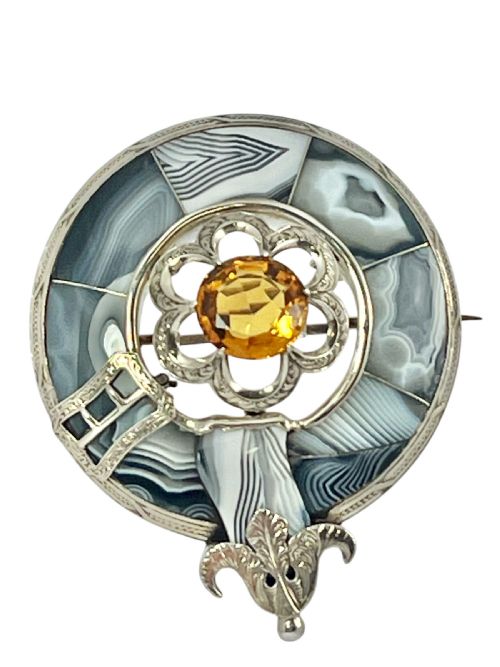
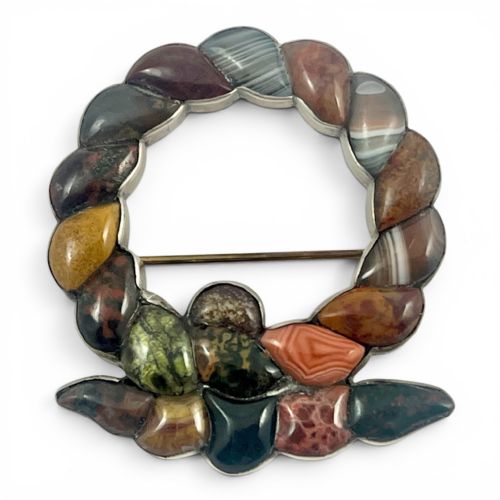
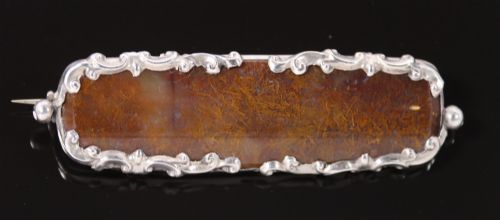
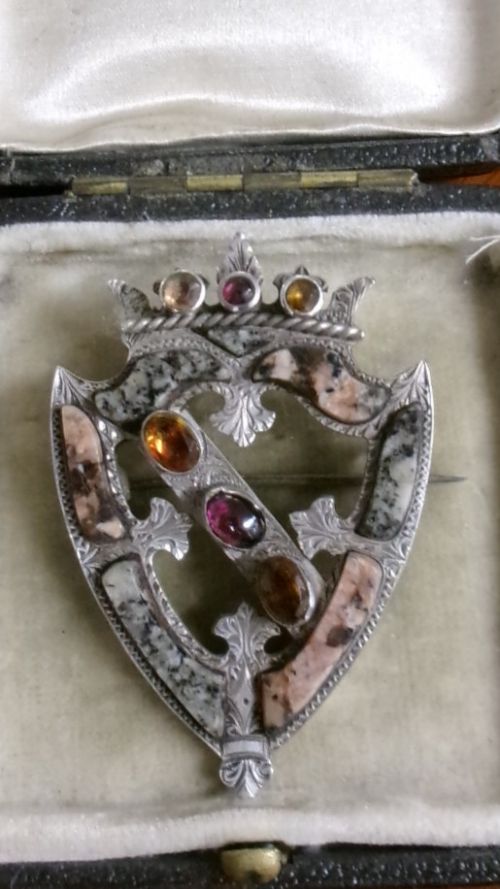
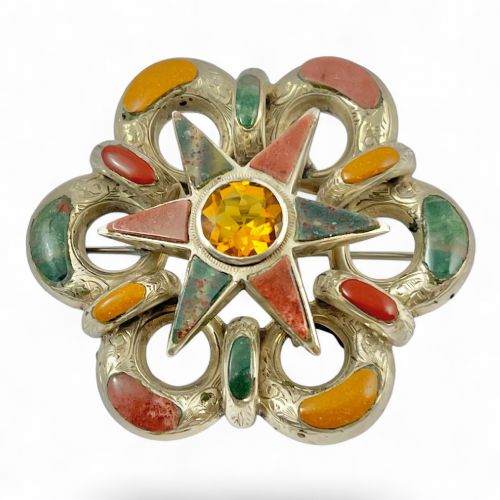
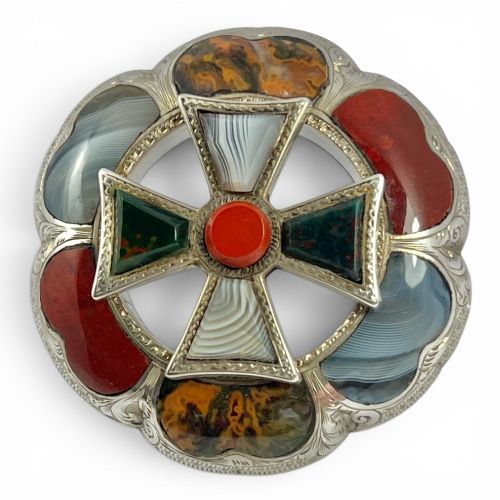
When you search for scottish silver agate jewellery, you encounter distinct pieces originating predominantly from the Victorian era, spanning styles such as Victorian Scottish Revival and Victorian Scottish Pebble. The form is defined by silver mounts holding natural hardstones like agate, jasper, bloodstone, and moss agate, sometimes accented with citrine.
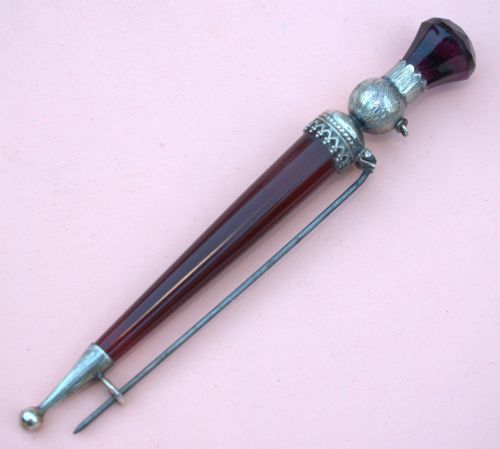
Brooches dominate the selection, including dirk brooches, kilt pins, shield shapes, basket-hilted broadswords, and braided plaid brooches, alongside occasional earrings and padlocks. These items trace back to nineteenth-century interpretations of Highland traditions, capturing a distinct regional aesthetic.
The materials speak directly of British mineralogy and craft, combining local hardstones with sterling silver or provincial silver settings. Most examples cluster around the middle and late nineteenth century, reflecting the height of the Scottish pebble jewellery craze.
How they were made
Silversmiths shaped local sterling or provincial silver into elaborate frames, incorporating motifs like broadswords, dirks, and padlocks. These metal mounts required precise hand-cutting and soldering to house the heavy stone elements securely.
Lapidaries sliced and polished natural stones including Montrose agate, moss agate, jasper, and bloodstone into geometric or figurative shapes. These polished hardstones were then tightly set into the silver channels, frequently accompanied by faceted yellow citrines.
The combination of braided silver wirework and multi-coloured stone inlay created substantial, durable pieces designed to fasten heavy woollen tartans and plaids.
Materials recorded across current items include sterling silver, Montrose agate, moss agate, jasper, bloodstone, and citrine.
What varies in quality
The standard of cutting and polishing in the hardstones sets finer examples apart, where natural banding within the agate or moss agate displays sharp contrast and rich saturation without dull patches. Provincial silverwork also introduces variation, with certain regional pieces showing particularly ambitious three-dimensional forms like basket-hilted broadswords.
The Scottish Silver Agate Jewellery Glossary
- Agate
- A form of chalcedony displaying distinct natural banding or concentric rings. This durable stone served as the primary visual element in nineteenth-century Scottish pebble jewellery.
- Montrose agate
- A specific variety of Scottish hardstone prized for its particular colouration and transparency. It frequently appears in nineteenth-century provincial brooches.
- Dirk brooch
- A fastening pin shaped like a traditional Scottish dagger. These substantial pieces combined symbolic Highland weaponry with functional silverwork.
- Plaid brooch
- A large circular fastener utilised to secure heavy tartan garments. They often featured elaborate silver braided patterns surrounding multi-coloured hardstone inlays.
- Jasper
- An opaque, microcrystalline variety of quartz used alongside agate in Victorian Scottish pieces. Its earthy tones provided strong contrast against polished silver mounts.
Scottish Silver Agate Jewellery: Frequently Asked Questions
How do I wear a kilt pin?
These historical pins were originally designed to fasten heavy woollen tartans and plaids rather than delicate modern fabrics. Ensure the garment weight can support the substantial silver and stone construction.
Position the pin carefully through the outer layer of fabric only, avoiding the lining, to prevent pulling or tearing the textile under the weight of the hardstones.
Are these pieces genuinely Victorian?
The vast majority originate from the nineteenth century, aligning with the Victorian Scottish Revival movement. Hallmark evidence and regional styles help anchor these dates accurately.
Makers drew heavily on traditional Highland motifs during this period, producing distinctive pebble jewellery that remains distinct from later twentieth-century reproductions.
What is Montrose agate?
Montrose agate refers to specific hardstones sourced and cut in Scotland during the nineteenth-century jewellery boom. These stones exhibit characteristic natural patterns and rich colour variations.
Collectors look for this specific provenance as an indicator of regional authenticity within Victorian Scottish silver collections.
How should I clean silver and agate jewellery?
Clean the silver components gently with a soft microfibre cloth designed for precious metals. Avoid dipping multi-stone agate pieces in liquid chemical cleaners, which can seep into settings and damage adhesives.
Store each item individually in a dry box to prevent the hardstones from scratching against neighbouring pieces of jewellery.