




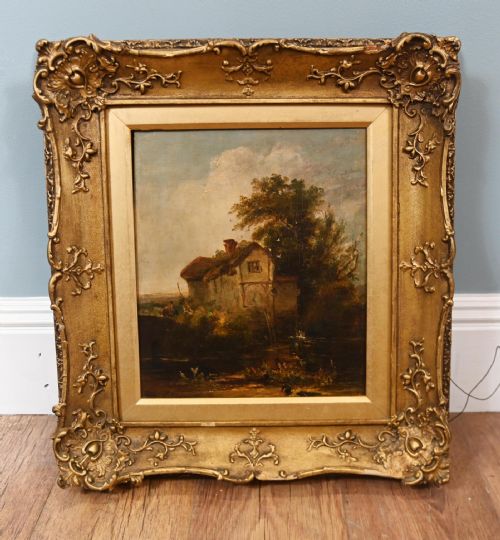


Scottish River Landscape
A Scottish river landscape brings the high waters and quiet valleys of the north into a room.
Scottish River Landscape
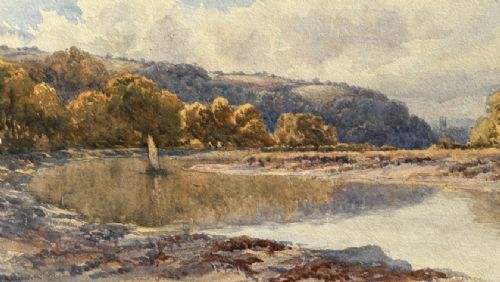
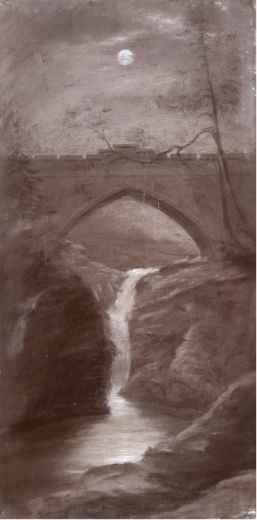
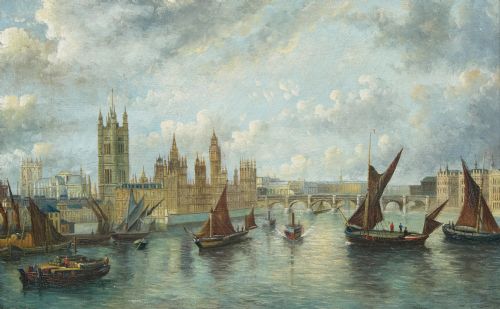
A Scottish river landscape captures the waterways, glens, and bridges of the north through oil and watercolour. These works range from late eighteenth-century views to mid-century impressionist panels.
Buyers will find oil paintings on canvas and wood alongside detailed watercolours on paper. Many depict specific locations such as the Isle of Arran, the river Tweed, and highland bridges.
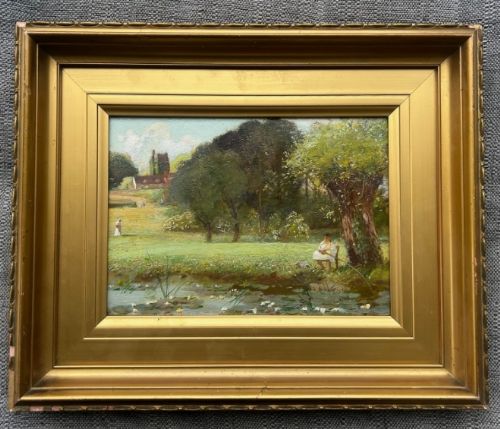
The pieces reflect various movements including Victorian realism, British impressionism, and mid-century impasto techniques. Each work records the shifting light over northern terrain.
How they were made
Artists painted primarily in oil and watercolour, applying pigments to prepared canvas, wood panels, or heavy paper. Gesso provided the foundational layer for panels, while gold leaf occasionally surfaced in framing.
Subsequent works employed thick impasto brushwork to build texture across the canvas, capturing the movement of water and mountain air. Earlier compositions relied on precise washes of watercolour or smooth oil glazes.
The listings feature oil and watercolour works across the eighteenth, nineteenth, and twentieth centuries, including Victorian and mid-century impressionist styles.
What varies in quality
Quality rests in the handling of light and atmospheric depth across the water and surrounding hills. A superior composition balances the movement of the river with the stillness of distant mountains.
The sureness of the brushwork distinguishes accomplished works from simpler regional depictions. Stronger pieces reveal confident application of oil or pigment that defines the terrain without stiffness.
David Law·William George Tennick·Archibald Kay·Sir David Murray·Frank Hider·Tom Seymour·Louis Bosworth Hurt·A. De Breanski·Sidney Richard Percy·Tom Campbell·John Hamilton Glass·James Drummond·F.E. Jamieson
The Scottish River Landscape Glossary
- Impasto
- Paint applied thickly to a canvas or panel so that it stands out from the surface. This technique adds tactile weight to water and foliage.
- Gesso
- A mixture of binder and chalk used to prepare wood panels for painting. It provides a smooth white ground for oil pigments.
- Watercolour
- A paint consisting of pigment suspended in a water-based solution. Artists applied these transparent washes to paper for lighter landscape studies.
- Wood Panel
- A rigid wooden support used in place of canvas for oil paintings. These panels offer a firm surface for detailed brushwork.
Scottish River Landscape: Frequently Asked Questions
What periods do these paintings cover?
The available works span from the late eighteenth century through the Victorian era and into the mid-twentieth century. Styles shift from early Italianate views to later impressionist treatments.
Most pieces date from the nineteenth and early twentieth centuries, reflecting the height of landscape painting in the region.
Are these works signed by the artists?
Many pieces bear signatures or attributions to recorded painters and regional schools. Signatures often appear in the lower corners of the canvas or paper.
Unsigned works are attributed through stylistic comparison to known nineteenth and twentieth-century Scottish artists.
What mediums are used in these landscapes?
Painters worked primarily in oil and watercolour on supports such as canvas, wood panel, and paper. Some pieces feature charcoal underdrawing or layered impasto.
Frames often incorporate gesso mouldings and gold leaf finishes suited to the period of the artwork.
How do I care for an antique oil painting?
Keep paintings away from direct sunlight and dramatic shifts in temperature or humidity. This prevents the canvas and wood panels from warping or cracking.
Dust the surface gently with a soft, dry brush and avoid using liquid cleaners on the paint or gesso frame.