



Scottish Pastoral Oil Painting
These scottish pastoral oil painting works capture remote northern highlands and quiet rural life with lasting appeal.
Scottish Pastoral Oil Painting
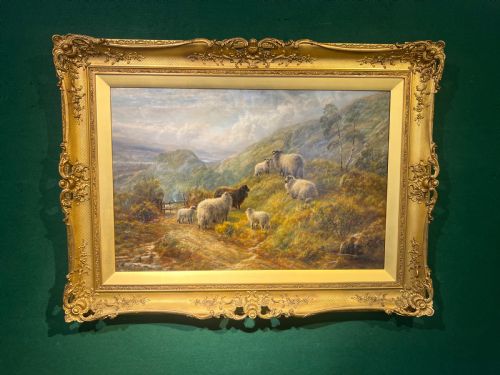
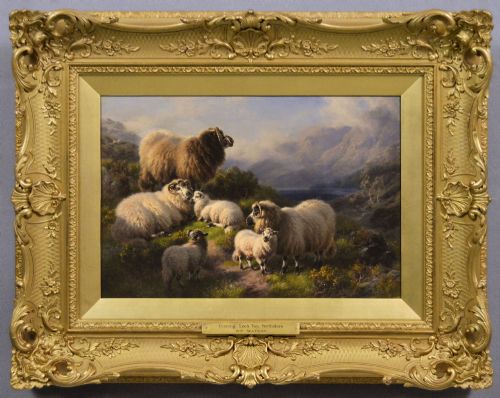
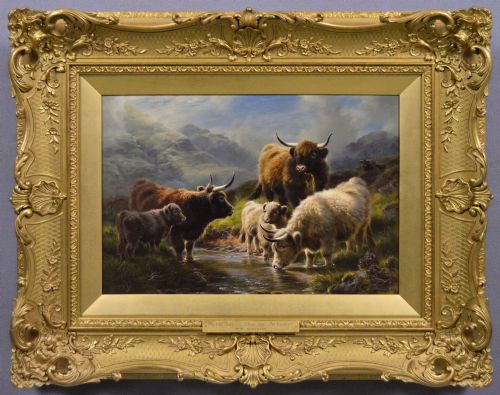
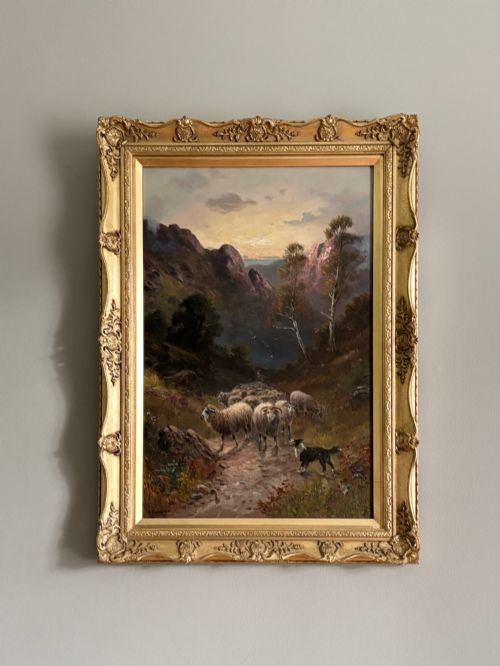
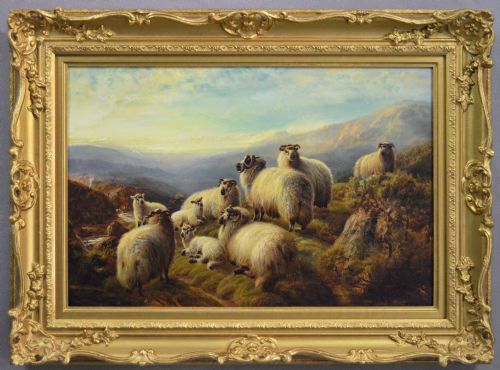
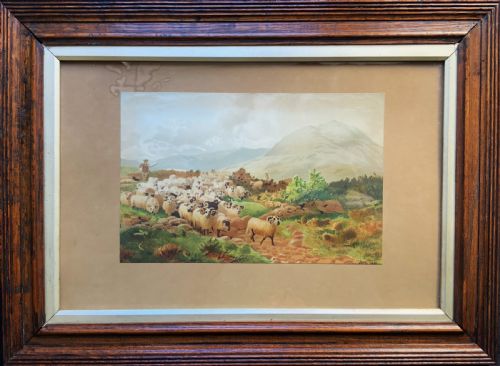
A scottish pastoral oil painting portrays northern landscapes, rural farming scenes, and grazing livestock across open terrain. Buyers seek these canvases for their atmospheric depiction of highland scenery, mountain lochs, and pastoral tranquility.
Most examples found here date from the nineteenth century through the early twentieth century, spanning Victorian, Edwardian, and Scottish Impressionism periods. Common subjects include highland cattle, sheep, and shepherds situated near rivers, glens, and mountainous backgrounds.
These works reflect regional schools such as the Highland School and Victorian Naturalism, focusing on natural light and rural working life. Collectors acquire them to bring historical landscape artistry and rural Scottish heritage into domestic interiors.
How They Were Made
Artists painted primarily with oil on canvas or wood panel, applying pigment to build rich textures and tonal depths. Giltwood frames, often finished with gesso and gold leaf, frequently enclose these works.
Makers utilised traditional brushwork techniques to render atmospheric weather, rugged terrain, and the tactile coats of cattle and sheep. The combination of oil pigments and layered varnish preserved the luminous quality of each landscape over generations.
Common framing materials recorded across these pastoral landscapes include gesso, gold leaf, and gilt wood.
What Varies in Quality
Quality rests in the artist's handling of light, anatomical precision of livestock, and composition of the wider landscape. Finer pieces demonstrate confident brushwork and a balanced integration of figures, animals, and scenery.
The condition of the painted surface and the originality of the frame influence the standing of a piece. Works by recognised members of the Royal Scottish Academy or established regional painters command greater attention from serious collectors.
Tom Campbell·Robert Watson·William Watson Jnr·Douglas Cameron·Sidney Pike·George Turner·John W Morris·William Miller Frazer·GW Horlor·Frederick Richard Lee·Thomas Sidney Cooper·Henry Birtles·George Smith·Charles Jones·Sir David Murray·James Kay
The Scottish Pastoral Oil Painting Glossary
- Oil on Canvas
- Pigment mixed with drying oil applied to woven fabric stretched across a wooden support. This combination provides a flexible and durable surface favored by nineteenth-century landscape artists.
- Gesso
- A plaster-like mixture applied to wood frames before gilding. It creates a smooth base for gold leaf application.
- Giltwood
- Wood carved and coated with gold leaf or metallic powder. It frames many traditional pastoral paintings of this era.
- Scottish Impressionism
- A painting style emerging in the late nineteenth century characterised by looser brushstrokes and an emphasis on natural light. It marks a shift from rigid academic realism toward atmospheric expression.
- Victorian Naturalism
- An art movement focusing on realistic depictions of the natural world and rural laborers. Artists working in this manner observed outdoor lighting and agricultural life with careful attention.
Scottish Pastoral Oil Painting: Frequently Asked Questions
What subjects appear in these paintings?
These artworks depict Scottish highland landscapes featuring cattle, sheep, shepherds, and rural farming scenes. Mountainous backgrounds, rivers, and lochs frequently anchor the composition.
Animals are often shown resting or grazing in pastoral settings, reflecting traditional rural life in the north during the Victorian and Edwardian eras.
How should I hang an oil painting?
Mount the canvas securely using appropriate wall fixings that match the weight of the frame and painting. Position the work away from direct sunlight and damp environments to protect the oil pigments and wooden support.
Keep the piece clear of direct heat sources such as radiators to prevent the canvas and gesso frame from drying out or cracking.
How can I tell the period?
Examine the materials, stretcher frames, and framing techniques used in the construction. Canvas types, wedge keys, and backing boards often provide clues to the age of the piece.
Stylistic markers such as Victorian naturalism or early twentieth-century impressionistic brushwork also help narrow down the decade of creation alongside artist signatures.
Where were these pastoral scenes painted?
Artists painted these scenes across Scottish regions including highland glens, farming estates, and remote loch shores. Locations such as Loch Tay and Auchlyne Road appear in specific titles.
Painters travelled into rural environments to sketch livestock and landscapes directly from nature before completing the final oils in their studios.