




Scottish Moorland Painting
These pieces of scottish moorland painting capture the wild heather and open skies of the north, offering buyers a genuine window into untamed rural landscapes.
Scottish Moorland Painting
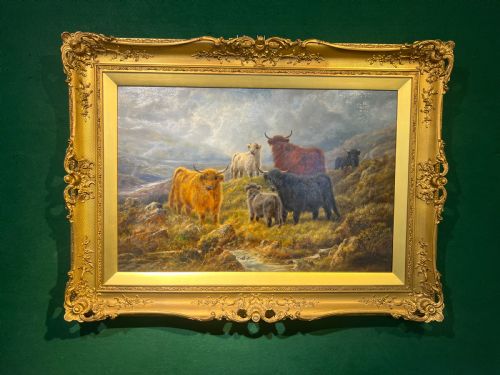
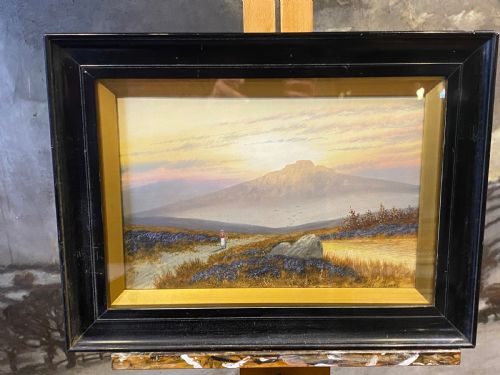
A scottish moorland painting depicts remote upland terrain, frequently populated by sheep, sporting dogs, or figures traversing the rugged heather. These works emerge primarily from the Victorian era and the early twentieth century, spanning the nineteenth century up to nineteen thirty.
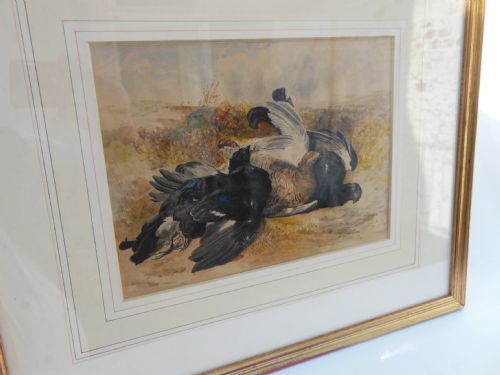
You will encounter various formats on this page, ranging from oils on canvas and wood panel to delicate watercolours on paper. The Scottish School and Highland Sporting Art traditions dominate the selection, capturing both expansive scenery and intimate wildlife studies.
The subjects range from quiet shepherds with flocks to sporting scenes featuring game dogs and hunters. These pieces reflect a sustained nineteenth and twentieth century artistic fascination with the remote wilderness of the north.
Materials and Methods
Artists painted these scenes primarily using oil on canvas, wood panel, or board, building up rich textures to describe heather, rock, and sky. Watercolours on paper also appear, offering a lighter touch for detailed depictions of wildlife and rural figures.
Many of these works retain their period gilt wood frames, which complement the traditional palettes employed by artists of the Scottish School. The combination of durable canvas or panel supports and quality oil pigments ensures these nineteenth and twentieth century works survive robustly.
Listings feature works spanning the nineteenth century through to nineteen thirty, utilising oil on canvas, wood panel, and watercolour on paper.
Distinctions in Quality
Quality rests upon the artist's ability to render atmospheric light and the distinct textures of upland vegetation rather than mere scale. Works by named painters with documented exhibition histories display superior handling of composition and naturalist detail.
The integration of human or animal figures within the wider landscape often separates standard topographical records from accomplished artistic expressions. Original period framing also contributes to the integrity of the piece.
Tom Campbell·Robert Watson·John A. Houston·Joseph Farquharson·John Charles Tunnard·Robert Cleminson·Alfred Graham·W Parks·W Hallam
The Scottish Moorland Painting Glossary
- Oil on Canvas
- Pigment mixed with drying oil applied to a stretched fabric support. This traditional medium allows for deep colour saturation and textured brushwork.
- Wood Panel
- A rigid wooden support used by painters instead of canvas. It provides a smooth, stable surface often favored for smaller cabinet works.
- Watercolour
- Pigments suspended in a water-based, translucent solution applied to paper. It creates luminous washes well suited to atmospheric weather effects.
- Gilt Wood
- Timber frames coated with a thin layer of gold leaf or metallic gilt. These ornate surrounds were designed to enhance the visual depth of Victorian paintings.
Scottish Moorland Painting: Frequently Asked Questions
How do I date a scottish moorland painting?
Dating relies heavily on recorded artist lifespans, costume details of any figures depicted, and stylistic markers of the Victorian period or early twentieth century. Canvas stamps, stretcher types, and framer labels on the reverse also provide reliable chronological clues.
Examining the physical materials, such as the weave of the canvas or the preparation of the wood panel, helps narrow down the decade of production. Comparative examples sold in archives further assist in establishing a secure timeframe.
What subjects appear in these paintings?
Common subjects include expansive heather-clad hillsides, grazing sheep, sporting dogs, and solitary figures walking through rural terrain. Game birds such as black grouse also feature prominently in works associated with Highland sporting art.
Artists frequently portrayed changing weather conditions, from misty morning light to stormy skies over remote terrain. These themes reflect a broader nineteenth century cultural appreciation for wild landscapes.
How should I care for an oil on wood panel?
Paintings on wood panels require stable indoor humidity and temperature to prevent the wood from warping or splitting over time. Avoid placing them near direct heat sources or in areas subject to rapid environmental fluctuations.
Dusting should be done gently with a soft, dry brush, avoiding any moisture or cleaning agents on the painted surface. Professional conservation should be sought if the paint layer shows signs of cracking.
What is Highland sporting art?
Highland sporting art is a genre focusing on field sports, game animals, and hunting dogs set against remote Scottish landscapes. It gained immense popularity during the Victorian era alongside the rise of rural tourism and country estates.
These works often combine precise animal anatomy with dramatic landscape backdrops. Artists working in this tradition frequently exhibited at major institutions of the period.