

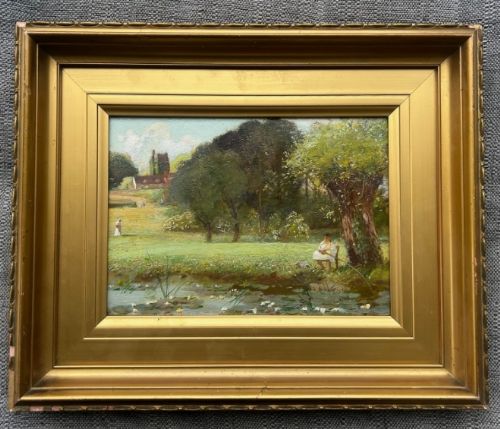


Scottish Impressionist Oil Painting
When you search for a scottish impressionist oil painting, you find works capturing light and weather across rural and coastal scenes.
Scottish Impressionist Oil Painting
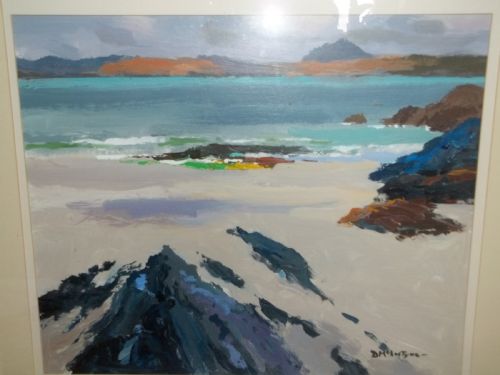
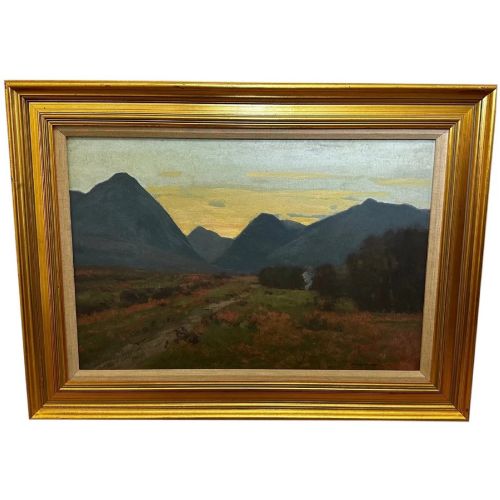
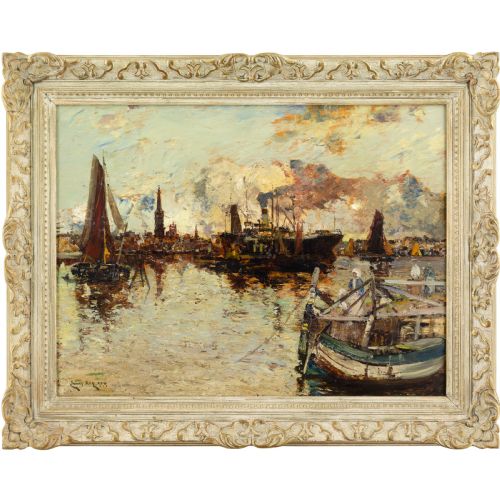
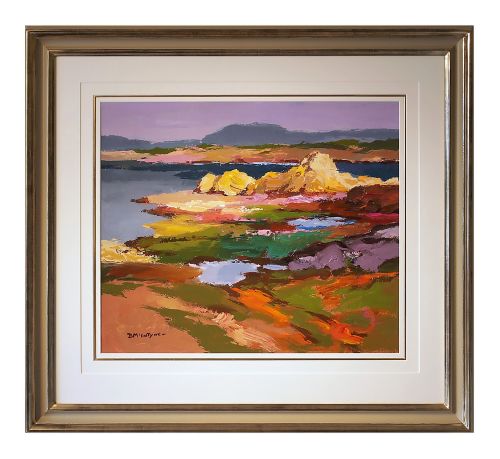
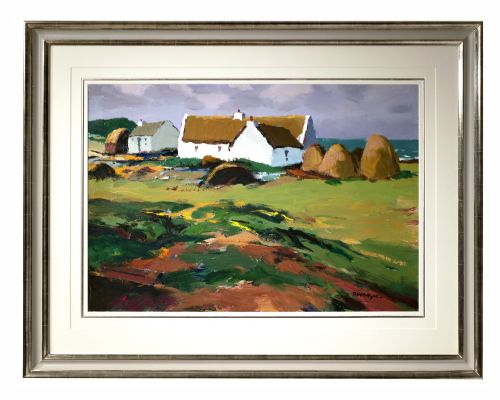
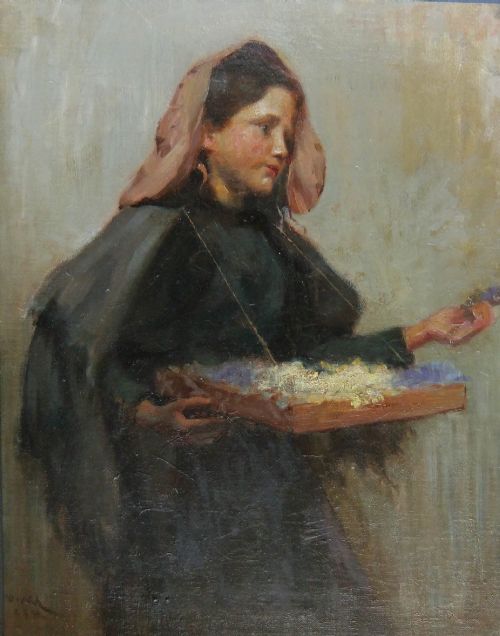
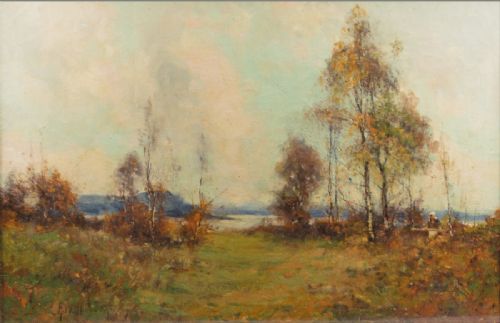
A scottish impressionist oil painting captures the distinct light, weather, and landscapes of Scotland and beyond through loose brushwork and vibrant pigments.
You will encounter works originating from the late nineteenth century through to the mid twentieth century, encompassing periods such as the Edwardian era and the nineteen fifties.
Subjects range widely from serene river fishing landscapes and pastoral farmyards to bustling marine harbours and quiet village streets.
Materials and Technique
Artists primarily applied oil paint onto traditional stretched canvas, wooden panels, or rigid boards, building texture with varied brushwork.
Many compositions utilise thick impasto techniques to give physical depth to water, foliage, and skies, often finished within period gilt wood frames.
A solitary Friesian cow stands placidly among the Scottish impressionist views, watching the landscape unfold.
Separating the Range
Quality rests upon the confidence of the brushwork, the subtlety of the colour palette, and how effectively the painter captures atmospheric light.
Works by established exhibitors and academicians demonstrate a surer handling of composition and tone compared to anonymous or lesser known studio pieces.
George Houston RSA RSW·James Kay RSW·Donald McIntyre·William Watt Milne·Alexander Jamieson·Alexander Wellwood Rattray·Archibald Kay RSA·Sir David Murray·Thomas Bromley Blacklock·William Grant Murray·Robert Russell MacNee·William Miller Frazer·James Torrington Bell·Owen Bowen·Robert Macaulay Stevenson·Robert McGregor·George Smith RSA·Josephine Haswell Miller·George Melvin Rennie·Alastair Flatterly·James G Faulds·Allan Douglass Mainds·George Neil·Helen Monro Turner
The Scottish Impressionist Oil Painting Glossary
- Impasto
- Paint applied thickly to a canvas or board, standing out in relief from the surface so that the marks of the brush or palette knife remain visible.
- Oil on Board
- A painting executed on a rigid wood or composition board rather than flexible woven fabric.
- RSA
- Royal Scottish Academy, an institution whose members frequently signed their canvases with these letters to denote academic recognition.
- RSW
- Royal Scottish Society of Painters in Watercolour, indicating an artist's affiliation with professional exhibiting bodies.
- Gilt Wood
- Timber framing coated with gold leaf or metallic paint, commonly found surrounding period oil paintings.
Scottish Impressionist Oil Painting: Frequently Asked Questions
What subjects appear in these paintings?
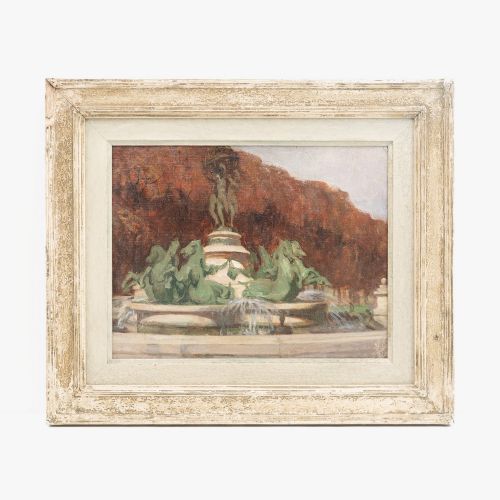
The compositions predominantly feature Scottish landscapes, coastal marine views, rural farmyards, and occasional foreign street scenes recorded during European travels.
Artists frequently documented the changing seasons, depicting snowy mountain passes, quiet river fishing spots, and peaceful harbour villages under shifting northern skies.
How do I date an antique oil painting?
Dating relies on a combination of artist biographical records, exhibition labels, stylistic markers, and the physical composition of the canvas or backing board.
Victorian and Edwardian works often feature specific framing styles and canvas stamps that help narrow down the decade of creation alongside the signature.
Are these works always framed?
Many pieces retain their original or period appropriate gilt wood frames, which complement the tonal qualities of the oil paint.
Some collectors prefer to keep the framing intact as historical evidence, while others source alternative period mouldings to suit their interior display.
What is impasto in oil painting?
Impasto refers to paint laid on an area of the surface in very thick layers, usually thick enough that the strokes of the brush or palette knife are plainly visible.
This technique adds tangible texture and depth to elements like foaming water, thick foliage, or heavy winter snow within the landscape.