
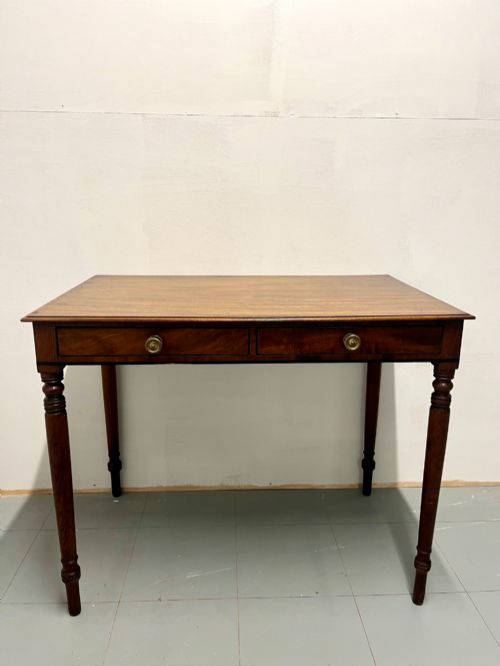


Scottish Georgian Table
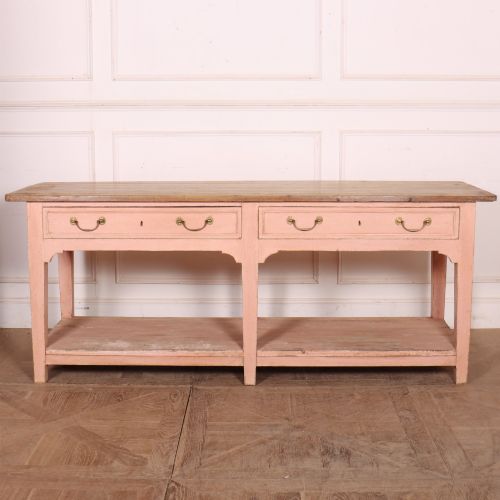
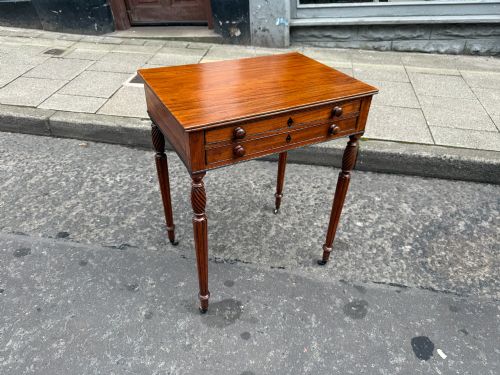
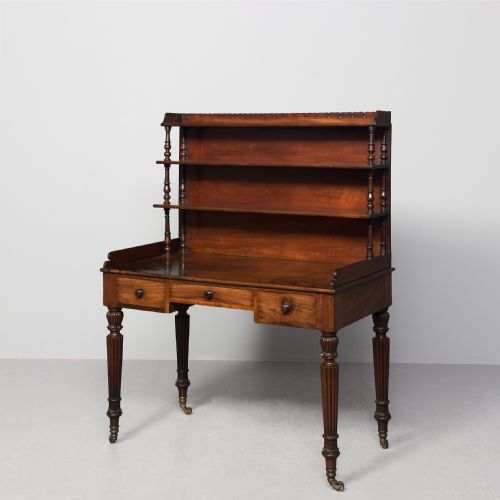
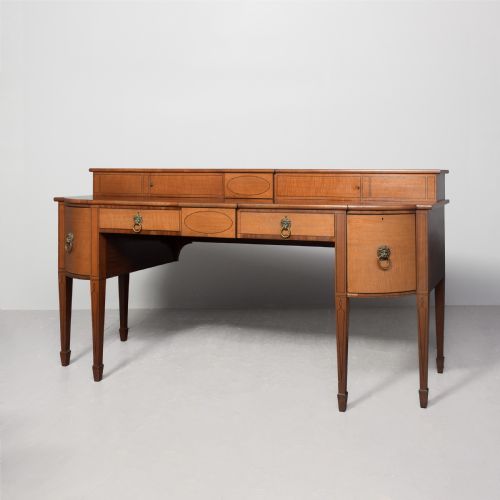
When you search for a scottish georgian table, you find timber furniture shaped by regional makers from mahogany and satinwood.
Scottish Georgian Table
A scottish georgian table covers domestic forms built across the eighteenth and early nineteenth centuries, including dining tables, card tables, occasional pieces, and serving surfaces. You meet them most often in mahogany and flame mahogany, frequently bearing the distinctive proportions favoured by northern makers.
The selection ranges from simple tripod stands and narrow hall tables to larger stage-back sideboards and complex pillar dining tables. Regional variations appear in timber selection and secondary woods like pine, marking them out from English equivalents.
How they were made
Joiners built these pieces using solid mahogany, satinwood, and oak, often applying veneers of flame mahogany or lacewood over sturdy pine carcases. Boxwood inlay and brass mounts provided structural accent and decorative contrast without obscuring the timber grain.
Cabinet makers utilised hand-cut dovetails for drawer construction and turned or reeded legs that reflected the reigning styles from George II through to the Regency period. Surface finishing relied on hand-applied polish that brought out the depth of the figured wood.
Some card tables hide small, secret compartments beneath their baize tops for stashing late-night gaming losses.
What varies in quality
The degree of fidelity in the timber selection defines the upper tier, where matched flame veneers wrap seamlessly around curves and corners. Lesser examples utilise plain secondary timbers with less attention paid to grain continuity across the top boards.
Refinement in carving and hardware marks the boundary between standard workshop production and master cabinet work. Sharp detail in edge moulding and original brass fittings elevate a piece above utilitarian output.
James Mein of Kelso·Bruce & Burns of Edinburgh·Morison of Ayr·William Trotter·Whytock & Reid of Edinburgh·Mitchell & Russell of Glasgow
The Scottish Georgian Table Glossary
- Stage-back sideboard
- A serving surface featuring a raised tiered back section used for displaying plate. It is a form frequently encountered in northern workshops.
- Card table
- A folding table designed for gaming, typically lined with baize and featuring a turn-over top supported on a swing leg.
- Flame mahogany
- Timber cut from the fork of the mahogany tree to produce a dramatic, flickering grain pattern. Cabinet makers reserved this veneer for primary focal surfaces.
- Teapoy
- A small box or chest mounted on a pillar and base, used originally for storing dry tea leaves. They often contain internal caddies.
- Tripod table
- A small occasional table supported by a central pillar above three splayed legs. This form allows for easy movement around a room.
Scottish Georgian Table: Frequently Asked Questions
How do I identify a Scottish table?
Look for specific timber choices, regional cabinet-making signatures, and secondary woods like pine. Northern workshops often employed distinct proportions and structural habits that separate their output from English counterparts.
Examine the construction of the drawers and the internal framing for clues. Maker attributions sometimes rest on distinctive handle types or documented regional design books.
Were these tables used for dining?
Many examples served specific domestic functions such as card playing, tea service, or bedside holding. Larger pillar and dining tables accommodated meals, while occasional and lamp tables sat beside seating.
Card tables and tea tables remained folded against walls until needed for evening entertainment. Their dual-purpose nature made them central to Georgian room layouts.
What is flame mahogany?
Flame mahogany is a decorative veneer sliced from where branches branch out from the main trunk. This cutting angle produces a distinct, fiery pattern prized by cabinet makers.
Craftsmen reserved this figured timber for the most visible surfaces of fine tables and sideboards. It creates a rich visual depth under traditional polish.
Can I date a table by its legs?
Leg styles shifted from cabriole forms in the early eighteenth century to straight tapered legs and reeded Regency pillars later on. These changes reflect broader stylistic movements across the Georgian era.
Matching the leg style with the overall carcase construction helps narrow down the period of manufacture. However, provincial makers sometimes lagged behind metropolitan fashion trends.