





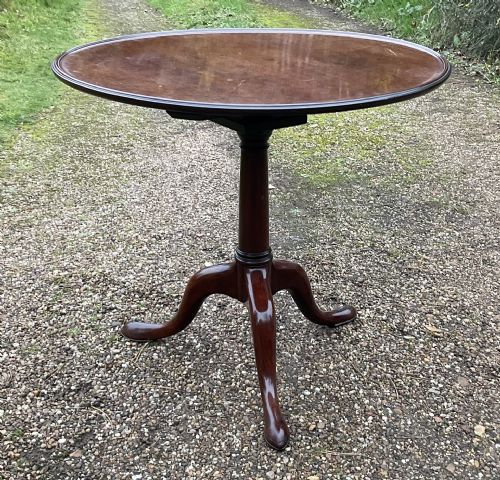
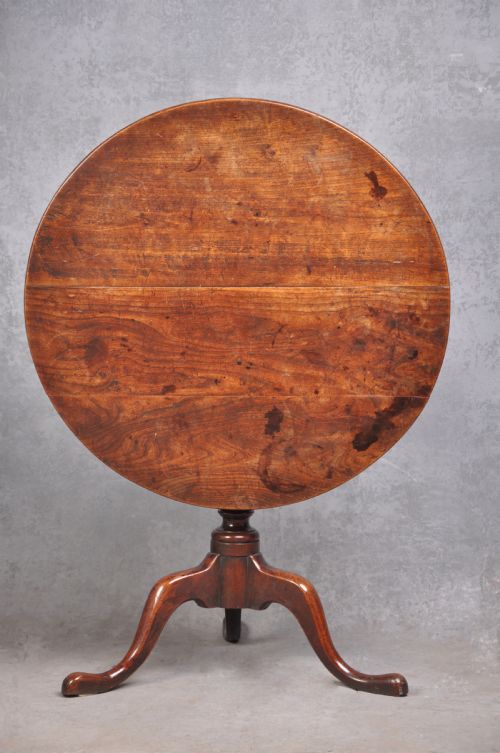

Pad Foot Wine Table
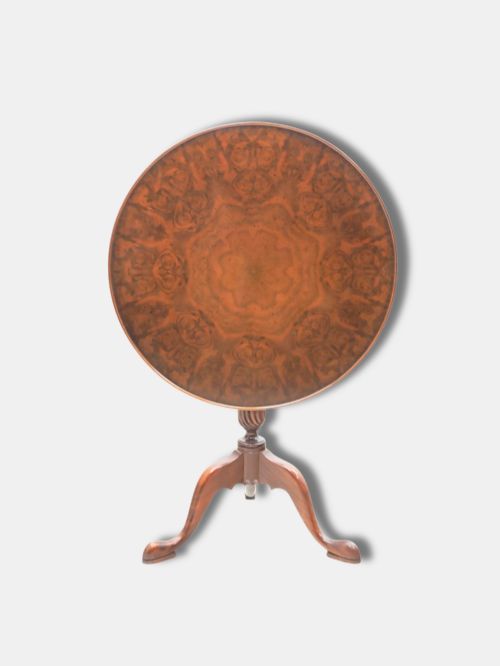
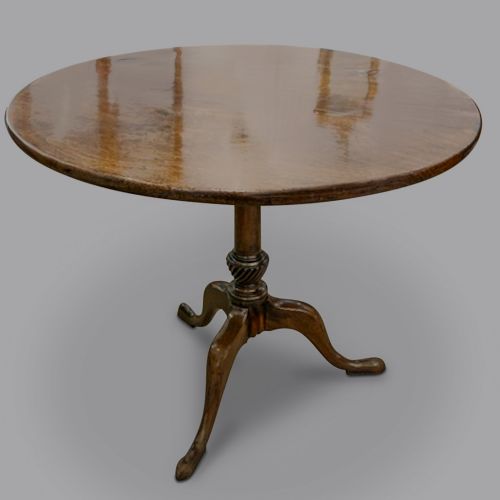
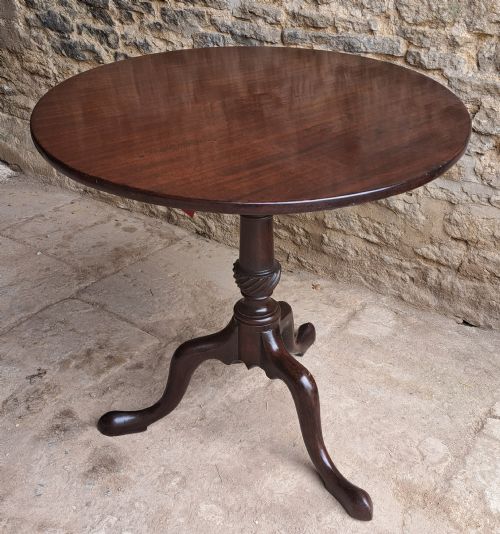
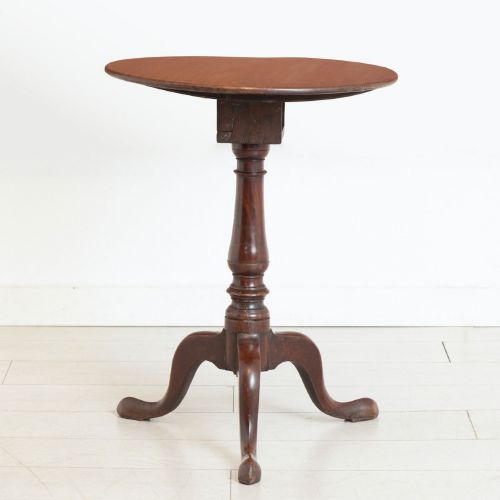
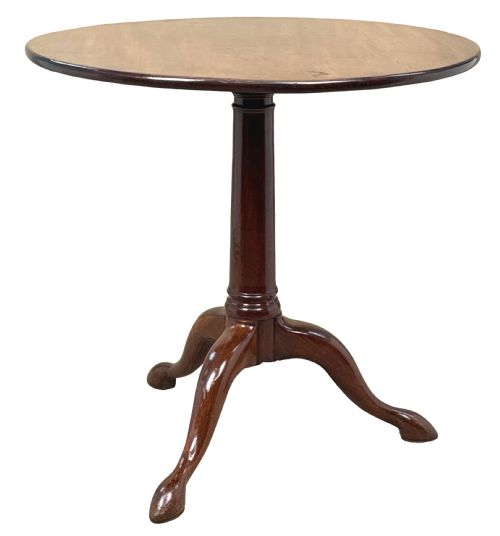
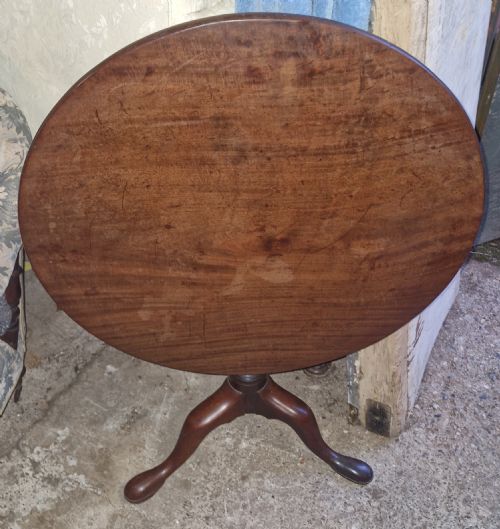
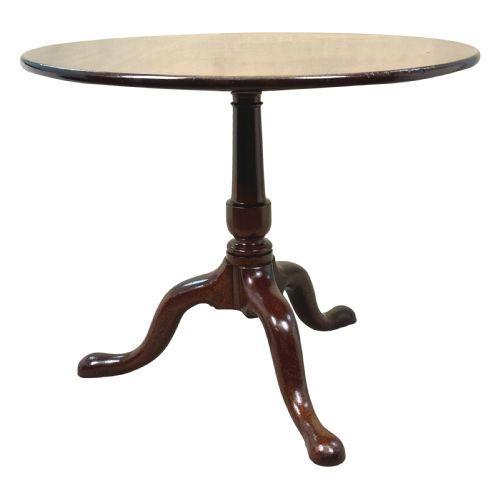
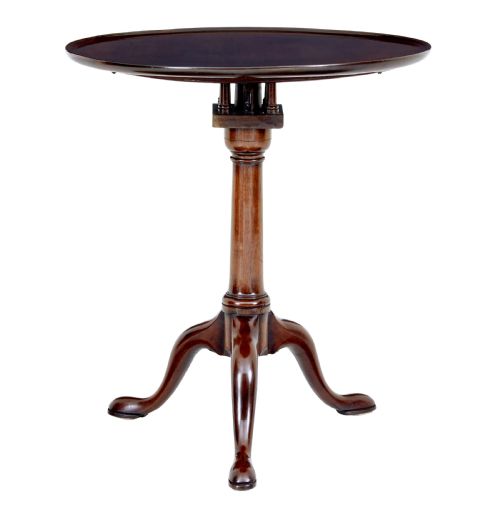
These pad foot wine table examples offer compact circular surfaces raised on tripod legs, prized for small spaces and traditional room schemes.
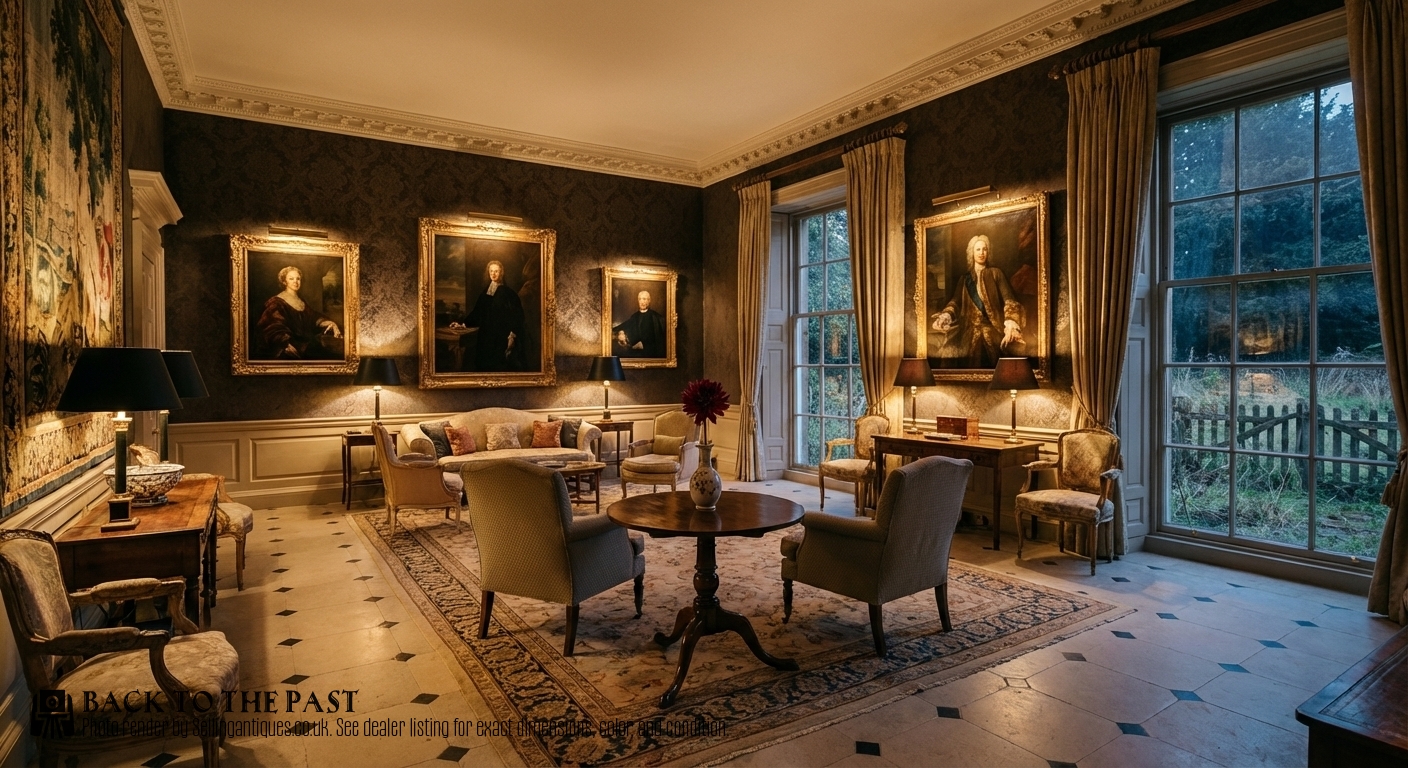
Pad Foot Wine Table
A pad foot wine table is a small occasional or side table featuring a circular top supported by a central pillar and three legs. You will most frequently encounter Georgian pieces alongside Georgian Revival reproductions, spanning the eighteenth century through to nineteen twenty.
The primary forms include simple fixed tops, tilting tops, and clever birdcage mechanisms that allow the surface to rotate and fold flat. These occasional tables serve neatly beside a chair or in the corner of a room, exactly as they did centuries ago.
How they were made
Cabinet makers constructed these tables predominantly using solid mahogany, walnut, fruitwood, and oak, occasionally applying burr walnut veneer to the top surface. Selected timbers were turned on a lathe for the central pillar and shaped by hand for the tripod legs.
Joinery techniques include pegged joints, dovetailing, and the sophisticated birdcage mechanism which utilises small wooden blocks and a turning pivot. Brass catches and iron fixings occasionally appear in the mechanisms and support brackets.
Some eighteenth-century walnut tables spent centuries holding tankards of ale before retiring to quiet corners as respectable lamp stands.
What varies in quality
The distinction between ordinary and exceptional pieces lies in the choice of timber and the crispness of the hand-carved details. Richness of grain figure, particularly on burr walnut or figured mahogany tops, elevates the visual weight of a small table.
Proportion and stability dictate the integrity of the design, with superior examples showing harmonious balance between the top diameter and the spread of the tripod base. The subtlety of the pad feet and the smooth action of the tilt or birdcage mechanism reveal the maker's hand.
The Pad Foot Wine Table Glossary
- Pad foot
- A simple rounded foot shape found at the base of cabriole or tripod legs. It sits flat on the floor without boots or castors.
- Tilt top
- A tabletop mounted on a catch that pivots vertically to save space when not in use. This clever design allows the table to stand flat against a wall.
- Birdcage
- A wooden framework beneath the tabletop that permits the surface to both rotate and tilt. It uses a small box construction with parallel rails.
- Tripod base
- A support structure comprising three spreading legs radiating from a central column. This arrangement provides steady footing on uneven historic floors.
Pad Foot Wine Table: Frequently Asked Questions
What is a pad foot wine table used for?
These small tables were originally designed for holding drinks, candles, or supper items beside a chair during the evening.
Today, they function as versatile lamp tables, plant stands, or occasional surfaces in tight corners where larger furniture will not fit.
How do I tell an 18th-century table from a later copy?
Eighteenth-century examples show hand-tool marks, natural timber shrinkage, and traditional joinery methods appropriate to the Georgian period. Later Georgian Revival pieces from nineteen twenty generally display more uniform machine sawing and cleaner, standardised interior fittings.
Examining the underside of the top and the wear patterns around the feet reveals the true age and history of handling.
Why do some tops tilt and others stay fixed?
Tilting tops and birdcage mechanisms were practical inventions that let servants clear the floor space quickly after a meal or gathering.
Fixed top versions offer greater rigidity and a smoother surface line, making them preferable if the table stays permanently in position.
How do I care for a mahogany or walnut top?
Keep historic timber surfaces away from direct sunlight and heat sources to prevent the wood or veneer from drying out and splitting.
Apply traditional beeswax occasionally and buff gently with a soft cloth to maintain the natural sheen without building up synthetic residues.