

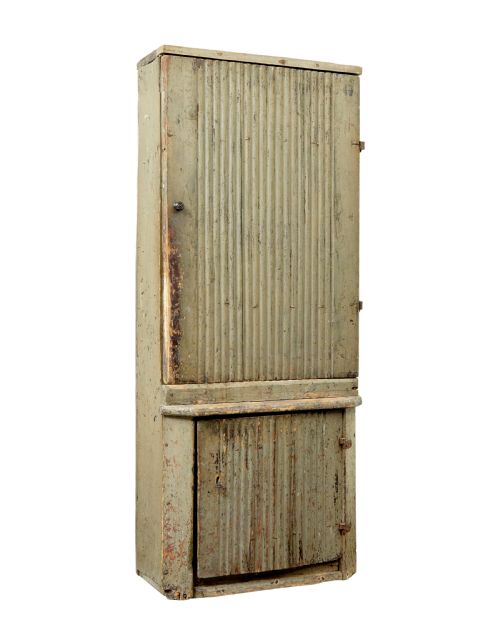

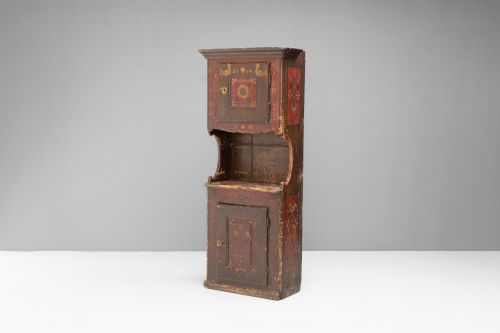


Scandinavian Rustic Wooden Cabinet
These pieces of scandinavian rustic wooden cabinet bring forth enduring storage forms built from pine and finished with traditional paint.
Scandinavian Rustic Wooden Cabinet
A scandinavian rustic wooden cabinet encompasses upright storage forms spanning the eighteenth and nineteenth centuries, including cupboards, dressers, linen cupboards, armoires, sideboards, and wall cabinets. You encounter painted softwood bodies shaped by regional makers working within Scandinavian country and folk art traditions.
The selection centres heavily on pine construction finished with historic paint layers, ranging from simple monochrome surfaces to ragwork decoration and carved detailing. Forms vary from single door wall cabinets and corner cupboards to substantial two door linen cupboards and kitchen pieces originating from Sweden, Denmark, and the wider Baltic region.
How they were made
Makers utilised native pine and softwood timber, constructing carcases with pegged joinery and panelled doors designed to withstand seasonal temperature shifts. Surfaces were routinely coated in lead or milk based paints, sometimes applying decorative ragwork techniques to imitate richer materials or add visual texture.
Iron and brass hardware such as hinges, latches, and key escutcheons were hand forged or cast locally, securing doors and drawers while adding functional contrast to the painted wood bodies.
Scandinavian Rustic Wooden Cabinet Retail Price Guide 2026
Typical asking prices for scandinavian rustic wooden cabinet among the pieces listed under this phrase on Sellingantiques today, from the lower quarter to the upper quarter. They describe what is for sale here now, not the wider market.
Listings span the eighteenth and nineteenth centuries, featuring pine and painted softwood structures executed in Scandinavian country and folk art styles.
What varies in quality
The distinction lies in the survival of original paint surfaces and the complexity of regional folk art decoration, where untouched patination holds far greater integrity than stripped or later repainted timber. Structural articulation such as carved mouldings, panel proportions, and the integration of original ironwork further separate standard utilitarian storage from pieces executed with higher artistic ambition.
Proportion and scale dictate the visual weight of each piece, ranging from diminutive wall mounted cabinets to commanding architectural linen cupboards with deep cornices and robust base plinths.
The Scandinavian Rustic Wooden Cabinet Glossary
- Pine
- A soft timber extensively utilised across Scandinavian cabinet making for its accessibility and workability. It forms the structural core of nearly all pieces in this category.
- Ragwork painted
- A decorative surface technique where rags or cloths are manipulated across wet paint to create mottled or textured patterns. This finish appears on specific regional kitchen cupboards.
- Linen cupboard
- A tall storage form designed primarily for textiles and bedding, usually featuring double doors opening to interior shelving. These large pieces represent substantial domestic furniture from eighteenth and nineteenth century Sweden.
- Folk art
- Traditional decorative styles rooted in regional culture and vernacular practices rather than formal academic design. It manifests here through hand applied paints and local carving motifs.
- Wall cabinet
- A smaller hanging storage unit fitted with doors, designed to be secured directly to a wall rather than resting on the floor. These pieces save floor space in domestic interiors.
Scandinavian Rustic Wooden Cabinet: Frequently Asked Questions
What rooms suit a scandinavian rustic wooden cabinet?
These storage pieces integrate naturally into kitchens, dining rooms, and hallways where practical volume is required. Their painted wooden surfaces bring warmth and historic character to neutral contemporary spaces.
Larger linen cupboards and dressers function well as primary storage for tableware or linens, whilst wall cabinets provide compact utility in tighter circulation areas.
How do I care for historic painted pine?
Maintain stable indoor humidity and temperature levels to prevent the softwood carcase from shifting or cracking over time. Dust gently with a dry cloth and avoid harsh chemical cleaners that might compromise fragile historic paint layers.
Keep pieces out of direct sunlight to protect pigmented surfaces from fading and to preserve the original patination developed across centuries.
How are eighteenth century pieces told from nineteenth century ones?
Eighteenth century examples, such as early Swedish linen cupboards, often display distinct joinery methods, deeper patination, and simpler architectural proportions rooted in earlier vernacular traditions. Nineteenth century pieces frequently incorporate more varied surface treatments like ragwork paint alongside revival decorative motifs.
Examining the backboards, interior shelving, and construction pegs helps reveal the manufacturing period alongside stylistic clues within the painted finish.
Were these cabinets built for kitchens or living areas?
Makers constructed these cupboards for various domestic zones, ranging from dedicated kitchen storage to general domestic utility spaces and bedrooms. Pieces designated as kitchen cupboards or dressers often feature open shelving or lower drawers tailored for culinary provisions.
Linen cupboards served private sleeping quarters or specialised storage rooms to protect textiles from dust and dampness.