


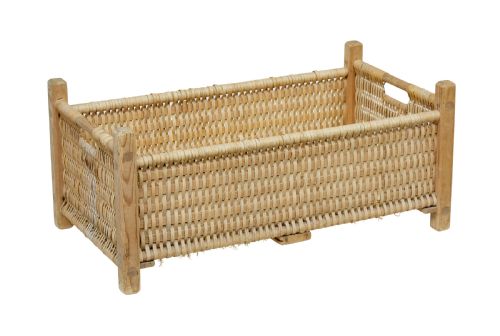


Scandinavian Rustic Basket
A scandinavian rustic basket brings tactile warmth and enduring utility to any room, crafted from honest natural materials.
Scandinavian Rustic Basket
A scandinavian rustic basket represents the practical domestic artistry of northern Europe, spanning storage vessels, log baskets, and linen baskets. These pieces reflect the functional needs of 19th-century and early 20th-century households where everyday objects required both durability and straightforward beauty.
The version most commonly met on this page is the hand-woven pine basket, often originating from Sweden. Such pieces display the robust construction typical of Scandinavian country and rustic farmhouse traditions.
Forms range from traditional woven baskets and storage barrels to more unusual tiered stands. Each item serves a clear purpose, whether holding firewood beside a hearth or storing textiles.
How they were made
Makers utilised locally available resources, relying heavily on pine, wood splint, and willow. These materials were shaped through traditional hand-weaving techniques that produced sturdy walls capable of handling heavy daily loads.
Structural reinforcement often involved iron and metal components, particularly on larger storage barrels and log baskets. This combination of flexible wood and rigid metal ensured the vessels maintained their form over decades of service.
Scandinavian Rustic Basket Retail Price Guide 2026
Typical asking prices for scandinavian rustic basket among the pieces listed under this phrase on Sellingantiques today, from the lower quarter to the upper quarter. They describe what is for sale here now, not the wider market.
The listings here draw entirely from the 19th century and the early 20th century, specifically featuring pine, willow, and iron.
What varies in quality
Quality in these pieces rests upon the tightness and regularity of the weave. Tightly packed splints and uniform tension across the body indicate a high level of maker skill.
The integrity of the structural frame also sets examples apart. Well-preserved binding and minimal degradation in the pine or willow separate fine surviving specimens from heavily worn utility items.
The Scandinavian Rustic Basket Glossary
- Pine
- A common softwood used extensively in Scandinavian furniture and basketry. It provides a light-toned, durable foundation for hand-woven items.
- Wood splint
- Thin strips of wood peeled or sliced from a log, utilised for basketry walls. This material offers both flexibility and structural strength.
- Log basket
- A heavy-duty vessel designed specifically for indoor firewood storage. These containers typically feature reinforced bases to withstand rough timber.
- Tiered stand
- A multi-level freestanding wooden structure intended for display or storage. Such pieces combine basketry techniques with framing joinery.
Scandinavian Rustic Basket: Frequently Asked Questions
What were these baskets used for?
These vessels served essential domestic roles in 19th-century homes, holding textiles, linens, and firewood by the hearth. Their robust construction handled heavy loads with ease.
Today, they adapt readily to modern interiors as practical storage solutions for blankets, toys, or magazines while retaining their historic character.
How do I date a pine basket?
Dating relies on observing construction methods, tool marks, and material wear visible across the piece. Nineteenth-century examples often display distinct hand-riven splints.
Comparing the form and regional style against documented pieces helps narrow down the decade of manufacture, particularly when dealing with items from the early 1900s.
Are these pieces suitable for daily use?
Most surviving examples remain remarkably sturdy due to the resilient nature of pine and willow. They function well for gentle, everyday storage tasks.
Placing them away from damp environments and extreme temperature fluctuations preserves the natural wood fibres for years to come.
Where did these baskets originate?
These items hail primarily from Sweden and wider Scandinavian regions. Local craftspeople built them to suit rural farmhouse and country interiors.
Regional preferences influenced whether a maker chose willow, cane, or pine splints for the weave.