


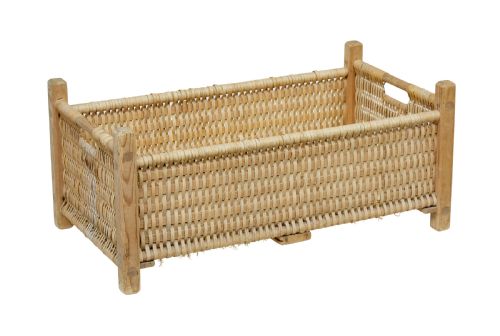


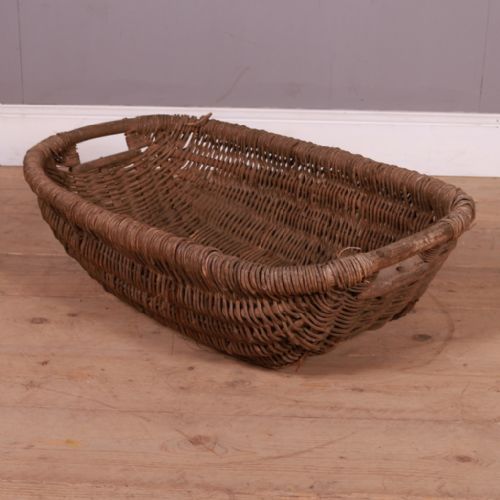

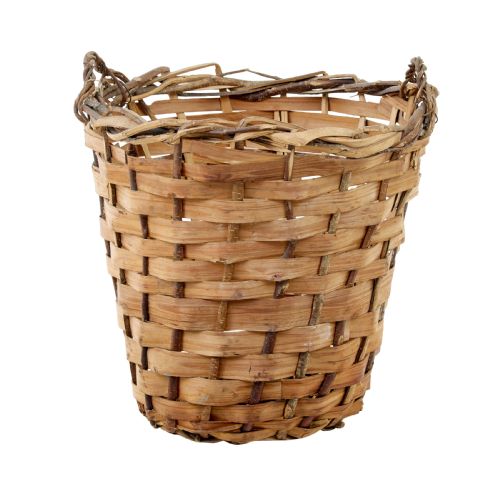
Natural Wood Basket
A natural wood basket brings honest utility and enduring warmth to a room, offering practical storage fashioned from simple timber.
Natural Wood Basket
When you search for a natural wood basket, you encounter sturdy vessels designed for daily graft and utility in domestic life. The selection here leans heavily towards Scandinavian country pieces alongside French examples, spanning the nineteenth century into the early twentieth century.
Most entries take the form of woven baskets, log baskets, and storage vessels, with occasional variations such as a two tier stand or a storage barrel. Pine, willow, hazel, and bentwood dominate the forms, reflecting rural traditions across Sweden and France.
You find vessels built to hold firewood, grapes, or general household stores, displaying straightforward construction intended for heavy work. The common thread is an unpretentious wooden or splint body shaped by hand to serve a distinct domestic purpose.
How they were made
Maker traditions rely on local timber such as pine, hazel, and willow, harvested and worked while pliable. Artisans split and weave the wood by hand to build resilient walls that could withstand heavy contents like logs or grapes.
Iron components occasionally reinforce the timber structures, adding strength to handles and rims where stress is greatest. Bentwood techniques allow solid sections of wood to curve organically without losing structural integrity.
Natural Wood Basket Retail Price Guide 2026
Typical asking prices for natural wood basket among the pieces listed under this phrase on Sellingantiques today, from the lower quarter to the upper quarter. They describe what is for sale here now, not the wider market.
Listings feature pieces spanning the 1890s through to the 1920s, constructed from pine, hazel, willow, and iron.
What varies in quality
The distinction between ordinary and exceptional pieces lies in the tightness of the weave and the balance of the proportions. A well-constructed basket displays uniform tension throughout the splints, ensuring the vessel maintains its shape under heavy loads.
Patina and surface wear tell the story of a piece's working life, where gentle softening of the pine or timber adds character. The handling of joints and the retention of original ironwork further separate standard utility items from finer examples of rural craftsmanship.
The Natural Wood Basket Glossary
- Bentwood
- Wood that has been heated and mechanically bent into curved shapes. This technique provides both strength and fluidity of form in storage vessels.
- Pine
- A soft timber widely used across Scandinavian country pieces for its accessibility and workable nature. It patinates deeply over decades of handling.
- Wood Splint
- Thin strips of timber peeled or split from a log for weaving baskets. The thickness of the splint determines the rigidity of the finished wall.
- Willow
- A flexible material traditionally employed in basketry for its ability to bend sharply without snapping. It forms tight, durable weaves suitable for carrying produce.
Natural Wood Basket: Frequently Asked Questions
How do I use a log basket?
A natural wood basket designed for logs sits beside a fireplace to hold firewood within easy reach of the hearth. The robust timber and woven structure handle the rough bark and heavy weight of logs without straining.
Over time, the wood absorbs the atmosphere of the room, developing a deeper tone from proximity to heat and daily use.
What periods do these baskets date from?
The pieces listed originate primarily from the nineteenth century, with some examples extending into the early twentieth century around 1910 and 1920. These dates reflect traditional rural crafting methods that persisted before industrial manufacturing took over.
Identifying the period relies on observing the tool marks left on the timber and the specific weaving styles characteristic of Scandinavian and French country workshops.
How do I clean a wooden basket?
Dust the woven surfaces gently with a dry cloth or a soft brush to remove loose dirt from the crevices of the weave. Avoid using water or chemical cleaners, which can strip the natural oils and dry out the old pine or willow.
Allow the piece to retain its natural character, as gentle dusting is all that is required to maintain the timber.
Where were these baskets made?
The geographical origins centre on rural regions of Scandinavia, including Sweden, alongside examples from France. Local craftsmen utilised the timber available in their immediate environment, such as pine and hazel, to build durable vessels for agricultural and domestic life.
These regional variations in material and weaving give each piece a distinct local identity tied to its country of origin.