



Scandinavian Pine Chest Drawers
A Scandinavian pine chest drawers brings northern utility and painted calm into a room, offering honest storage built from pale softwood.
Scandinavian Pine Chest Drawers
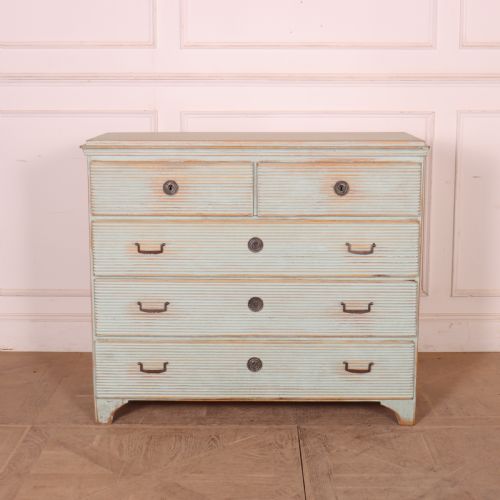
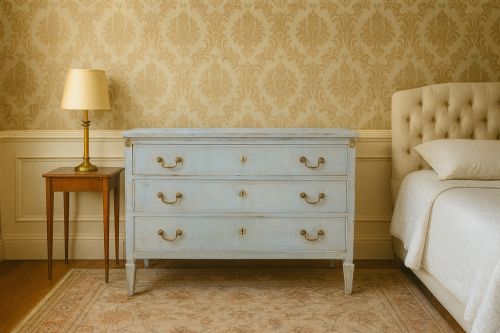
A Scandinavian pine chest drawers combines robust regional storage with the distinctive styles of Swedish country houses and neoclassical salons. Buyers seek these pieces for their generous proportions, soft painted finishes, and functional drawer arrangements that anchor a bedroom or living space.
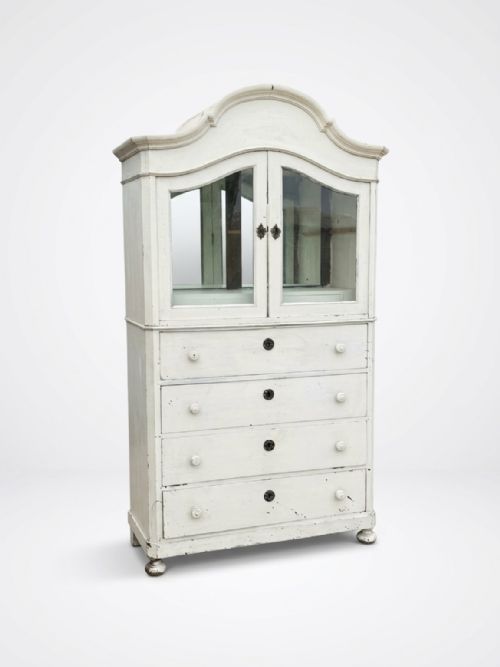
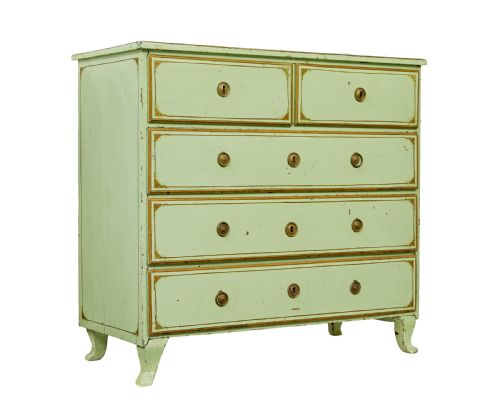
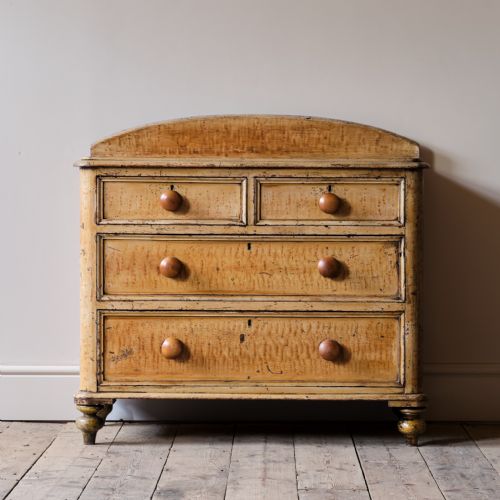
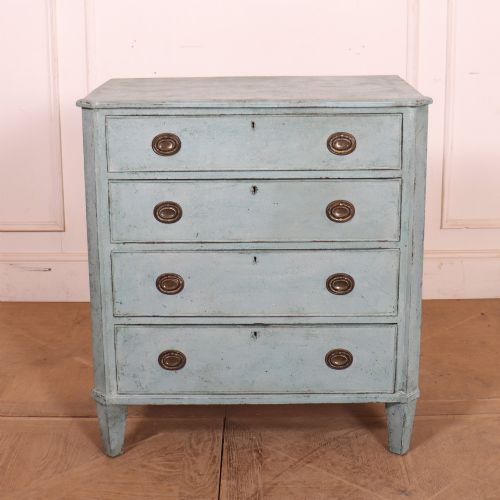
Nineteenth-century examples dominate the selection, often finished in original paint, simulated birch, or dark schemes alongside earlier eighteenth-century Gustavian and Danish iterations. These chests range from serpentine commodes with fluted drawer fronts to simpler rustic country forms.
Makers such as Gemla Fabrikers appear among twentieth-century works, demonstrating how traditional softwood furniture adapted through the decades. The primary object types remain chests of drawers and commodes, occasionally joined by related cabinets.
Assessing quality and character
Quality rests in the survival of original paint surfaces, where untouched hand-painted decoration commands greater interest than later overpainting. The sophistication of the form also separates standard regional pieces from high-style Gustavian commodes with carved fluted fronts and serpentine profiles.
Proportion and execution define the hierarchy of these chests, distinguishing between vernacular country workshop output and refined neoclassical commissions. The integration of period hardware and the crispness of surviving mouldings further set exceptional examples apart.
Some chests wear their black paint like an elegant winter coat, ready to absorb the northern light.
GEMLA FABRIKERS
The Scandinavian Pine Chest Drawers Glossary
- Gustavian
- The Swedish neoclassical style spanning the late eighteenth century, characterised by restrained classical detailing and lighter proportions. It draws inspiration from French Louis XVI design adapted to northern sensibilities.
- Commode
- A low chest of drawers or cabinet designed for domestic storage, often featuring decorative front profiles. In Scandinavian pieces, this term frequently describes sophisticated chests with serpentine or curved facades.
- Softwood
- Timber derived from conifers such as pine, utilised extensively in northern European furniture production for its workability and abundance. It forms the core material of the pieces found in this category.
- Serpentine
- A furniture front shape defined by a curving line that undulates outward in the centre and inward at the sides, or vice versa. This contour requires skilled carpentry and appears on finer commodes.
- Bonnet top
- A cabinet or chest superstructure featuring an arched or hooded upper cornice, reminiscent of a traditional bonnet. This architectural feature elevates the profile of tall storage pieces.
Scandinavian Pine Chest Drawers: Frequently Asked Questions
How do I date a painted pine chest?
Dating relies on stylistic markers such as Gustavian neoclassicism, structural construction methods, and the composition of the paint layers. Regional variations across nineteenth-century Sweden and Denmark also help narrow the period of origin.
Examining the type of timber preparation and the wear patterns on the softwood surfaces provides further clues to age. Original hand-painted finishes often exhibit craquelure and patina consistent with historical use.
Are these chests suitable for daily bedroom use?
These chests were originally built for practical domestic storage and remain robust enough for modern apparel and linen. The deep drawers accommodate contemporary clothing requirements while adding distinct character to a room.
Care should be taken to maintain stable humidity levels to protect historic pine and original painted surfaces from shrinking or cracking. Lining drawers with acid-free tissue helps preserve delicate interior timber.
What is the difference between a commode and a chest?
While both provide drawer storage, a commode generally refers to a more decorative, low-profile chest with stylistic flourishes like curved fronts. Standard chests often feature simpler rectilinear carcases suited to utility.
In Scandinavian furniture traditions, commodes frequently incorporate Gustavian or baroque revival elements that elevate their visual presence compared to rustic country pine chests.
How should I clean original painted pine?
Original painted surfaces require gentle maintenance using a dry or barely damp microfiber cloth to remove dust. Avoid harsh chemical cleaners or abrasive agents that might strip historic pigment.
Wax finishes on unpainted pine sections benefit from occasional application of traditional beeswax to nourish the softwood. Professional conservation is recommended if paint stabilization becomes necessary.