



Scandinavian Biedermeier Table
A scandinavian biedermeier table brings domestic warmth to a room through honeyed wood and clean architectural lines.
Scandinavian Biedermeier Table
A scandinavian biedermeier table encompasses a range of domestic furniture forms including occasional tables, centre pieces, and sofa tables originating primarily from Sweden during the nineteenth century. These pieces reflect a transition from grand courtly aesthetics towards comfortable, functional middle-class living.
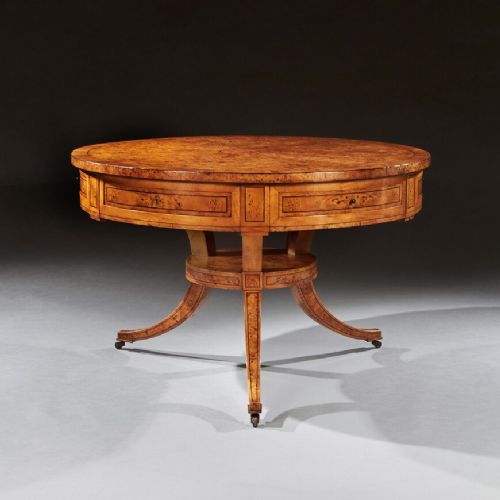
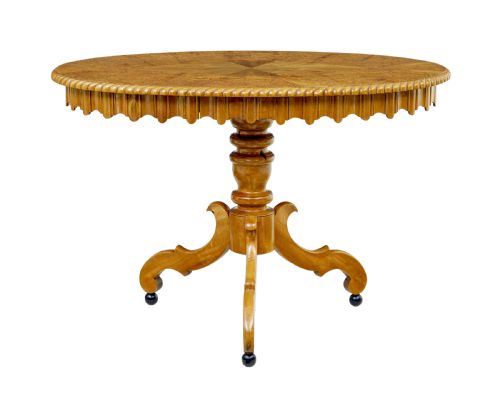
The version most commonly encountered on this page is the nineteenth century Swedish birch occasional table, often featuring figured burr veneers and warm golden tones. Alongside these, buyers find related forms such as Pembroke tea tables, pedestal desks, and games tables dating from the nineteenth century into the early twentieth century.
Makers working within the Scandinavian Biedermeier style also drew upon later design movements, resulting in occasional pieces showing Empire Revival, Karl Johan, and Art Deco influences. Structural formats range from simple tripod and tilt-top designs to substantial drum and centre tables supported by pillar pedestals.
Materials and Technique
Cabinet makers built the primary carcass structures using pine or solid birch before applying fine veneers to visible surfaces. Highly figured timbers such as burr birch, satin birch, alder root, and maple root provided striking grain patterns across table tops.
Surface decoration frequently incorporated contrasting ebonised wood details, ebony inlay, and cast brass mounts. Artisans utilised precise veneering techniques to create symmetrical patterns across oval, square, and round table tops.
Scandinavian Biedermeier Table Retail Price Guide 2026
Typical asking prices for scandinavian biedermeier table among the pieces listed under this phrase on Sellingantiques today, from the lower quarter to the upper quarter. They describe what is for sale here now, not the wider market.
Materials recorded across current inventory include solid birch, burr birch veneer, satin birch, alder root, pine, brass, and ebonised wood.
Assessing the Pieces
Quality in a scandinavian biedermeier table rests upon the selection and matching of the wood veneer. Superior examples display intensely figured burr birch or satin birch with balanced grain patterns that wrap harmoniously around the edges and aprons of the table top.
Construction methods and secondary woods also distinguish the craftsmanship of individual pieces. Well-executed tables demonstrate tight joinery in structural elements like pedestals and tripod legs, alongside refined inlay work and carefully integrated brass or ebonised accents.
The Scandinavian Biedermeier Table Glossary
- Burr birch
- A growth deformity in the birch tree that produces intricate, swirling grain patterns. Cabinet makers slice this timber into decorative veneers for table tops.
- Satin birch
- A light-coloured hardwood timber with a natural sheen resembling satin. It was widely utilised in nineteenth-century Scandinavian furniture.
- Ebonised wood
- Timber treated with a dark stain or chemical process to imitate ebony. It provides stark contrast against pale birch veneers.
- Drum table
- A circular table with a deep cabinet-like top resembling a drum. These typically stand on a central pillar pedestal.
- Tilt-top table
- A table featuring a mechanism that allows the top to pivot vertically. This design enabled easier storage against walls when not in use.
Scandinavian Biedermeier Table: Frequently Asked Questions
What is a scandinavian biedermeier table?
A scandinavian biedermeier table is a nineteenth-century domestic wooden table characterised by clean lines and pale decorative veneers. These pieces prioritise functional elegance over excessive ornamentation.
Most examples utilise native timbers like birch, often highlighted with burr grain patterns or ebonised inlay work. They appear in forms ranging from small bedside cabinets to large centre tables.
How do I identify a nineteenth-century piece?
Nineteenth-century pieces typically exhibit traditional construction methods using solid pine or birch beneath wood veneers. Look for hand-cut joinery and signs of age within the underside framing.
The use of specific decorative vocabularies such as Empire Revival or Karl Johan styling also points toward the nineteenth and early twentieth century periods.
Where should I place a centre table?
A centre table works best positioned in the middle of a room where its form can be appreciated from all angles. These pieces often feature finished grain patterns across the entire top surface.
Ensure there is adequate clearance around the table for movement and seating. They serve well as display surfaces for lamps or decorative objects.
How do I care for birch veneer?
Protect birch veneer surfaces by keeping them away from direct sunlight and excessive heat sources. Consistent environmental conditions prevent the wood from drying out or cracking.
Dust regularly with a soft, dry cloth and avoid harsh chemical polishes. Gentle cleaning preserves the natural warmth of the timber.