
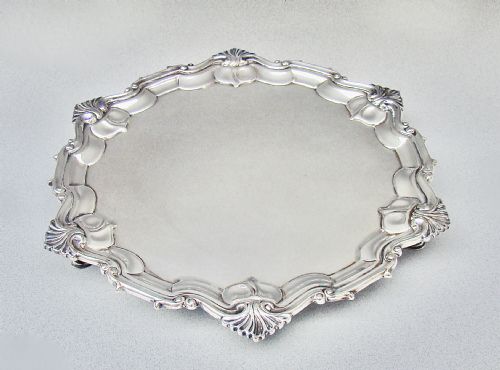


Scalloped Silver Salver
A scalloped silver salver is a footed serving tray with an ornate, curved rim that turns any afternoon tea into an occasion.
What They Are
When you search for a scalloped silver salver, you encounter footed serving trays designed to hold decanters, glasses, and tea services. These pieces range from Georgian and Art Deco eras to later twentieth-century interpretations.
The version you are most likely to meet on this page is a silver-plated round salver tray featuring an engraved surface and a raised detailed rim. This particular form balances ornamental elegance with everyday utility.
Originating as practical vessels for domestic service, these trays evolved into decorative centrepieces for the sideboard or table. Their distinctive edges give them a decorative presence that plain circular trays lack.
How They Were Made
Makers constructed these items using silver plate, applying a thin layer of silver over a base metal core to achieve a brilliant metallic sheen at a more accessible cost. This technique allowed workshops to produce substantial decorative items without the prohibitive weight and expense of solid precious metal.
The surface decoration relied on precise hand engraving, cutting intricate floral or geometric patterns into the metal plate. Raised rims often incorporated cast or stamped details, soldered carefully to the main body of the tray.
Many a Victorian butler polished these rims until his reflection stared back, no doubt checking his moustache before service.
What Varies in Quality
The distinction between standard production and superior work rests on the crispness of the engraving and the depth of the rim detail. Crisp, deep lines in the surface decoration and substantial weight indicate a higher standard of manufacture.
Simpler silver plate items show uniform plating thickness and secure joints where feet and rims meet the tray base. Finer examples maintain their silver layer evenly across the raised contours and engraved troughs without thinning at the highest points.
The Scalloped Silver Salver Glossary
- Salver
- A flat tray with feet, traditionally used for serving drinks or presenting letters. This form elevates the items placed upon it.
- Silver Plate
- A base metal coated with a thin layer of silver through electroplating or older fusion methods. It provides the visual appeal of solid silver.
- Engraved Surface
- A decorative pattern cut directly into the metal using sharp graving tools. This adds texture and visual complexity to the flat centre of the tray.
- Raised Detailed Rim
- An ornamental border rising above the flat plane of the tray, frequently featuring shaped edges or cast motifs. It frames the central design.
- Victorian
- A design period spanning the reign of Queen Victoria, characterised by eclectic revivals and ornate detailing. Pieces from this era often embrace heavy decoration.
Frequently Asked Questions
What is a scalloped silver salver used for?
These trays served primarily for carrying glasses, decanters, and tea sets during formal domestic gatherings.
Today, they function effectively as decorative centrepieces on sideboards or as polished surfaces for holding small daily items.
How do I clean my silver plated tray?
Use a dedicated silver polish and a soft cloth to remove tarnish gently without damaging the plated surface.
Avoid abrasive cleaners or harsh scrubbing pads that can wear away the thin layer of silver over the base metal.
How do I tell different periods apart?
Georgian pieces often display hand-wrought construction details and simpler, classic lines reflecting eighteenth-century tastes.
Art Deco and later twentieth-century items embrace geometric motifs or distinct manufacturing marks typical of modern industrial production.