

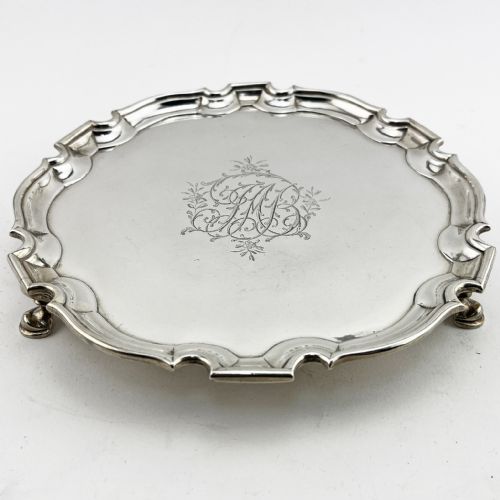


Footed Silver Salver
A footed silver salver brings substance to a table, offering a raised surface for serving or display that has anchored formal rooms for centuries.
Footed Silver Salver
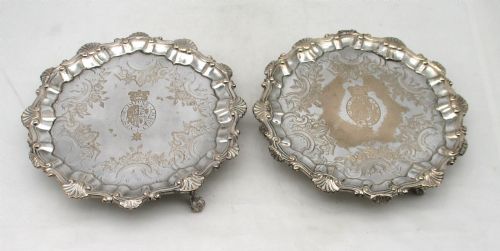
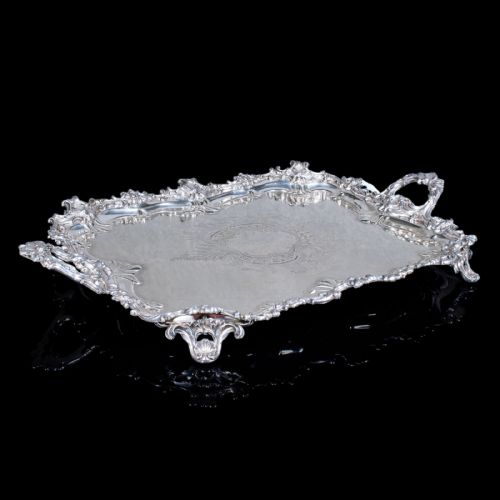
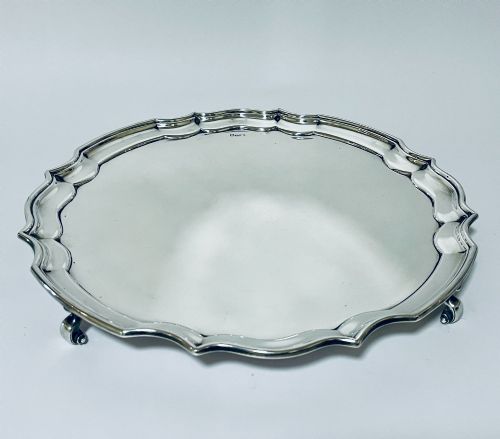
When you search for a footed silver salver, you look for a flat serving vessel elevated on small feet, encompassing everything from small card trays to large presentation platters. These pieces appear across the eighteenth and nineteenth centuries, carrying styles ranging from Georgian restraint to Rococo Revival ornamentation and Grand Regency flourishes.
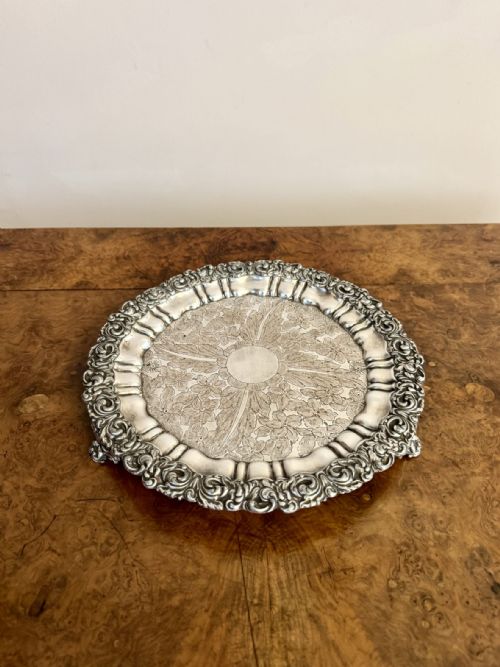
The versions you are most likely to meet on this page include round silver plated trays with engraved surfaces, sterling silver George III examples, and Victorian silver plated serving trays. Forms span simple round dishes with raised detailed rims, large oval platters, and smaller card trays resting on distinct feet.
Materials and construction
Makers shaped these vessels from solid sterling silver or utilised silver plating techniques, including Old Sheffield Plate and standard silver plate over copper, nickel silver, or EPNS bases. Plated items often reveal the underlying copper through wear, particularly along raised rims and detailed borders.
Silversmiths and manufacturers employed casting for feet and decorative borders, while hammering and rolling shaped the main body of the tray. Engraving frequently adorns the central surface, executed by hand with floral, geometric, or armorial motifs.
Object forms on this page range from small card trays and round serving salvers to large oval platters and gallery trays with detailed rims.
Assessing quality and craftsmanship
The distinction between standard output and superior work rests in the crispness of the chased or engraved surface detail and the structural integration of the feet. Weight relative to size signals a more substantial piece, whether in solid sterling or substantial Old Sheffield Plate.
Maker signatures and clear hallmarks elevate certain items, pointing to known workshops such as Paul Storr or John Harrison. The integrity of the plating layer and the balance of the piece upon its feet determine the enduring utility of each salver.
Robert Abercromby·William Garrard·Padley Parkin·John Harrison·Fenton Russel·Paul Storr·Philip Ashberry And Sons·Carrington And Co
The Footed Silver Salver Glossary
- Salver
- A flat tray, usually with feet, used for serving food or drink or for presenting cards.
- Old Sheffield Plate
- A material made by fusing a thin sheet of silver to a thicker copper base, characteristic of eighteenth and nineteenth-century manufacture.
- Paten
- A small plate or disk, often used in religious contexts but historically applied to small flat dishes on feet.
- EPNS
- Electroplated nickel silver, a common base metal combination introduced in the nineteenth century for silver plated wares.
- Gallery tray
- A tray featuring a pierced or solid upright gallery or rail around its perimeter rather than a simple raised rim.
Footed Silver Salver: Frequently Asked Questions
How were footed salvers used?
These vessels served drinks, carried calling cards, or presented food during formal afternoon tea and dinner service. Their raised feet kept hot dishes or damp items off fine table linens.
Over time, larger presentation trays also functioned as decorative centrepieces or commemorative gifts, often engraved with inscriptions or family crests.
How do I clean a silver plated salver?
Use a soft cloth and a gentle, non-abrasive silver polish formulated specifically for plated items. Avoid harsh scrubbing that can wear through thin silver layers down to the base metal.
Wash the tray in warm soapy water afterwards and dry it thoroughly with a lint-free cloth to prevent water spots and tarnish buildup.
Can I use an antique salver daily?
Solid sterling silver pieces handle regular use well, provided you wash them by hand and avoid abrasive scouring pads. Silver plated and Old Sheffield items require more care to preserve the thin metal coating.
Limit acidic foods like citrus or vinegar on plated surfaces, as prolonged contact can damage the finish over time.
How do I date a silver salver?
Hallmarks on sterling silver pieces provide exact assay office marks, date letters, and maker stamps that pinpoint the year of creation. Stylistic cues like Rococo Revival curves or Georgian borders help narrow down unmarked or plated items.
Construction methods, such as the fused copper layers in Old Sheffield Plate, also indicate specific production eras before electroplating became common.