


19th Century Silver Salver
A 19th century silver salver brings formal service and substantial weight to a table, offering both sterling silver and silver plated forms.
19th Century Silver Salver
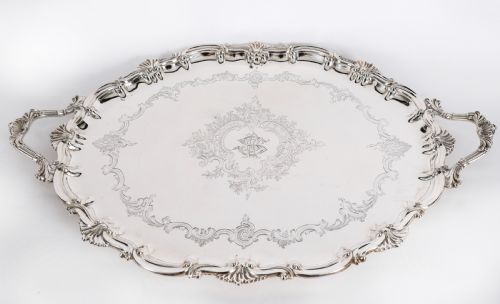
A 19th century silver salver is a serving tray designed for drinks and small items, taking forms from oval and round platters to engraved serving trays. You will frequently meet silver plated examples from the Victorian period alongside sterling silver pieces.
The objects span styles such as Victorian, William IV, Indian Colonial, and Grand Regency. Makers utilised these designs for formal dining and domestic service throughout the century.
How they were made
Silversmiths constructed pieces using sterling silver, copper, and base metal coated in silver plate. Old Sheffield plate methods and electroplating techniques created durable surfaces over copper bases.
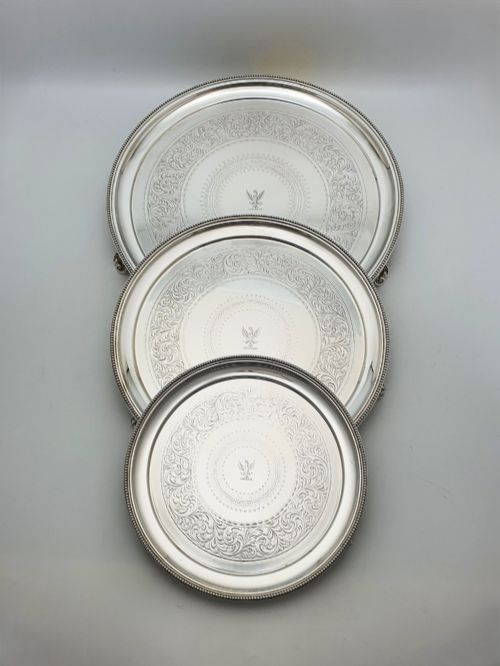
Craftsmen applied hand engraving and chased decoration to surfaces, often featuring grape motifs or geometric patterns. Makers integrated handles and raised rims onto oval and circular bodies.
What varies in quality
Quality rests in the thickness of the silver plate over the copper or base metal, and the depth of hand engraving on the tray surface. Substantial weight and crisp cast borders distinguish superior pieces from lighter utilitarian items.
The reputation of the maker, from prominent silversmiths to established firms, influences the standing of a salver. Integration of matched sets or specialised accessories adds distinction to the work.
Thomas Bradbury And Sons·Elkington·John Harrison·Peters Hamburg·Fenton Russel·Paul Storr·Barker Ellis·James Dixon·Maple And Co·Fenton Bros·Tiffany And Co
The 19th Century Silver Salver Glossary
- Silver Plate
- A layer of silver bonded or electroplated to a base metal such as copper. This method allowed makers to produce large serving trays at a lower cost than solid sterling silver.
- Sterling Silver
- An alloy containing a high proportion of pure silver mixed with other metals for durability. Pieces marked as sterling silver represent the highest standard of precious metal composition.
- Old Sheffield Plate
- An early method of fusing a sheet of silver to a copper ingot before rolling them together into sheets. This technique predates modern electroplating and produces a warm tone.
- Salver
- A flat tray traditionally used for presenting letters, glasses, or visiting cards. In nineteenth century usage, the term often overlaps with serving trays and platters.
- Chasing
- A metalworking technique where a craftsman pushes metal from the front using hammers and punches to create raised surface decoration. This method adds texture and ornamental detail to the rim or centre.
19th Century Silver Salver: Frequently Asked Questions
What is the difference between a salver and a tray?
Salvers generally refer to footed flat trays used for formal presentation, while trays encompass a broader range of serving vessels with or without feet.
Historical usage often blends the terms, though nineteenth century makers applied both labels to round and oval serving pieces.
How can I tell sterling silver from silver plate?
Sterling silver pieces bear hallmarks indicating purity, maker, and assay office, whereas silver plate reveals base metal or copper beneath worn areas.
Weight and magnetic properties also help distinguish solid precious metal from plated copper bases.
What periods do these pieces date from?
The selection spans the nineteenth century, encompassing Regency, William IV, and Victorian eras.
Dates range from the early eighteen hundreds through to the late Victorian decades around eighteen eighty.
Were these items used for dining?
Domestic households utilised these vessels for serving wine, tea, and food during formal gatherings.
Smaller examples served for presenting visiting cards, while monumental trays handled substantial service duties.