

Scalloped Mahogany Wine Table
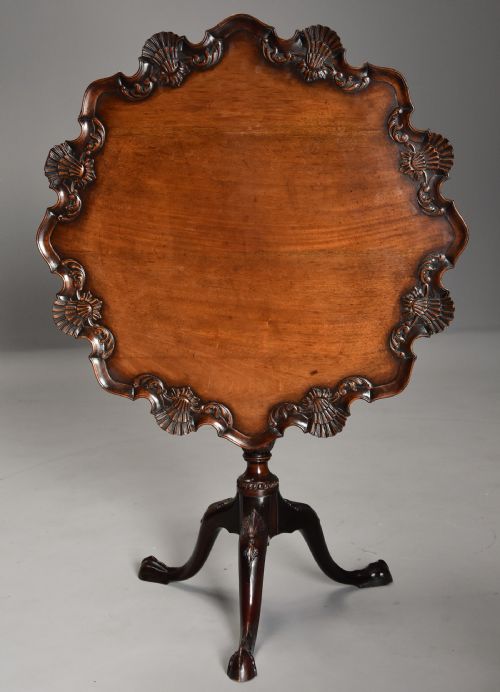
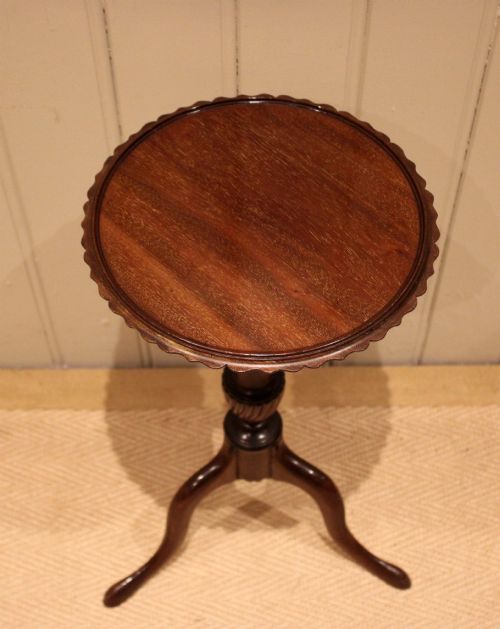
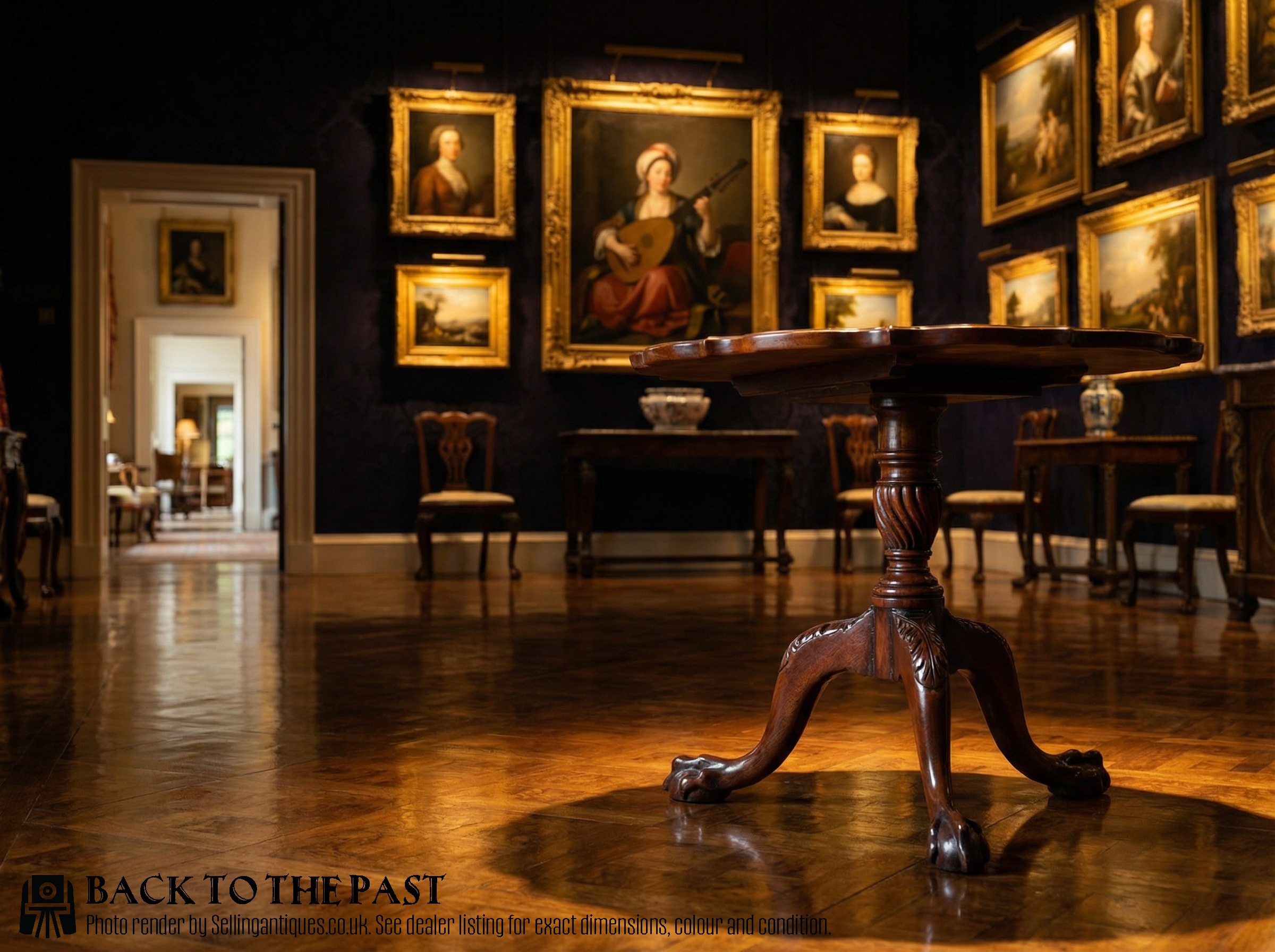
A scalloped mahogany wine table is a compact timber stand for drinks, most often found with a tilting top and tripod base.
Scalloped Mahogany Wine Table
When you search for a scalloped mahogany wine table, you find a range of small occasional tables designed to hold bottles, glasses or lamps beside a chair. The examples gathered here span from the eighteenth century through the Georgian and Victorian eras into the Edwardian period and the early twentieth century.
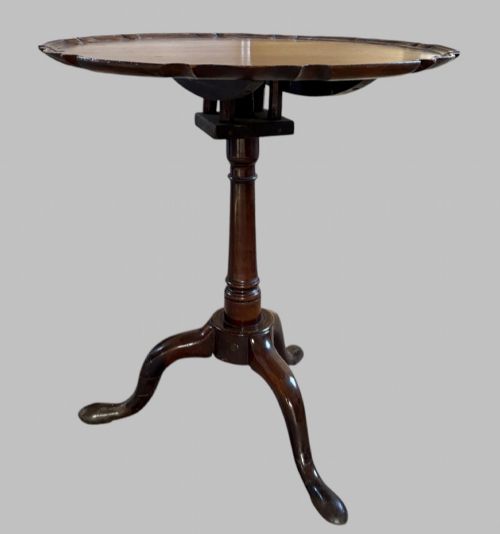
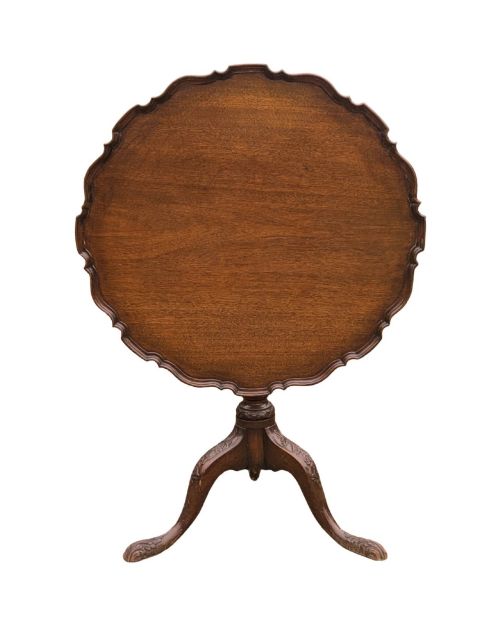
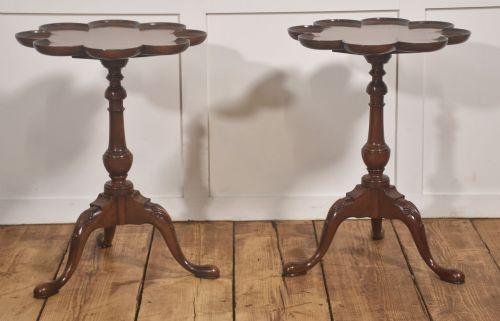
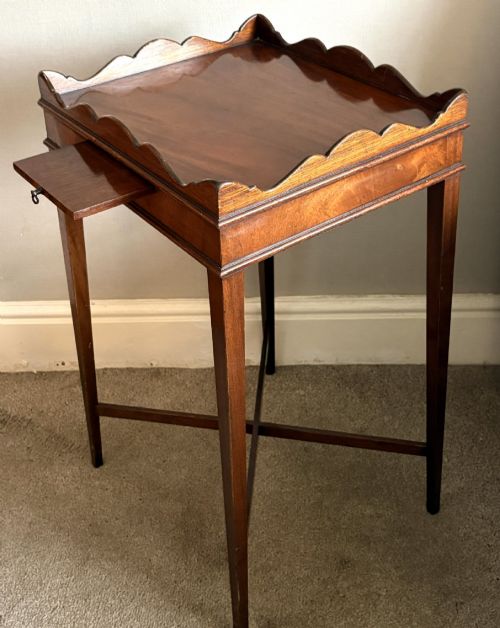
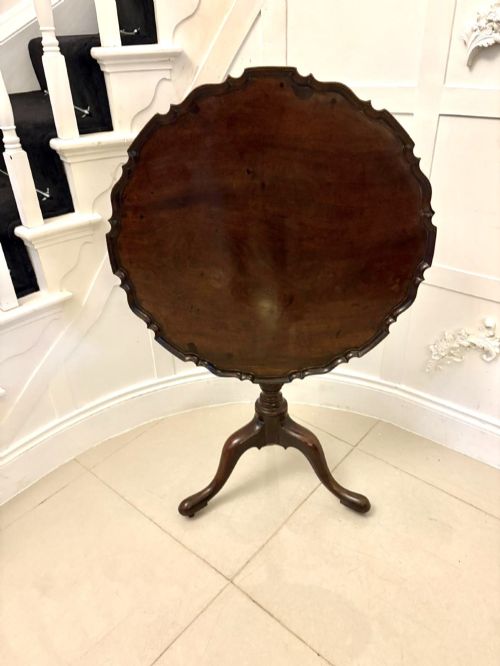
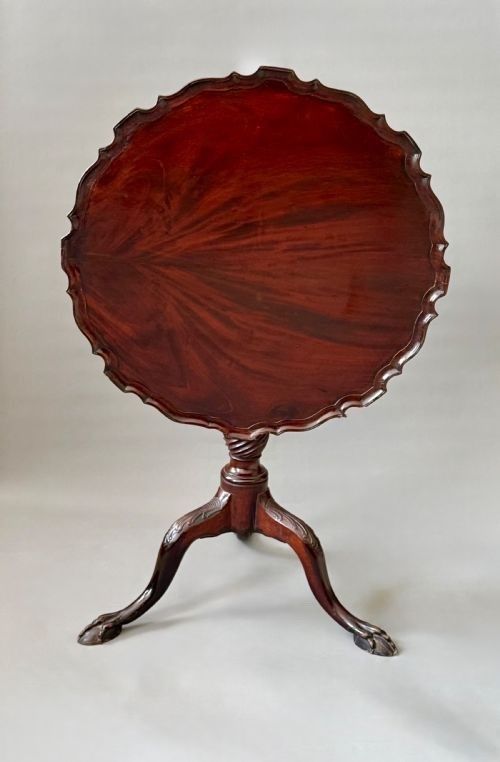
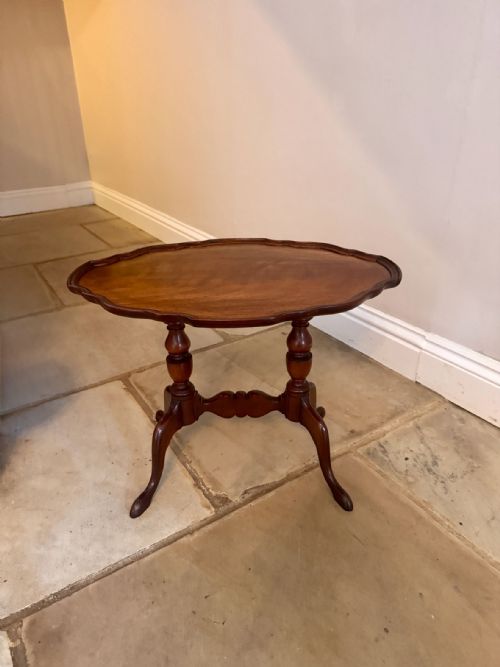
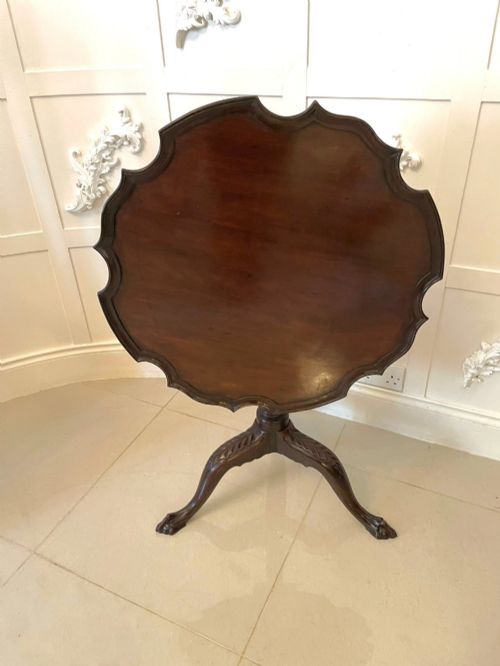
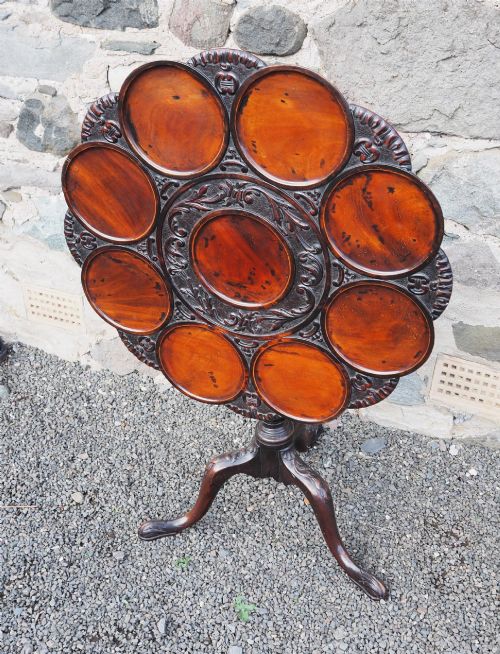
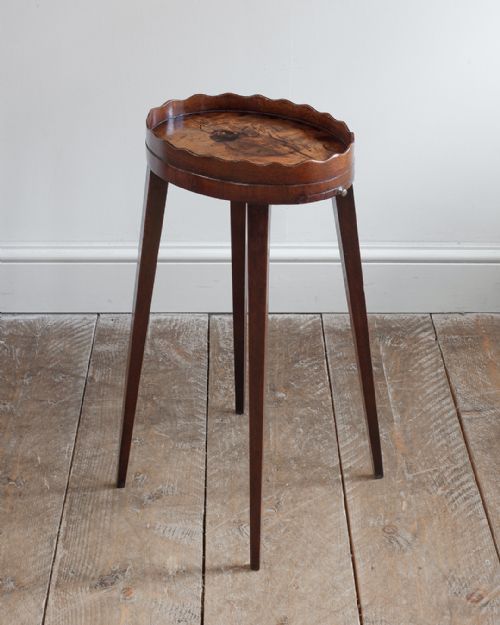
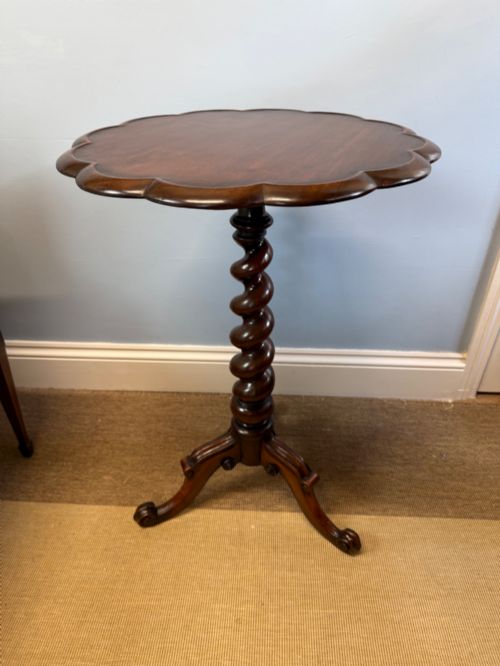
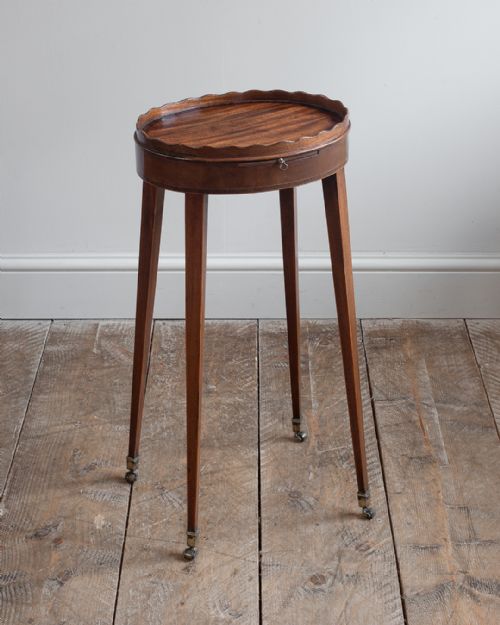
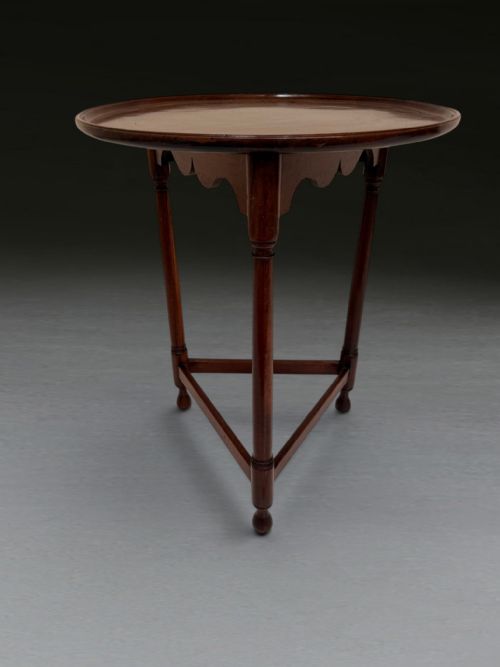
You will encounter various formats including tripod tables, tilt-top tables, urn stands, kettlestands and birdcage tables. The most frequent iteration is a circular or oval top featuring a raised, carved edge, supported on a central pillar with three legs.
Materials and construction methods
The primary timber used across these pieces is mahogany, frequently enriched with Cuban mahogany or flame mahogany veneer alongside supporting elements in oak or brass. Timber selection determined the weight and grain pattern of the top, which was often turned from a single solid board or built upon a sturdy hardwood core.
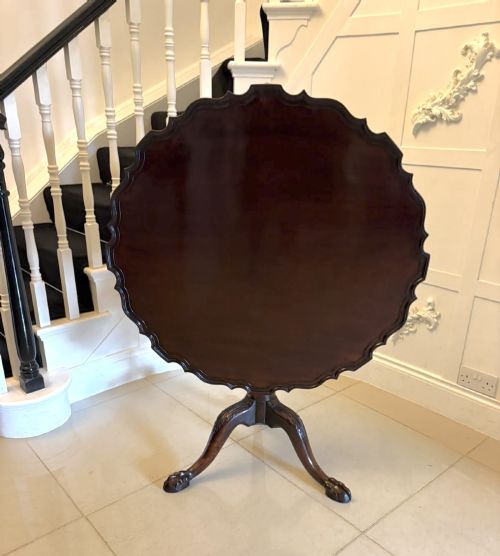
Many of the tops feature a tilting mechanism, allowing the surface to fold vertically when not in use, mounted onto a birdcage box or a turned pillar. The tripod base relies on finely shaped legs, sometimes carved in the Chippendale style with claw and ball feet or pad feet.
Scalloped Mahogany Wine Table Retail Price Guide 2026
Typical asking prices for scalloped mahogany wine table among the pieces listed under this phrase on Sellingantiques today, from the lower quarter to the upper quarter. They describe what is for sale here now, not the wider market.
Several tables retain clever birdcage mechanisms that let the top both tilt and spin, proving that eighteenth-century engineers loved a good fidget toy.
Distinctions in quality and execution
The division between standard workshop production and superior cabinet-making rests in the crispness of the carved edge and the selection of the timber. A well-executed scalloped border requires patient hand-shaping rather than mechanical routing, yielding clean contours that catch the light.
Proportion and stability define the better examples, where the spread of the tripod legs matches the diameter of the top to prevent tipping. The integration of the tilt mechanism and the turning of the central column also reveal the hand of a more skilled maker.
Shapland and Petter
The Scalloped Mahogany Wine Table Glossary
- Piecrust edge
- A raised, scalloped perimeter carved into the solid timber of a tabletop, mimicking pastry work. This decorative detail is typical of finer eighteenth-century and revival tripod tables.
- Tilt-top
- A hinged tabletop mechanism that pivots ninety degrees to stand flat against the central pillar. This allowed tables to be stored against walls when space was required.
- Tripod base
- A supporting structure consisting of three curved legs radiating from a central column. It provides a stable footing on uneven floors.
- Birdcage
- A timber framework beneath the tabletop that allows the surface both to rotate and to tilt. It is a hallmark of better-constructed occasional and wine tables.
- Cuban mahogany
- A dense, heavy variety of the timber prized for its rich colour and deep grain figures. It was frequently utilised in high-status furniture.
Scalloped Mahogany Wine Table: Frequently Asked Questions
What is a scalloped mahogany wine table used for?
These small stands were originally designed to hold wine glasses and bottles beside seating areas in reception rooms. Today they function equally well as lamp tables, plant stands or decorative accents in sitting rooms.
Because of their compact footprint and tipping tops, they suit smaller spaces where permanent furniture might crowd the room.
How do I identify a Georgian wine table?
Georgian examples, dating from the eighteenth century into the early nineteenth, typically exhibit hand-carved details such as piecrust edges and tripod legs terminating in pad or claw feet. The timber often shows a rich, deep patina acquired through centuries of polishing.
Later revival pieces from the Edwardian era or the nineteen-twenties often emulate these forms, but the construction details, timber density and tool marks help distinguish the older originals.
What does a tilt-top mechanism do?
The tilt-top allows the surface of the table to pivot from horizontal to vertical via a clever hinge arrangement beneath the top. This practical feature meant the table could be tucked away flat against a wall when the room was cleared for other activities.
In many pieces, this mechanism includes a catch or a birdcage block that also lets the top spin around its central axis.
How should I care for an antique mahogany table?
Keep mahogany furniture away from direct heat sources and strong sunlight to prevent the timber from drying out or the polish from fading. Regular dusting with a soft, dry cloth is usually sufficient for maintenance.
Occasional application of a suitable wax polish helps nourish the grain and preserve the finish without building up excessive residue.