
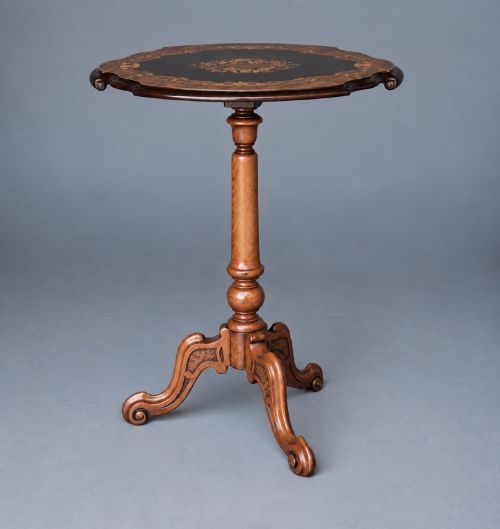
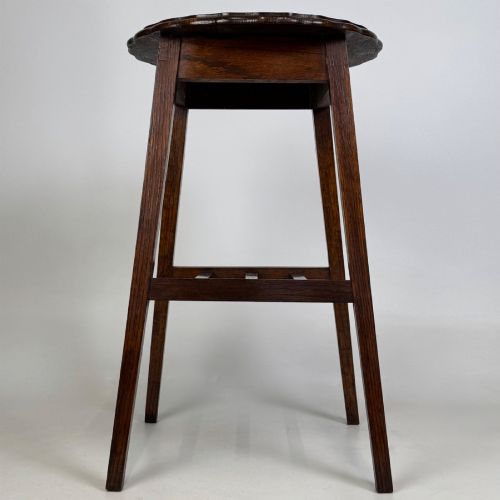
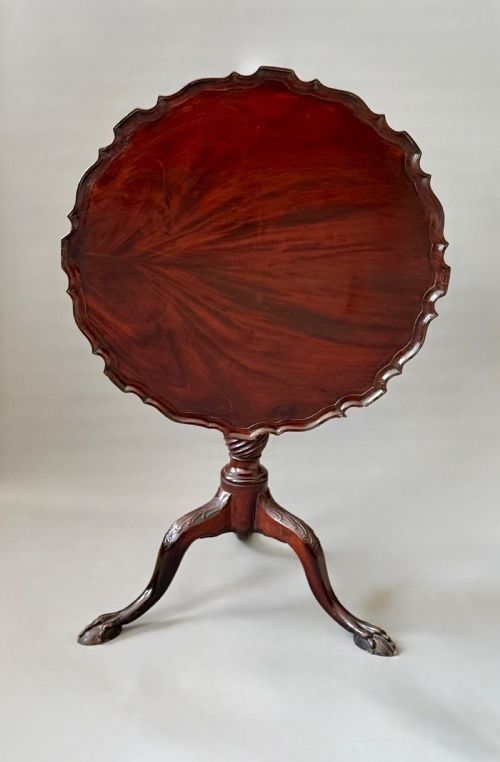
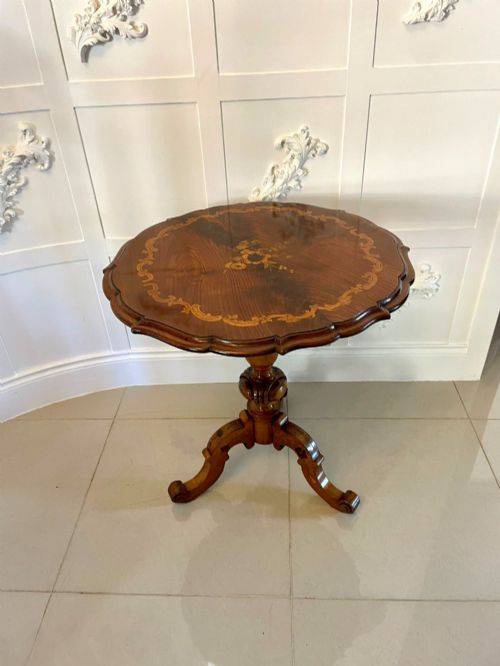
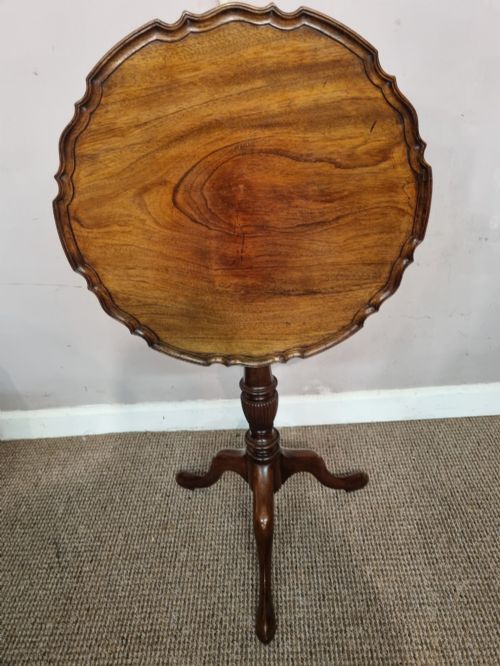
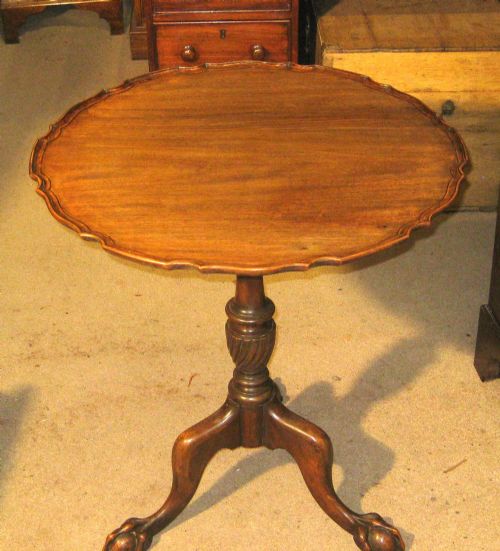
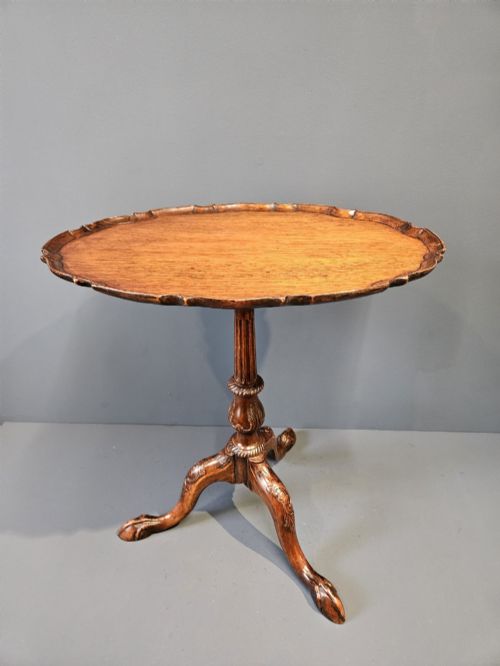
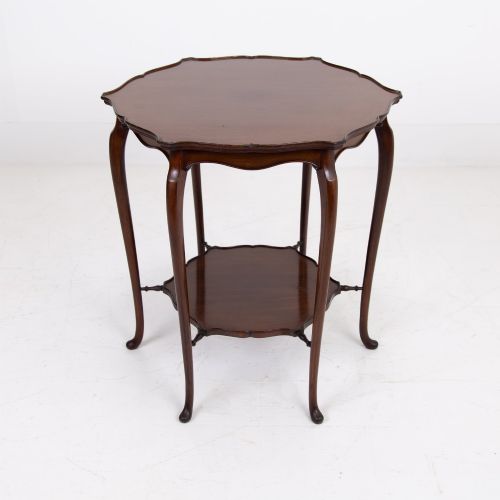
Scalloped Edge Occasional Table
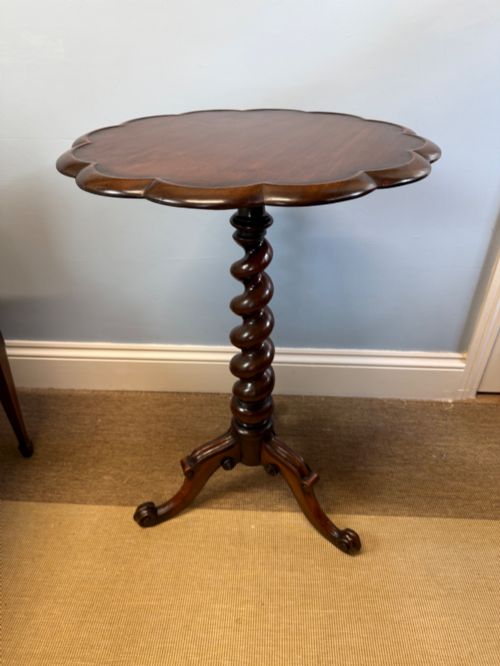
A scalloped edge occasional table brings movement and texture to a room, offering a decorative profile derived from eighteenth-century precedents.
Scalloped Edge Occasional Table
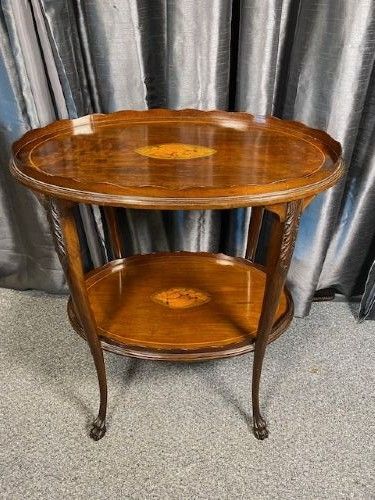
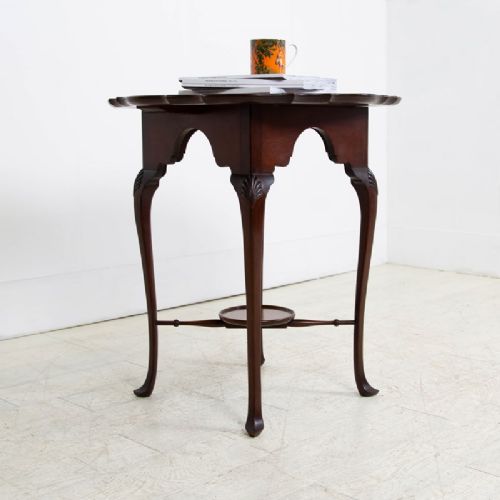
A scalloped edge occasional table appears across various formats, including tilt-top tripod wine tables, fixed-top lamp tables, and small centre pieces. The form bridges functional household use and decorative display.
Makers produced these tables through the Georgian, Victorian, and Edwardian eras, continuing into the early twentieth century with revival designs. Mahogany and walnut dominate the surviving examples on this page.
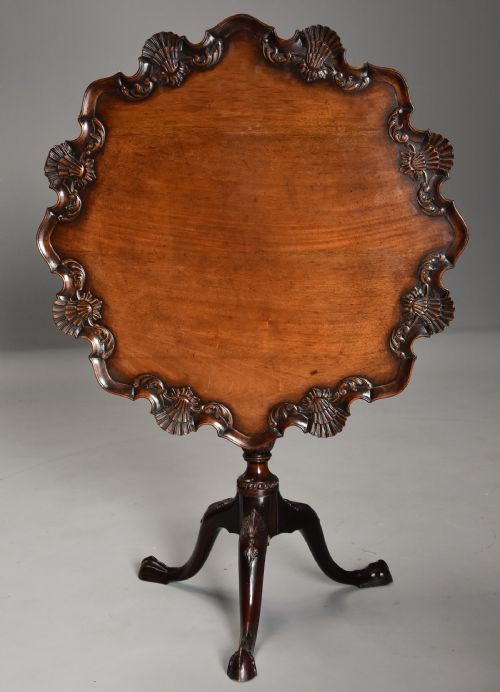
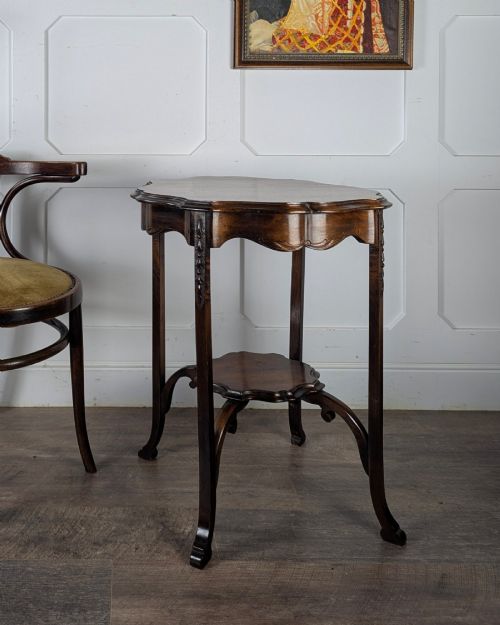
The characteristic moulded or carved perimeter takes several forms, from pie-crust edges on tripod tables to simpler shaped friezes on Edwardian side tables.
Materials and construction
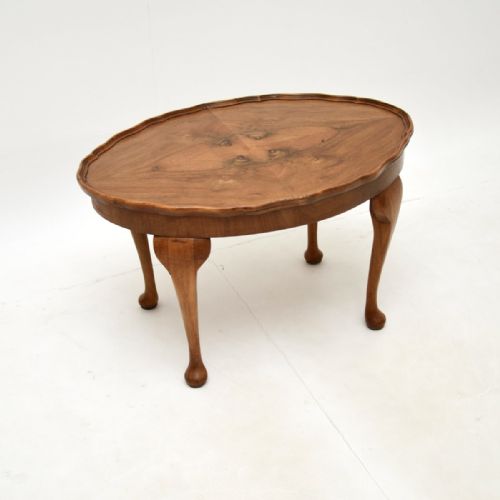
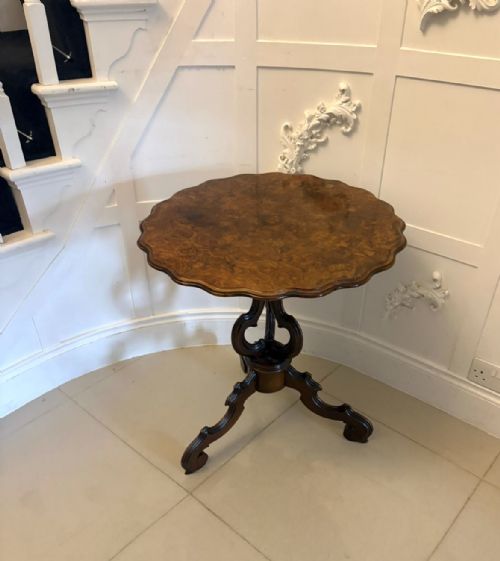
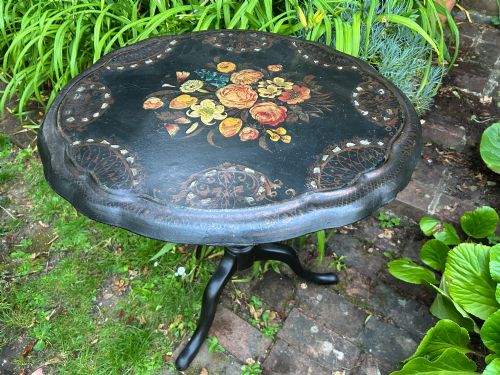
Cabinet makers utilised dense timbers like mahogany and walnut, frequently selecting burr or figured veneers for table tops to create patterned surfaces. Solid oak and painted woods also appear among regional and later pieces.
Tilt-top mechanisms incorporate birdcage or bird-cage assemblies, allowing the top to pivot and lock vertically when not in use. Tripod bases typically feature three cabriole legs terminating in pad or claw feet.
Edges were shaped by hand-carving the timber directly or shaping applied mouldings, particularly on pieces influenced by Chippendale designs.
Queen Victoria's private residence lent its name to a painted side table on record here.
Defining quality
The sophistication of the edge carving dictates much of the visual success, distinguishing crisp, deeply undercut mouldings from simpler, shallower shaping. Timber selection also separates standard production from pieces featuring rich burr walnut or well-figured mahogany veneers.
Structural stability in the pillar and tripod base determines longevity, particularly where tilt-top mechanisms require precise joint work to prevent wobbling. Refined proportions in the turning of the central column and the sweep of the legs indicate superior craftsmanship.
Shapland and Petter
The Scalloped Edge Occasional Table Glossary
- Pie-crust edge
- A raised, decoratively carved perimeter resembling pastry crust, commonly found on eighteenth and nineteenth-century tripod tables. It is typically carved from the solid timber of the top rather than applied.
- Tilt-top
- A table top hinged to the central pillar, allowing it to pivot upright for storage against a wall. This mechanism often includes a catch and a rotating block known as a birdcage.
- Tripod table
- A small freestanding table supported by a central pillar resting on three legs. These tables gained popularity during the Georgian period for serving tea or wine.
- Frieze
- The horizontal band beneath the table top, sometimes shaped or decorated with inlay in Edwardian examples. It provides structural rigidity to the frame.
Scalloped Edge Occasional Table: Frequently Asked Questions
How do tilt-top tables work?
Tilt-top tables utilise a hinged mechanism beneath the top that allows the surface to pivot from horizontal to vertical. This design enabled the table to be stored flat against a wall when not in use.
Many examples include a rotating block or birdcage construction above the central column, permitting the top to spin as well as tilt.
Where were occasional tables used?
Occasional tables served versatile roles in period interiors, positioned beside seating for tea, reading materials, or lamps. Their lightweight construction allowed servants or occupants to move them easily about the room.
Smaller wine tables and lamp tables were particularly suited to parlours and drawing rooms where surface space was needed temporarily.
How do I date a walnut table?
Dating a walnut table involves examining the timber selection, construction methods, and overall style. Earlier pieces from the Georgian era often feature solid walnut or simpler veneers, while Victorian and Edwardian examples frequently utilise rich burr walnut and marquetry inlay.
Revival pieces from the early twentieth century often mimic eighteenth-century forms but employ machine-cut secondary woods and modern fixings.