
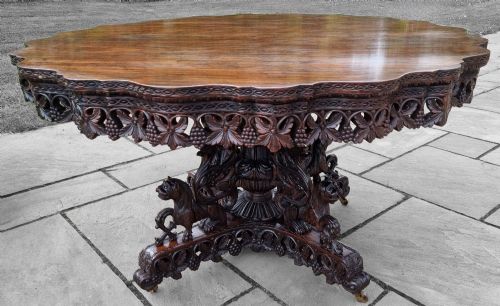
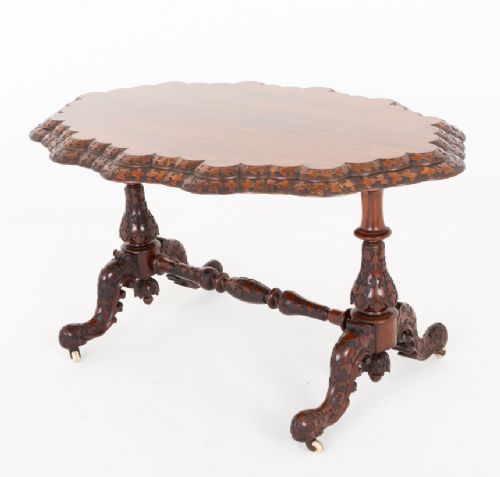
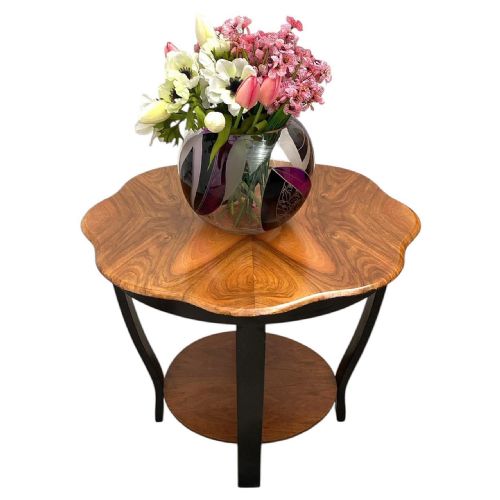
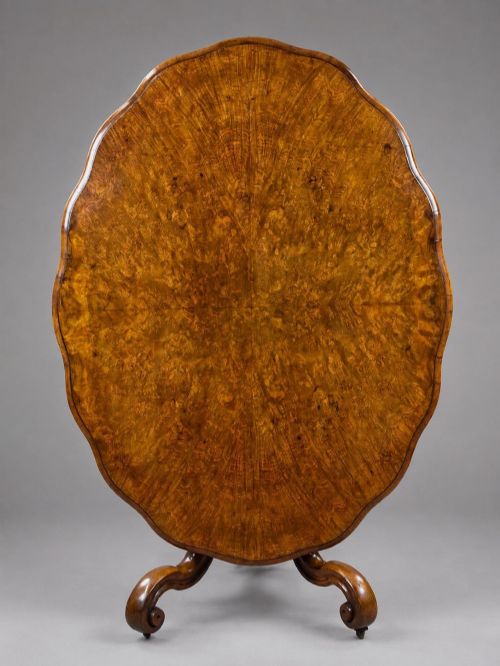



Scalloped Centre Table
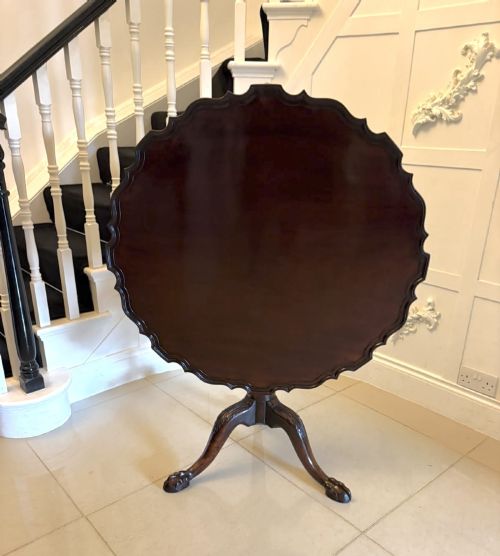
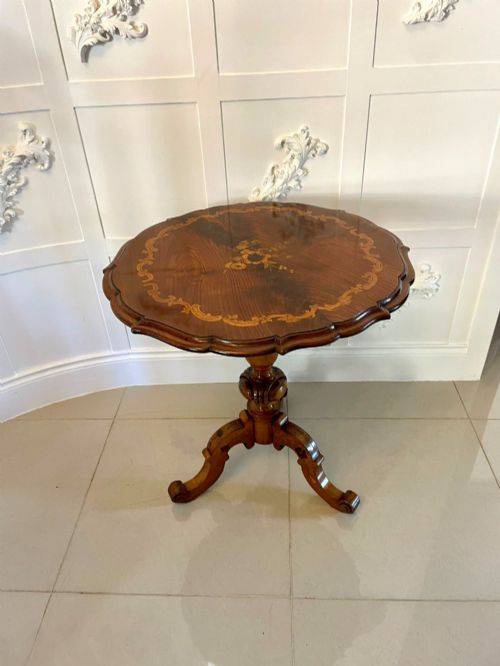
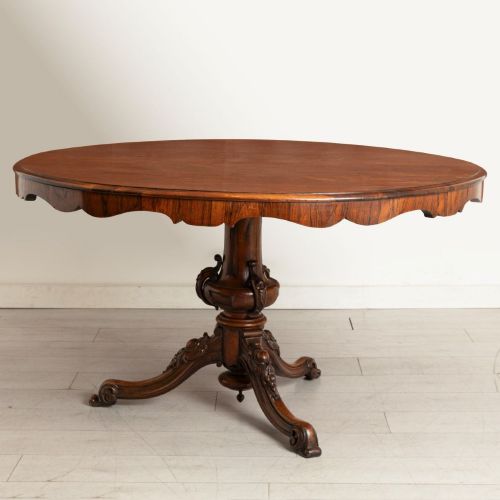
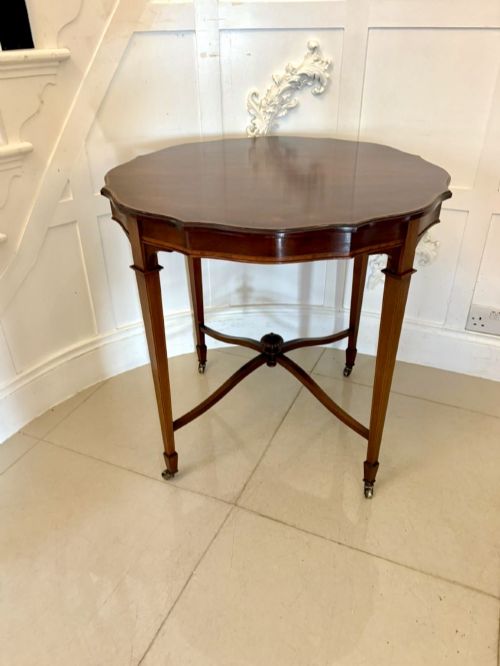
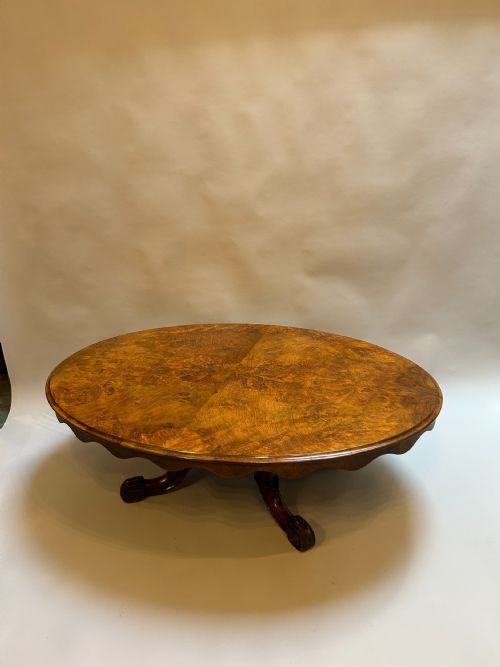
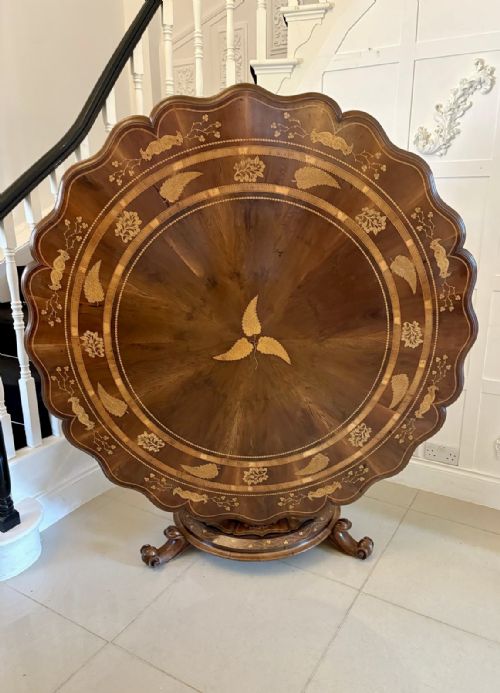
A scalloped centre table draws the eye with its undulating edge, serving as a striking focal point in any room.
Scalloped Centre Table
A scalloped centre table stands independently in a room rather than against a wall, designed to be viewed from all sides. These pieces range from compact occasional and coffee tables to larger dining and loo tables.
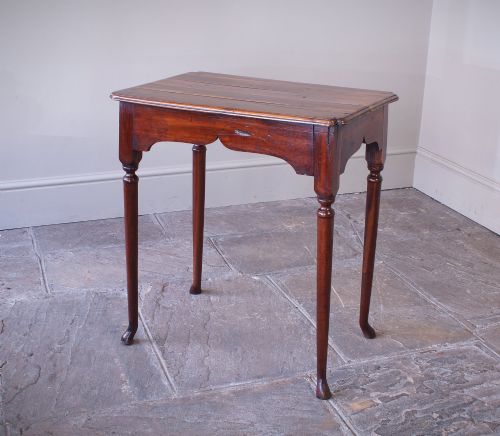
Victorian burr walnut and rosewood examples dominate the selection, often featuring shaped or piecrust tops. Earlier George III mahogany designs and later Edwardian and Art Deco interpretations also appear.
Originating across Britain, Ireland, Europe and India, these tables utilise diverse woods including mahogany, walnut, yew and satinwood.
Materials and Construction
Cabinetmakers relied on rich hardwoods such as walnut, mahogany and rosewood, frequently applying burr walnut or satinwood veneers to create dramatic grain patterns. Marquetry inlay, brass accents and carved solid wood bases add further detail.
Many examples employ tilt-top or birdcage mechanisms, allowing the circular or shaped top to pivot and fold away when not in use. Solid turned pedestals and tripod legs provide sturdy support for the heavy timber tops.
Some tables tilt entirely vertical, transforming from functional furniture into decorative wooden shields against the wall.
Factors of Quality
The choice of timber dictates the initial distinction, with highly figured burr walnut, intricate marquetry and exhibition-quality carving separating standard pieces from exceptional ones. The crispness of the shaped or piecrust edge reveals the carver's skill.
Construction integrity matters immensely, from the precision of the veneer work to the smooth operation of tilt-top mechanisms and drawers. Finer examples maintain structural stability while displaying harmonious proportions across the base and top.
John Kendal·Whytock and Reid·Egan Workshop
The Scalloped Centre Table Glossary
- Piecrust edge
- A raised, carved, and scalloped border mimicking pastry crust, typically found on round eighteenth- and nineteenth-century tabletops. This technique requires considerable skill with hand chisels.
- Marquetry
- The art of applying decorative veneer pieces to form intricate pictorial or geometric patterns on a wooden surface. Craftsmen use contrasting timbers like satinwood and walnut to achieve depth.
- Tilt-top
- A hinged tabletop mechanism that allows the surface to pivot vertically for storage or display when not in use. It often locks into place with a brass catch.
- Oyster veneer
- Cross-cut slices of small branches or roots arranged to resemble the shape of oyster shells. This decorative technique creates concentric circular patterns in the grain.
Scalloped Centre Table: Frequently Asked Questions
Where should I place a centre table?
A centre table belongs in the middle of a room, entrance hall or large landing where it can be appreciated from every angle. It serves well as a display surface for lamps, books or floral arrangements.
Ensure you leave adequate walking space around the perimeter so the shaped or scalloped edges remain unobstructed and easy to navigate.
What is the difference between a loo table and a centre table?
A loo table is a specific type of large Victorian table, usually featuring a tilt-top mechanism, originally designed for the card game loo. Centre tables encompass a broader category of freestanding tables used for display or dining.
Both styles often share the characteristic shaped or scalloped top found in nineteenth-century furniture.
How do I care for antique wood surfaces?
Protect antique wood by keeping it away from direct sunlight and sudden temperature changes, which can dry out the timber and crack veneers. Use coasters and avoid placing damp items directly on the polish.
Apply a quality beeswax periodically and buff gently with a soft cloth to maintain the natural lustre of walnut, mahogany or rosewood.
How do I identify the period of a table?
Examine the secondary woods, construction methods, and hardware beneath the table to determine its age. Eighteenth-century pieces often display hand-cut dovetails and simpler internal framing compared to Victorian examples.
Stylistic cues such as George III tripod bases, Victorian burr walnut veneers, or Art Deco geometric lines also point toward specific eras.