

Scallop Edge Table
These scallop edge table pieces bring refined wooden curves into a room, offering distinct raised borders for display and daily use.
Scallop Edge Table
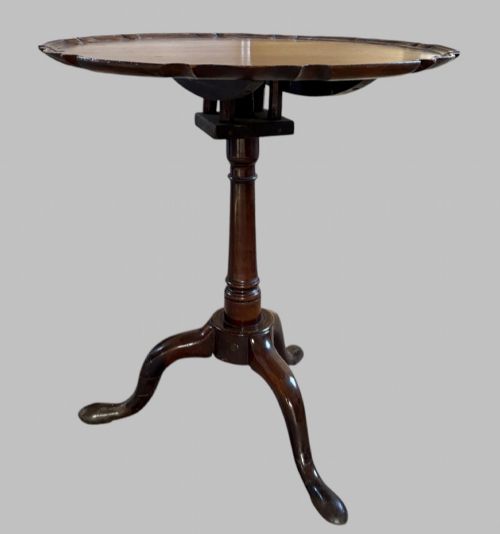
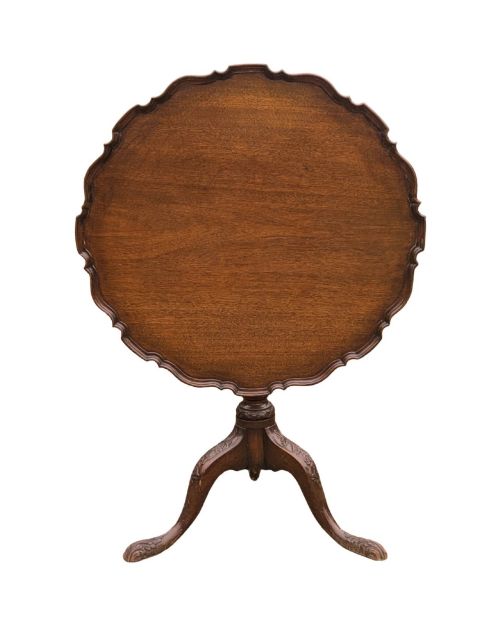
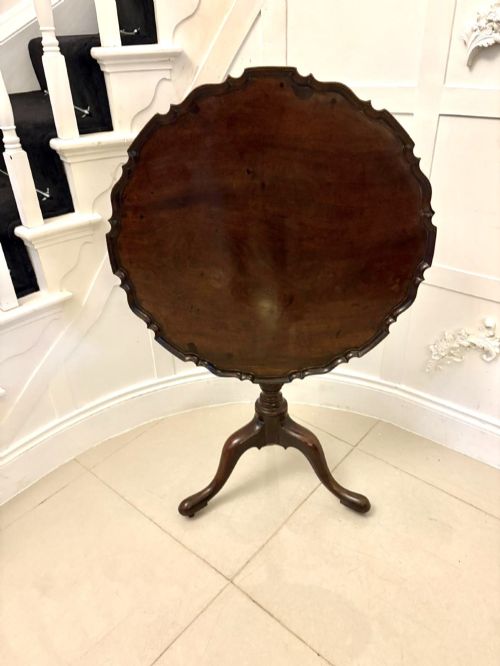
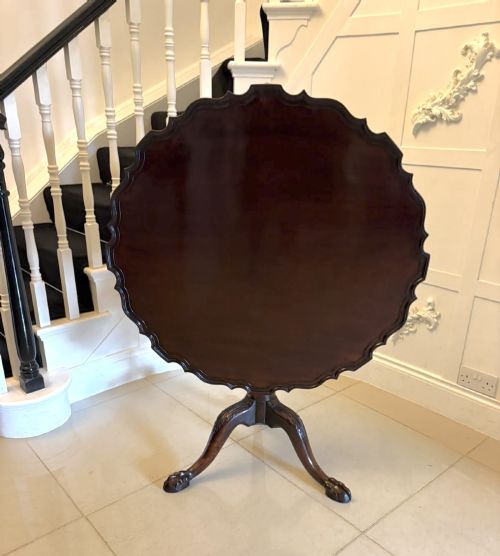
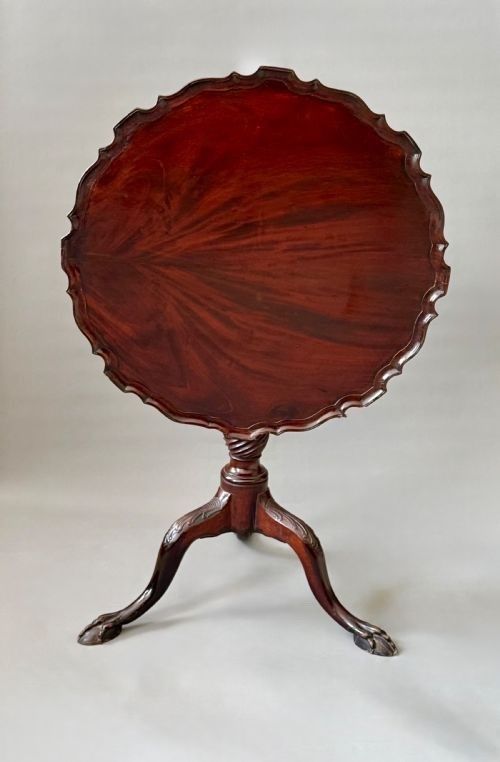
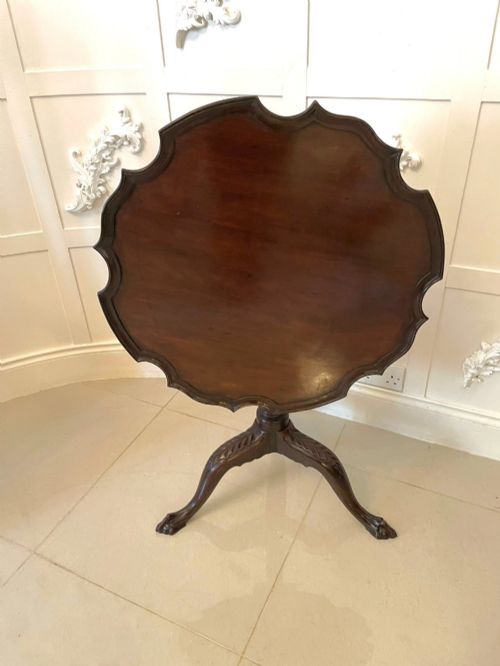
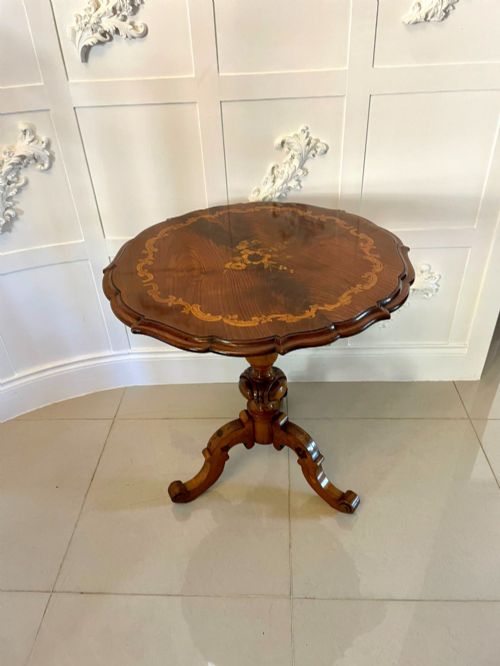
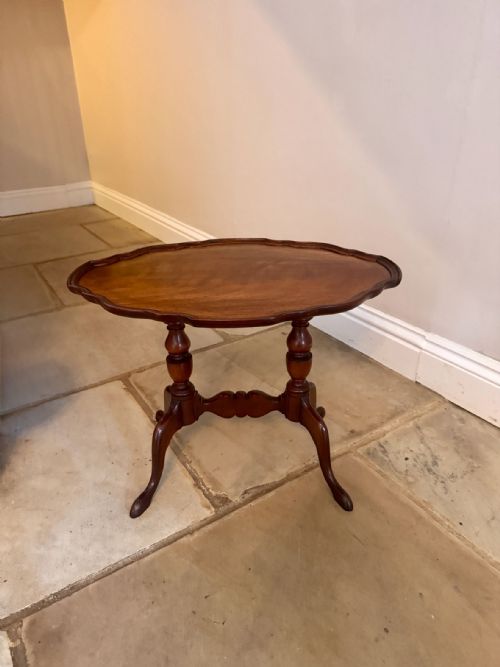
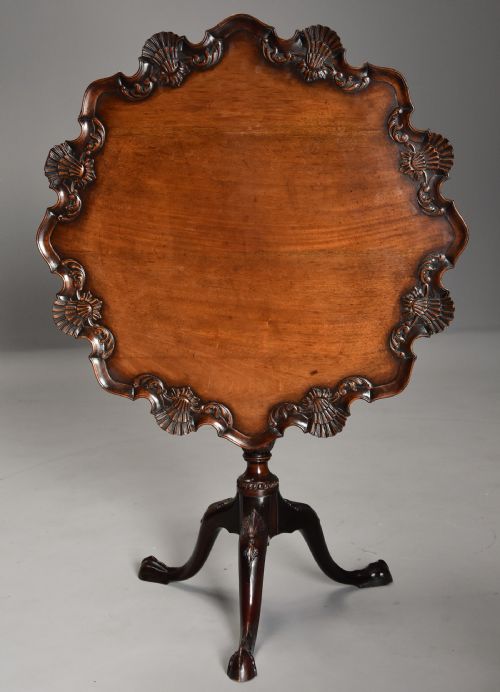
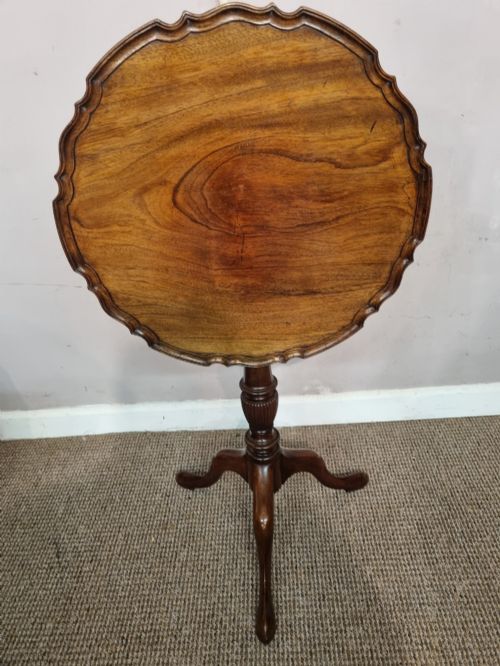
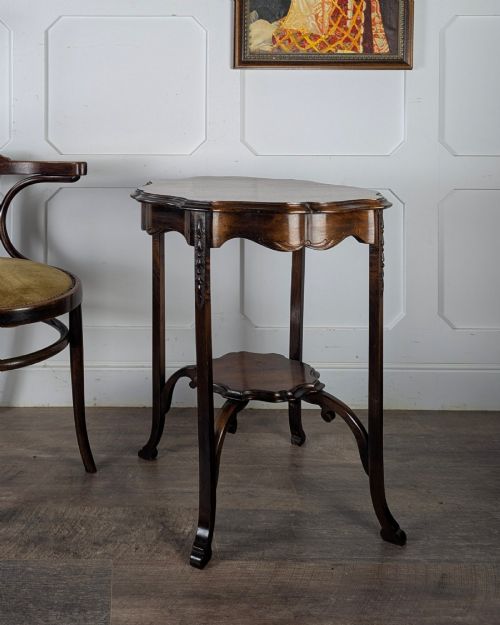
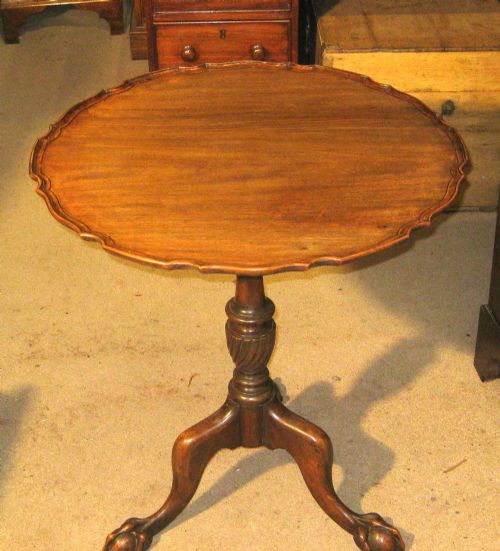
A scallop edge table is primarily encountered as a tripod wine table, a pedestal centre table, or a tilt-top occasional table dating from the 18th century through to the Edwardian period. Buyers searching for this phrase encounter circular or oval wooden tops shaped with carved mouldings, often termed pie-crust edges, supported on pillar and tripod bases.
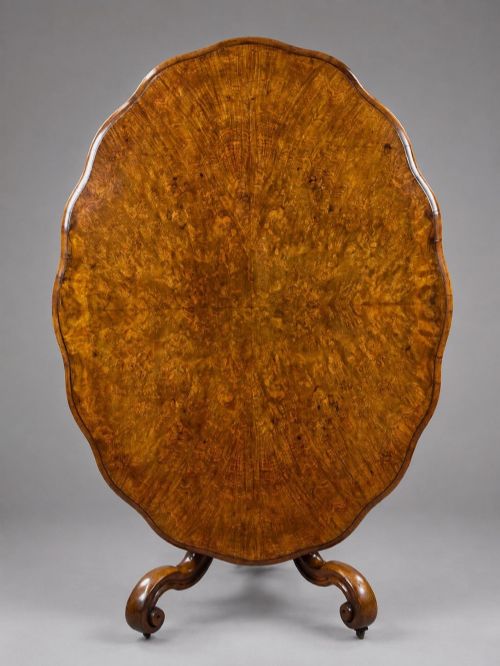
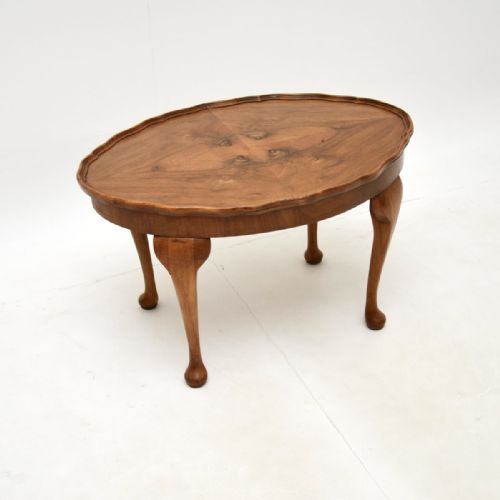
The selection ranges from Georgian mahogany examples built in the Chippendale taste to Victorian burr walnut lamp tables and early 20th-century walnut coffee tables. Many of these pieces feature tilting mechanisms that allowed the top to rest vertically against a wall when not in use.
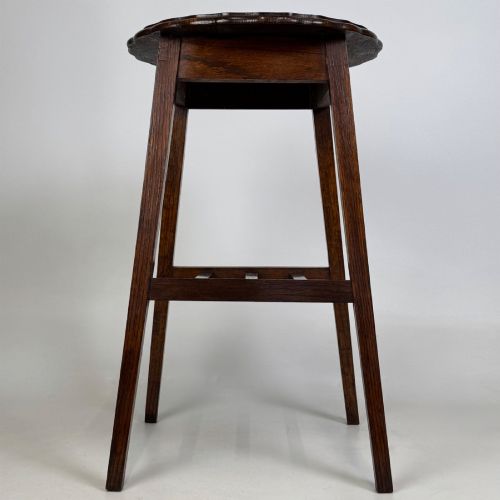
Alongside standard occasional and wine tables, the form extends to larger centre tables, games tables with inlaid chess boards, and occasional side tables in oak, yew, and kingwood. The unifying element across these diverse forms is the shaped perimeter of the tabletop.
Materials and construction
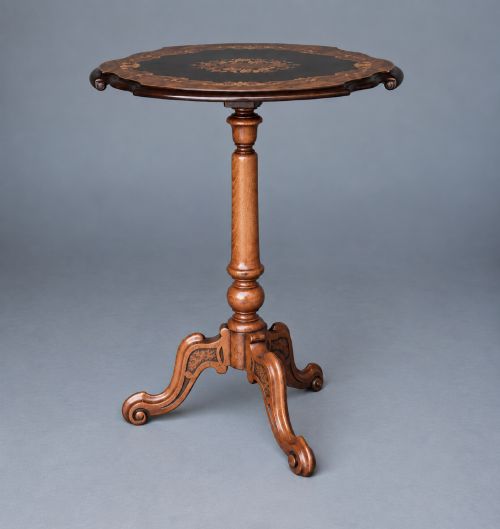
Makers utilised dense timbers such as mahogany, walnut, burr walnut, and oak to construct these tables, often applying marquetry inlay, kingwood, or yew wood oyster veneers to the surfaces. Solid wood was frequently carved directly along the rim to create the characteristic shaped edge, requiring skilled hand tool work to achieve smooth, undulating curves.
Tripod bases were joined to central pedestals using sturdy box joints or dovetailing, while tilt-top models employed brass catches and birdcage mechanisms to allow the surface to pivot and rotate. Marquetry inlaid details incorporated contrasting woods, brass accents, and painted decoration to enrich the visual depth of the tabletop.
Scallop Edge Table Retail Price Guide 2026
Typical asking prices for scallop edge table among the pieces listed under this phrase on Sellingantiques today, from the lower quarter to the upper quarter. They describe what is for sale here now, not the wider market.
Object forms span occasional tables, wine tables, side tables, lamp tables, and larger centre tables.
Assessing quality and craftsmanship
The distinction between standard domestic pieces and exhibition quality work lies in the choice of timber and the precision of the carving. Finely figured burr walnut and rich mahogany with deep natural patination elevate an object, whereas plain timbers indicate simpler utilitarian production.
Execution of the shaped border is a primary indicator of skill, with superior pieces displaying crisp, evenly spaced undulations carved directly from solid timber rather than applied moulding. Furthermore, the stability of the central pillar, the tight fit of the tilt-top mechanism, and the intricacy of marquetry inlay separate basic workshop output from master cabinet work.
Shapland and Petter·Egan Workshop
The Scallop Edge Table Glossary
- Pie-crust edge
- A raised, carved decorative rim around a circular tabletop, shaped into small undulations resembling pastry work. This feature is commonly found on Georgian and Victorian tripod tables.
- Tilt-top table
- A table equipped with a hinge mechanism that allows the top to pivot into a vertical position. This clever space-saving design permitted tables to stand flat against walls when not in active use.
- Tripod base
- A support structure comprising three legs radiating from a central pillar. It provides stability on uneven floors and is a defining characteristic of smaller wine and occasional tables.
- Marquetry inlay
- A decorative technique where small pieces of contrasting wood veneer are fitted into a scored surface to form pictures or geometric patterns. It appears frequently on Victorian and French occasional tables.
- Burr walnut
- Timber harvested from the unusual growths on walnut trees, prized for its swirling, highly figured grain patterns. Cabinet makers utilised burr walnut veneers on the tops of fine lamp and coffee tables.
Scallop Edge Table: Frequently Asked Questions
What is a scallop edge table used for?
These tables function primarily as occasional pieces for holding lamps, decorative items, or drinks in a reception room. Their compact tripod forms make them easy to move beside seating as required.
Tilt-top variants also served a decorative purpose when folded vertically against a wall, displaying the wood grain and carved rim as a wall ornament.
How do I date a scallop edge table?
Dating relies on examining the timber, the style of the base, and construction methods. 18th-century and Georgian examples often feature heavy solid mahogany with carved tripod cabriole legs.
Later Victorian and Edwardian pieces frequently introduce burr walnut veneers, marquetry inlay, or alternative woods like oak and yew with lighter turned pedestals.
How do tilt-top mechanisms work?
The tabletop mounts to a wooden block that pivots on a horizontal pin secured to the top of the central pillar. A brass catch or wooden wedge locks the surface flat when in use.
Releasing this catch allows the entire top to swing upright, resting flush against the support column for convenient storage.
How should I care for polished walnut surfaces?
Maintain the wood by dusting regularly with a soft, dry cloth and avoiding direct sunlight that can fade the grain. Periodic application of quality beeswax nourishes the timber and preserves the natural sheen.
Keep these tables away from direct heat sources and moisture to prevent veneer lifting and wood shrinkage.