


Satinwood Tiered Table
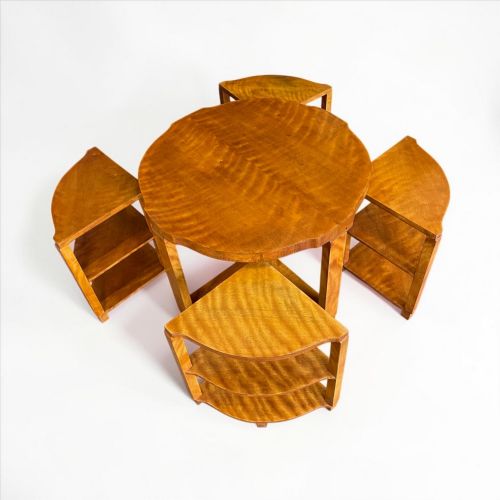
A satinwood tiered table brings lightness to a room, offering multiple surfaces for display through refined wood veneers and delicate proportions.
Satinwood Tiered Table
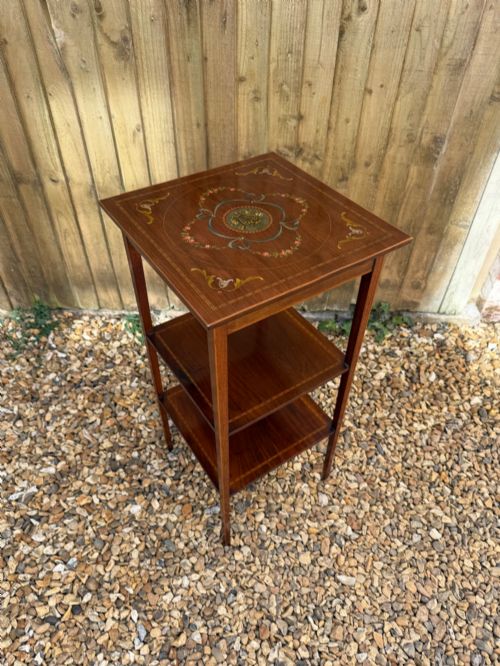
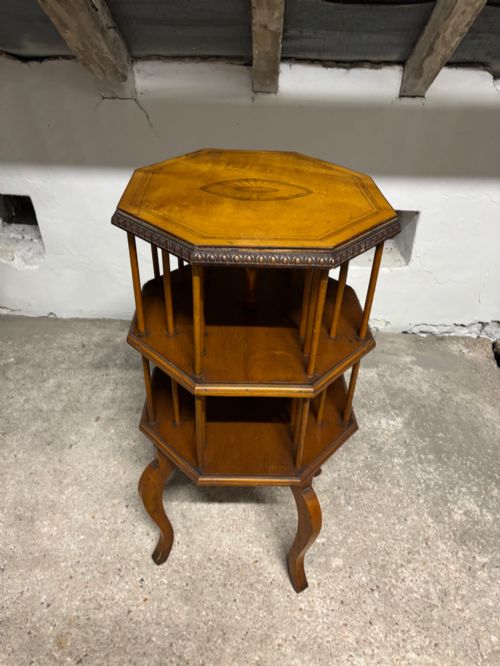
A satinwood tiered table combines multi-level display surfaces with the pale, lustrous grain characteristic of this distinctive timber. Buyers seeking a satinwood tiered table will encounter examples spanning the Victorian, Edwardian, and early twentieth-century periods, often finished with detailed crossbanding and stringing.
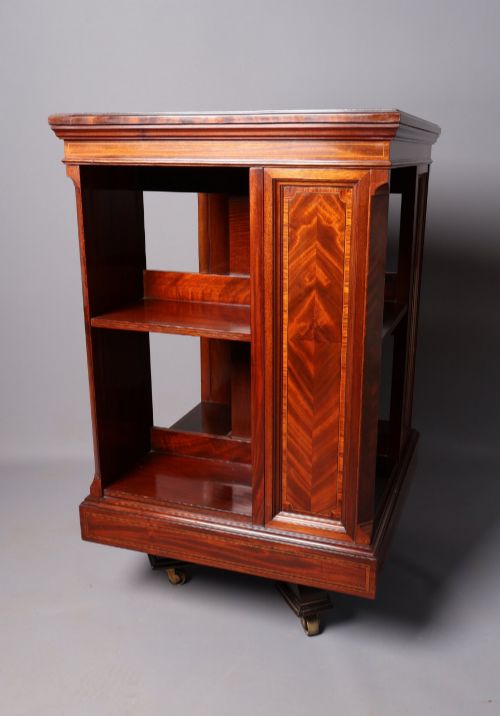
The pieces listed on this page appear predominantly as Edwardian and late nineteenth-century iterations, alongside related forms like etageres, occasional tables, and revolving bookcases. These tables served as versatile furniture for drawing rooms and boudoirs, designed to hold books, lamps, and decorative objects without crowding the floor space.
Makers drew heavily on earlier Georgian design idioms, producing Sheraton Revival pieces that paired satinwood with contrasting timbers like mahogany and rosewood. The structural arrangement relies on slender uprights supporting successive tiers, creating an open silhouette that reflects changing domestic habits of the late Victorian era.
Materials and Construction
Construction relies on applying fine veneers over a stable secondary timber, utilising satinwood for its golden sheen and smooth texture. Cabinet makers combined this primary surface with contrasting woods such as mahogany, rosewood, and walnut to frame panels and define edges.
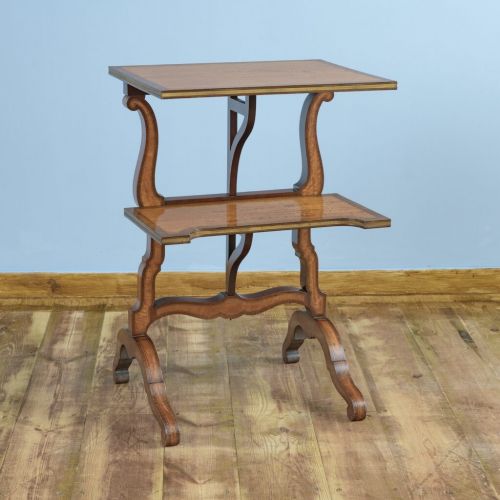
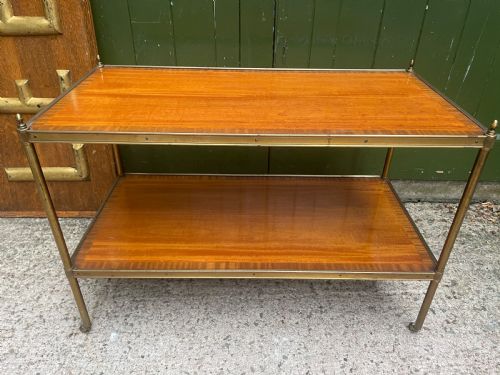
Intricate decoration was achieved through marquetry and inlay, incorporating boxwood, ebony, and bone to form floral motifs and geometric banding. Brass mounts and frames appear on specific low etagere forms, adding structural rigidity and metallic contrast to the timber tiers.
Some tables incorporated bone and ebony inlay to give inanimate wood the appearance of delicate floral blooms.
Craftsmanship and Proportion
Quality rests in the precision of the veneer work and the crispness of the inlaid details, where tight joints and balanced grain patterns distinguish finer examples. The handling of secondary woods and the subtlety of the marquetry dictate the level of artistry invested by the maker.
Proportion and stability separate standard utility pieces from exceptional works, as slender tiered structures require careful engineering to prevent wobbling across multiple levels. The harmony between the pale satinwood panels and the darker stringing defines the visual balance of the finished piece.
Maison Giroux·Donald Ross
The Satinwood Tiered Table Glossary
- Satinwood
- A dense, lustrous hardwood yielding a pale golden-yellow timber prized for fine veneer work. It takes a high polish and forms the primary decorative surface on many late nineteenth-century tables.
- Etagere
- A set of open shelves or tiers designed for displaying ornaments and small objects. This French form gained popularity in English interiors during the Victorian and Edwardian periods.
- Marquetry
- The art of applying pieces of veneer to a structure to form decorative patterns and pictures. Craftsmen used various coloured woods, bone, and shell to create elaborate floral or geometric designs.
- Sheraton Revival
- A late nineteenth-century design style inspired by the furniture of George Sheraton. It is characterised by neoclassical restraint, tapered legs, and delicate satinwood inlay.
- Inlay
- A technique where pieces of contrasting material are inserted into recesses flush with the surrounding wood surface. Boxwood and ebony are frequently utilised for linear stringing and banding.
Satinwood Tiered Table: Frequently Asked Questions
How do I care for satinwood?
Satinwood benefits from minimal moisture and protection from direct sunlight, which can darken or fade the golden grain over time. Regular dusting with a soft, dry cloth preserves the polished finish.
Applying a microcrystalline wax occasionally helps maintain the lustre of the veneer without building up heavy residues on the surface.
How do I distinguish Edwardian pieces?
Edwardian furniture often exhibits lighter construction and brighter inlay work compared to heavier earlier Victorian designs. Many pieces draw directly on eighteenth-century Sheraton Revival motifs.
These tables frequently combine satinwood veneers with mahogany frames, reflecting a renewed interest in neoclassical elegance around the turn of the twentieth century.
Where were these tables used?
These tables stood in drawing rooms, parlours, and bedrooms as versatile pieces for everyday convenience. Their multi-tiered surfaces allowed owners to keep reading materials and decorative items close at hand.
Because they were lightweight and portable, servants could easily move them around the home to suit changing domestic activities.