
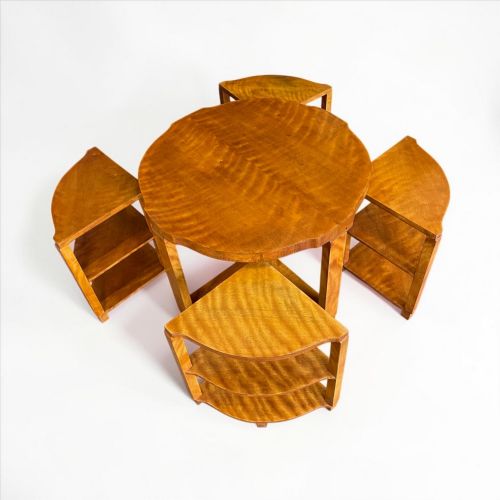


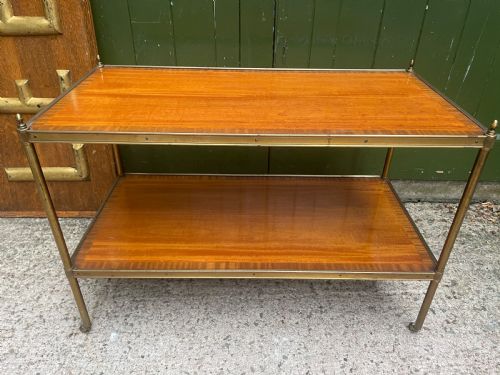
Satinwood Tier Table
Satinwood tier table pieces combine light timbers with multi-level surfaces, offering practical display space suited to period and traditional interiors.
Satinwood Tier Table
When you search for a satinwood tier table, you find multi-level occasional furniture designed for display and utility in the home. These surfaces provide distinct platforms for lamps, books, or decorative objects without dominating the floor space of a room.
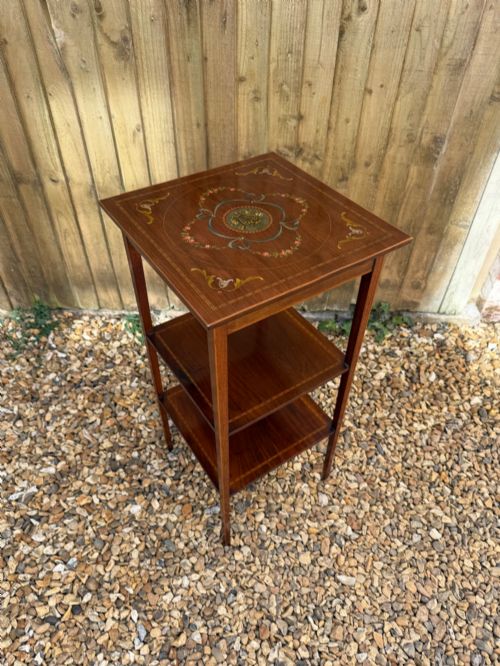
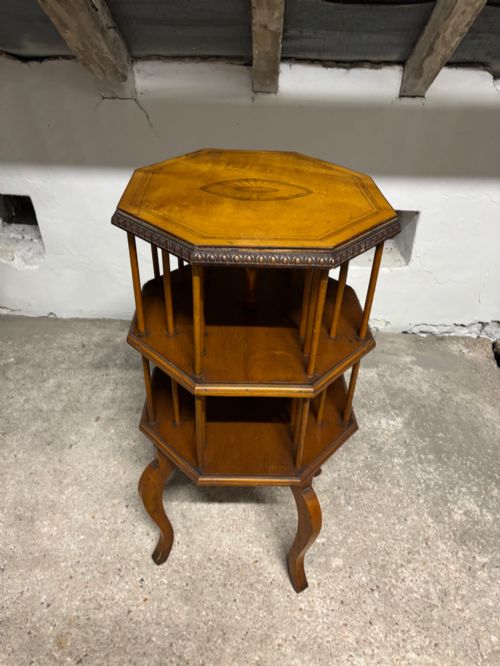
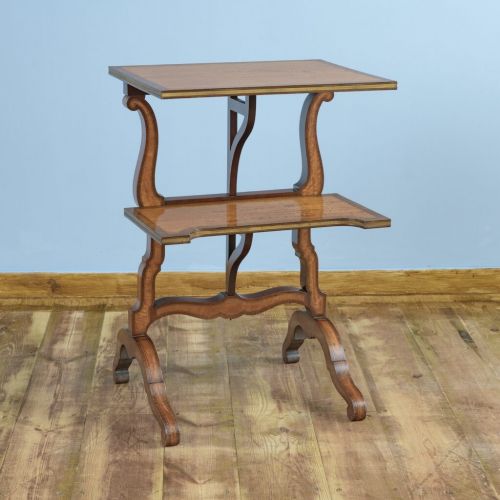
The versions most common in these listings date from the Edwardian period and the nineteenth century. Makers constructed them in forms such as oval tables, etageres, and two-tier occasional tables.
Many examples combine a primary timber like mahogany with contrasting satinwood veneers or detailed stringing. The stylistic influence of the Sheraton Revival appears frequently among these multi-tier designs.
Materials and methods of construction
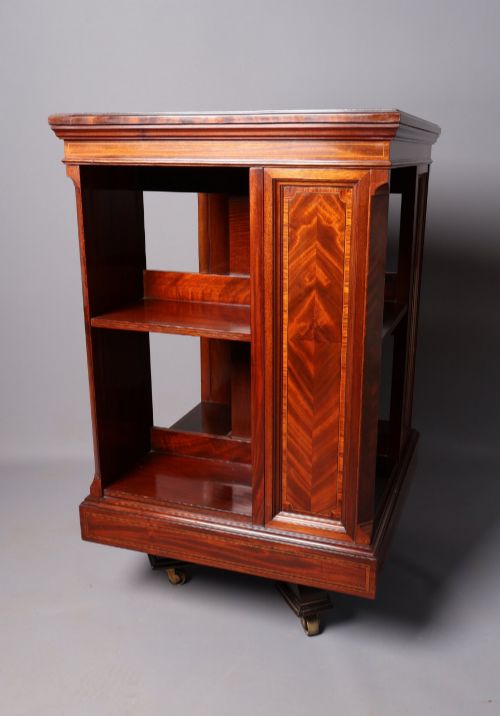
Cabinetmakers utilised satinwood alongside mahogany, rosewood, and walnut to achieve distinct tonal contrasts on table tops and shelves. Timber veneers were cut and laid carefully over firmer carcase woods to create smooth, decorative surfaces.
Inlay and marquetry form a central part of the construction, incorporating boxwood, ebony, and brass details. Brass framing and mounts occasionally provide structural support and linear definition to multi-tier etageres.
Materials recorded across these tables include brass, bone, ebony, kingwood, and mahogany alongside satinwood.
What separates the best examples
The quality of a multi-tier table depends on the precision of its marquetry and the choice of timber grain. Superior pieces display intricate, well-fitted inlay work using diverse woods such as satinwood and rosewood.
Structural finesse also dictates worth, visible in the stability of the upright supports joining the tiers and the crispness of edge banding. Tables attributed to specific skilled workshops or retaining original surfaces command greater attention from collectors.
Maison Giroux·Donald Ross·Edwards and Roberts
The Satinwood Tier Table Glossary
- Satinwood
- A hard, yellowish timber with a lustrous sheen, utilised extensively for fine cabinetmaking and decorative veneers. It provides a bright surface contrasted by darker inlay.
- Etagere
- A piece of furniture consisting of a set of open shelves or tiers for displaying small objects. These multi-level pieces appeared frequently in nineteenth and early twentieth-century interiors.
- Marquetry
- Decorative veneer work forming pictures or geometric patterns by assembling small pieces of various woods, shell, or ivory. This technique ornamented many tabletops and cabinet fronts.
- Stringing
- Thin lines of contrasting wood inlaid into grooves on furniture surfaces to create borders and geometric outlines. This linear detail defines the edges of many table tops.
Satinwood Tier Table: Frequently Asked Questions
What is a tier table used for?
These pieces served traditionally as occasional tables for holding lamps, tea items, or decorative ornaments in reception rooms.
Their multiple levels provided extra surface area while maintaining a compact footprint in domestic spaces.
How do I identify Edwardian examples?
Edwardian tier tables often feature light mahogany frames accented with delicate satinwood inlay and Sheraton Revival motifs.
They tend to date from the period around nineteen hundred to nineteen ten, reflecting lighter neoclassical tastes.
Are these tables sturdy?
Most multi-tier occasional pieces are constructed to support lamps and books across their various shelves.
However, their slender upright supports and multi-level designs mean they require careful handling when moved.
What materials are used in these tables?
Makers combined satinwood veneers with structural timbers such as mahogany, rosewood, and walnut.
Details often include boxwood stringing, brass framing, and intricate marquetry patterns.