


Satinwood Marquetry Chairs
Satinwood marquetry chairs bring refined neoclassical pattern to reception rooms through contrasting timber veneers and graceful revival framing.
Satinwood Marquetry Chairs
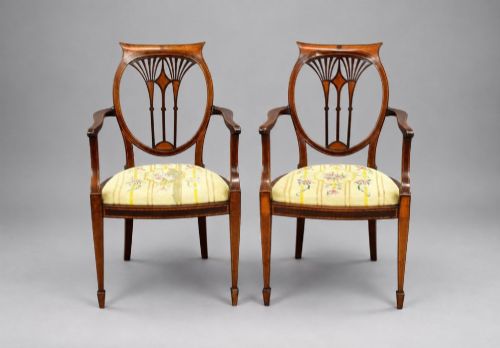
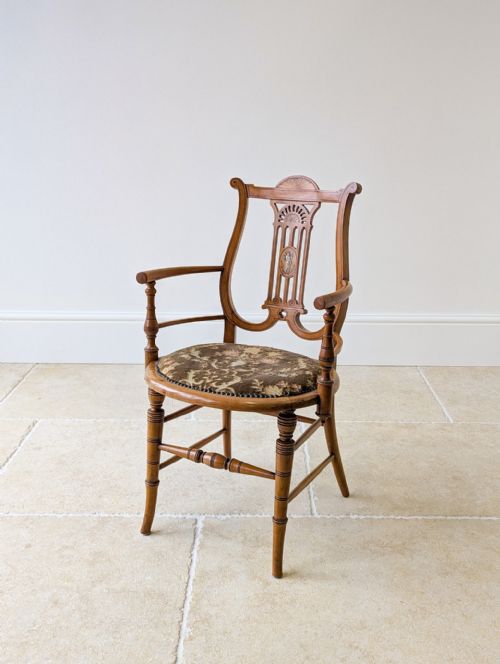
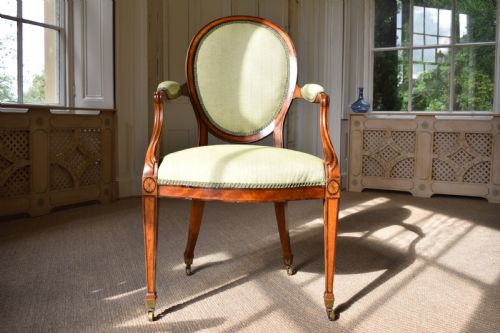
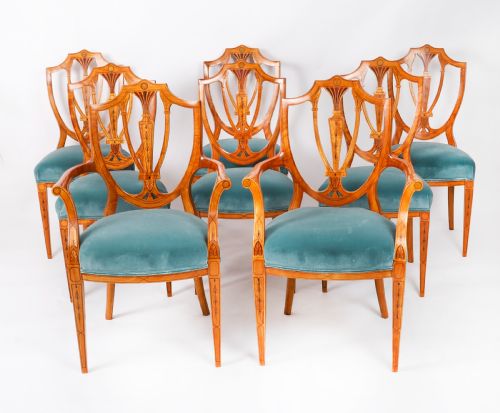
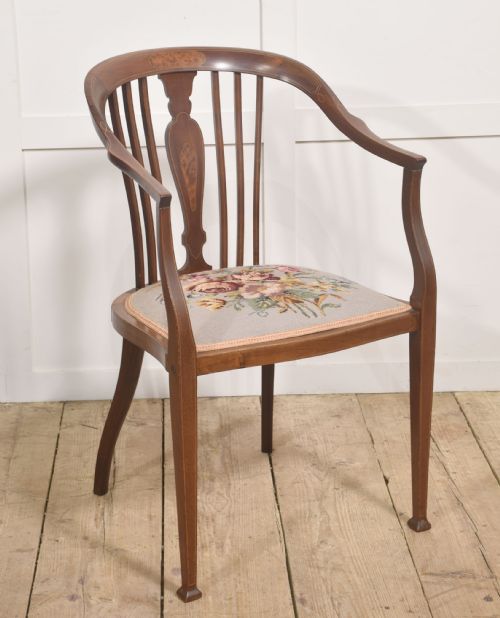
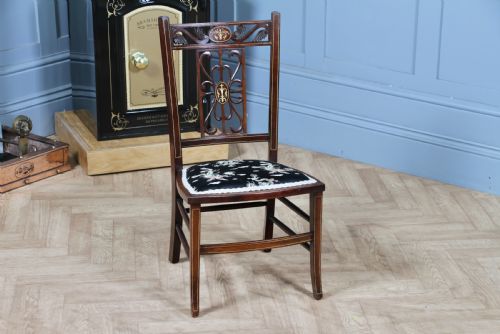
Satinwood marquetry chairs encompass seating forms designed across the Victorian, Edwardian, and George III periods, though Edwardian and Victorian revivals dominate current selections. Buyers encounter armchairs, desk chairs, dining sets, occasional chairs, and salon suites featuring characteristic decorative woodwork.
The aesthetic relies heavily on Sheraton Revival and Hepplewhite Revival interpretations, where makers combined rich mahogany structures with pale satinwood highlights. These pieces range from singular elbow chairs and rocking chairs to matching pairs and full salon suites with coordinating settees.
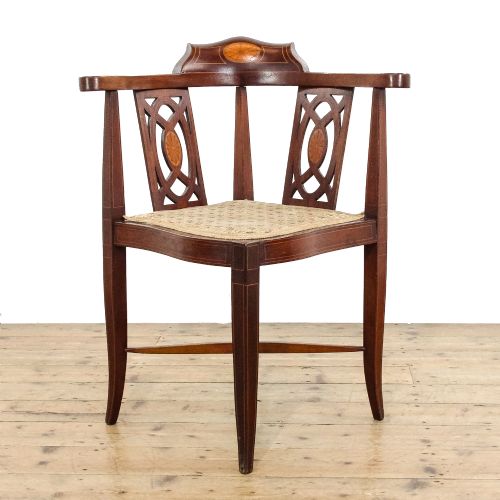
Forms extend to specialised seating including piano stools, child's armchairs, and swivelling ships chairs alongside traditional dining and desk variants. Each piece employs inlaid timber details to create the distinct visual rhythm expected of classical revival seating.
Materials and construction methods
Craftsmen built these chairs primarily using mahogany and satinwood, applying marquetry and satinwood inlay to achieve intricate surface patterns across splats, rails, and crests. Timber selection balanced structural durability in the frame with contrasting visual grain for the decorative veneers.
Upholstery materials recorded in the evidence include traditional fabric, velvet, silk, and leather, paired occasionally with brass hardware on specialised desk or swivel forms. The combination of dense hardwood frames and meticulous timber inlay defines the physical execution of these items.
Listings feature Edwardian, Victorian, and George III periods alongside Sheraton Revival and Hepplewhite Revival design styles.
Distinctions in quality
The sophistication of the marquetry work and the crispness of the satinwood inlay set finer examples apart from simpler production. Superior pieces demonstrate precise fitting of contrasting wood veneers and refined carving on shieldback or lyre-back frames.
The integrity of the structural timber, whether solid mahogany or supporting frames, influences the overall calibre of a chair. Consistency within a matched set or salon suite further distinguishes the most accomplished workshop output from standard commercial output.
Cowtan & Sons·Shoolbred
The Satinwood Marquetry Chairs Glossary
- Marquetry
- Decorative veneer work forming pictures or geometric patterns by fitting together small pieces of various woods. This technique provides the characteristic ornamentation seen on satinwood marquetry chairs.
- Satinwood
- A durable, lustrous tropical timber with a yellow sheen used extensively for contrasting veneers and inlay. It serves as the primary visual highlight in classical revival furniture.
- Sheraton Revival
- A late nineteenth and early twentieth century design movement drawing inspiration from the neoclassical furniture of Thomas Sheraton. Pieces from this style feature restrained classical proportions and delicate inlay.
- Elbow Chair
- An armchair designed with low arms, often used as a desk or occasional seat. These chairs provide comfortable seating without the bulk of a full armchair.
- Shieldback
- A chair back shaped like a heraldic shield, popularized during the eighteenth century and revived later. This form frequently incorporates pierced splats and delicate satinwood inlay.
Satinwood Marquetry Chairs: Frequently Asked Questions
What periods do these chairs date from?
The selection spans from George III pieces made around 1800 through Victorian and Edwardian revivals up to 1910.
Most items originate from the Victorian and Edwardian eras, reflecting popular nineteenth and early twentieth century revival styles.
How do I identify a Sheraton Revival chair?
Sheraton Revival pieces typically display classical symmetry, tapered legs, and delicate satinwood inlay set against darker mahogany frames.
These designs emulate eighteenth century forms while incorporating the manufacturing techniques of the late Victorian and Edwardian periods.
Where were these chairs used in a home?
Owners placed these seating forms in reception rooms, morning rooms, and drawing rooms as part of matching salon suites or occasional seating.
Specialised variants also served as desk chairs, piano stools, and dining seats depending on the specific room layout.
What upholstery materials appear on these pieces?
Original and replacement upholstery includes silk, velvet, fabric, and leather tailored to the specific function of the chair.
Some desk and swivel variants utilise leather surfaces for practical utility, while salon chairs favour decorative textiles.