





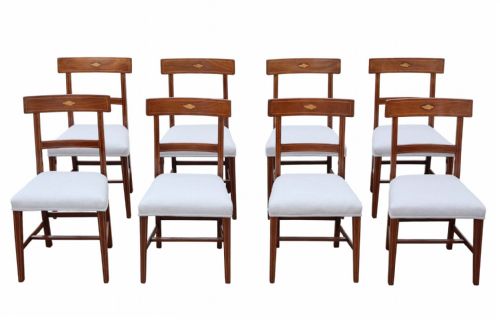


Inlaid Wooden Side Chairs
These inlaid wooden side chairs combine structural timber with decorative contrasting veneers, offering practical seating paired with period craftsmanship.
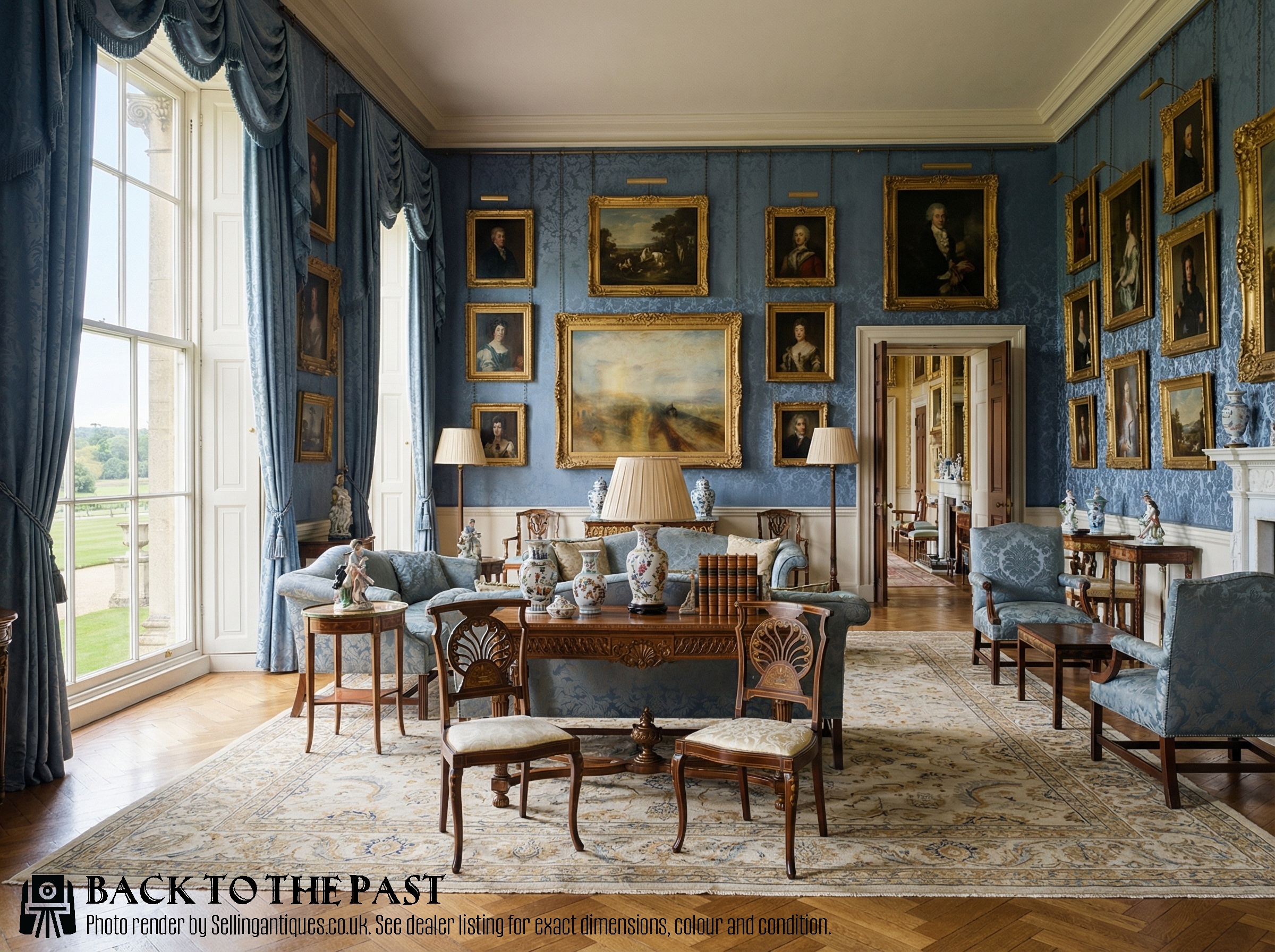
Inlaid Wooden Side Chairs
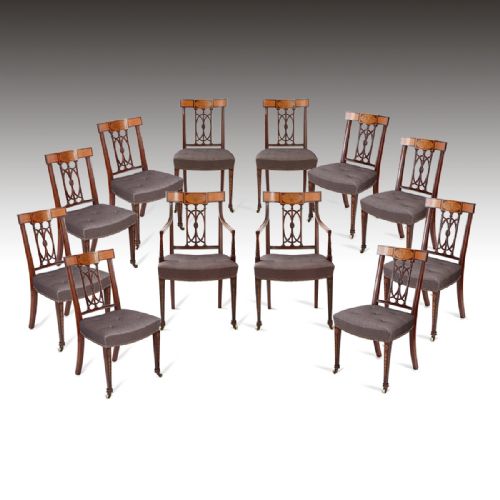
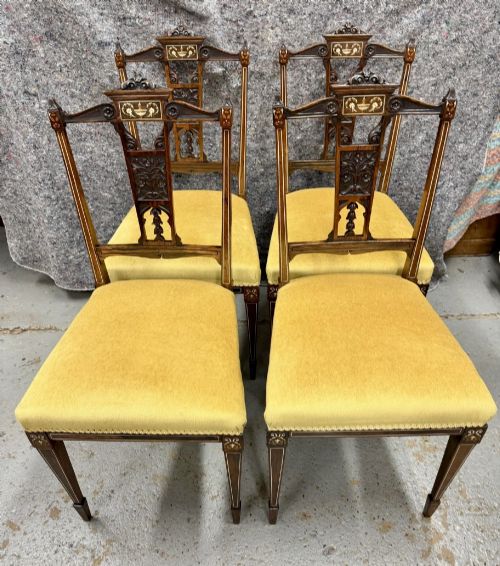
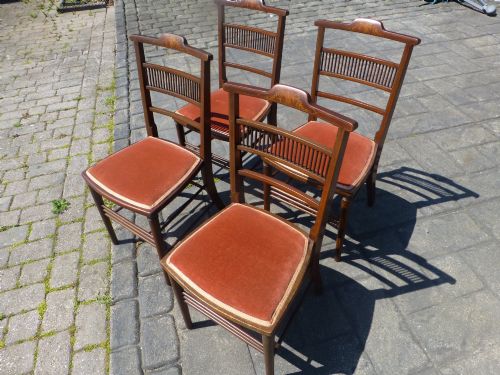
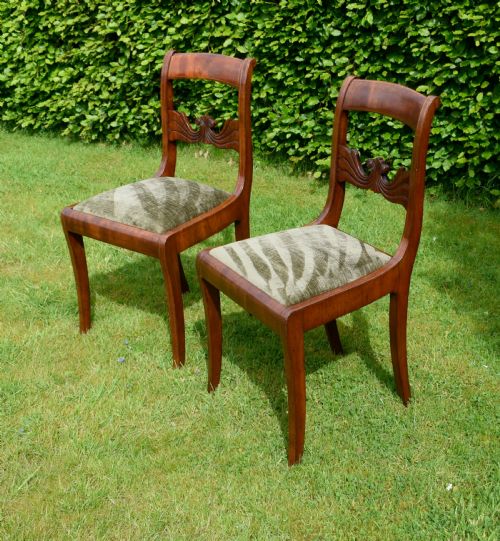
Inlaid wooden side chairs encompass seating pieces designed without arms, intended primarily for dining, occasional use, or placement against room boundaries. The selection spans distinct periods including Georgian, Regency, Victorian, and Edwardian eras.
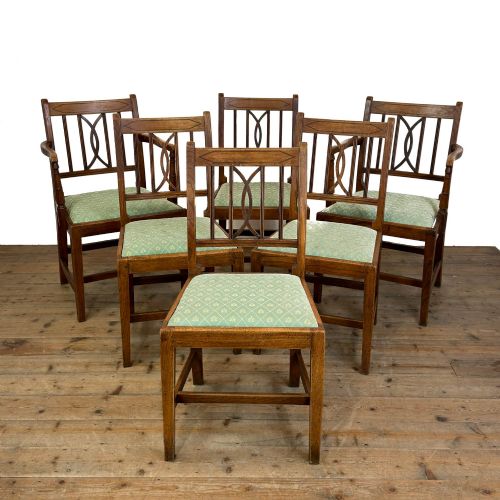
The most common iterations on this page are Edwardian mahogany pieces alongside nineteenth century dining sets. These often incorporate contrasting wood inlays or botanical motifs embedded directly into the wooden splats and top rails.
Materials and Construction
Cabinetmakers constructed these frames predominantly using dense timbers like mahogany, walnut, rosewood, and beech. Individual components were joined using traditional woodworking joints before decorative surface treatments were applied.
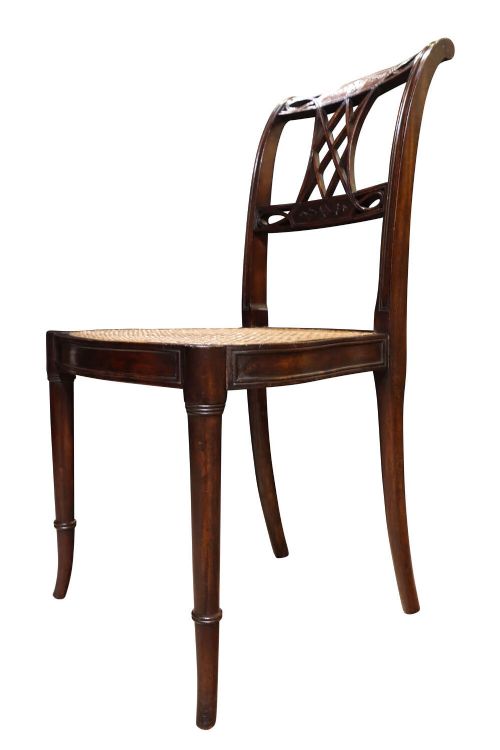
Inlay work involves recessing thin slices of lighter woods, satinwood, or bone into the primary timber ground. Seats were frequently upholstered in fabric, velvet, or woven cane depending on the domestic function of the chair.
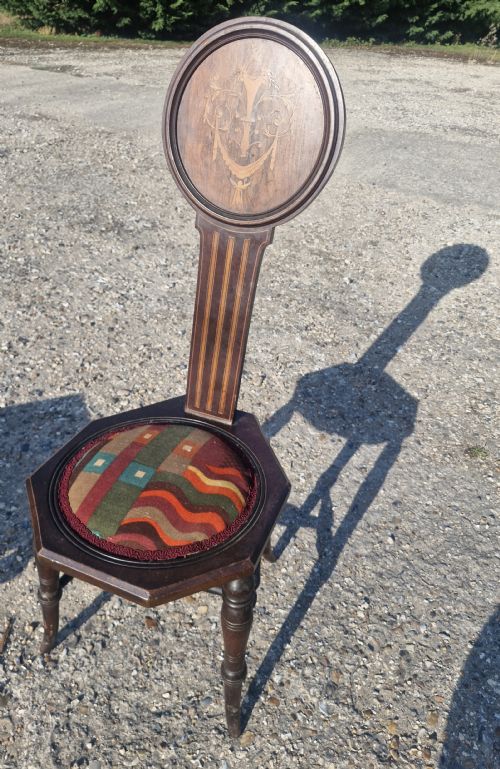
One exceptional nineteenth century walnut chair includes a built-in musical mechanism alongside its marquetry inlay.
Assessing Quality and Execution
Quality reveals itself in the precision of the inlay work and the tightness of the timber joints. Superior examples display seamless integration of contrasting veneers without visible gaps or excessive filler.
The choice of primary timber and the complexity of the decorative carving or marquetry dictate the upper tier of the range. Heavier timber frames and intact original cane or upholstery surfaces elevate the standard.
Shoolbred·Lamb of Manchester
The Inlaid Wooden Side Chairs Glossary
- Inlay
- The technique of inserting pieces of contrasting material into a depressed wooden surface to form a decorative design. This creates flush ornamental patterns across the backrests and splats.
- Marquetry
- Elaborate veneer work forming pictorial or geometric patterns across furniture surfaces. It utilises various tinted woods to construct complex pictorial compositions.
- Side Chair
- A small chair without arms designed for dining or occasional room placement. These pieces function independently from larger armchairs and carvers.
- Splat
- The central vertical slat down the middle of a chair back. It often carries the primary inlaid decoration or carved detail.
- Carver
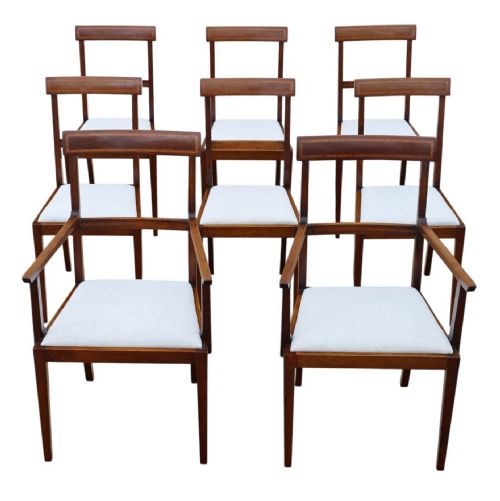
- An armchair designed in the same style as accompanying dining chairs, typically positioned at the head of a table. These provide arm rests alongside the standard seat height.
Inlaid Wooden Side Chairs: Frequently Asked Questions
What periods do these chairs represent?
The listings span multiple eras from the Georgian period through the Regency and Victorian decades into the Edwardian epoch.
Design characteristics shift across these periods, moving from geometric classical lines towards flowing Edwardian and Art Nouveau floral motifs.
How do I identify Edwardian inlaid chairs?
Edwardian examples typically utilise mahogany or beech combined with delicate satinwood inlay work. They frequently appear as bedroom, occasional, or salon seating.
The lighter proportions and integration of stylistic cues from earlier revivals help distinguish them from heavier mid Victorian dining sets.
Were these chairs used for dining?
Many examples on this page originated as components of larger dining sets meant for formal meals. Sets frequently include multiple side chairs paired with matching armchairs.
Other variants served as occasional, library, or bedroom seating rather than formal dining furniture.
What woods were used for the inlay?
Cabinetmakers utilised satinwood, bone, and lighter contrasting timbers to create decorative patterns against darker primary woods like mahogany and walnut.
This contrast highlights the grain and defines the borders of back splats and top rails.