



Satinwood Kidney Table
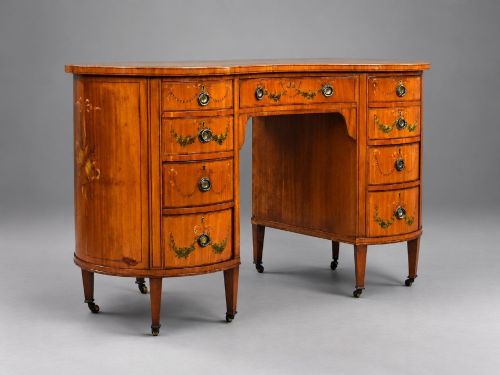
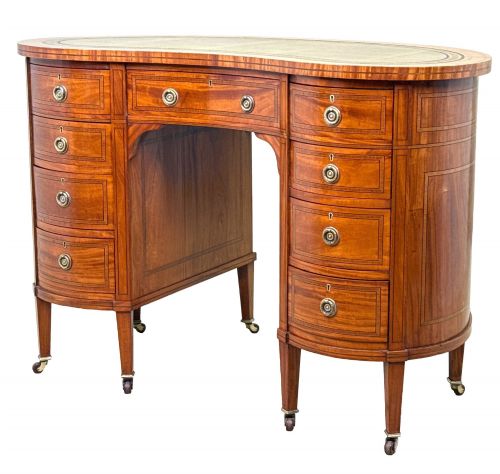
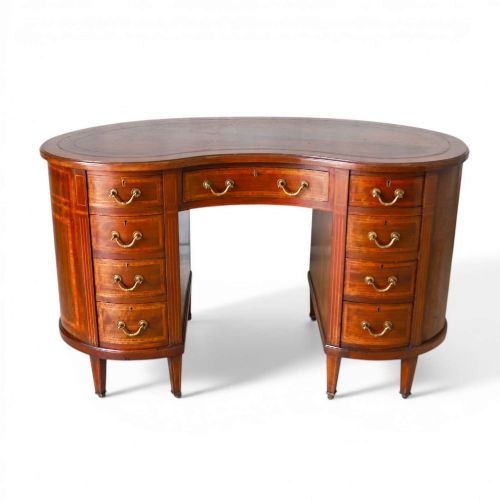
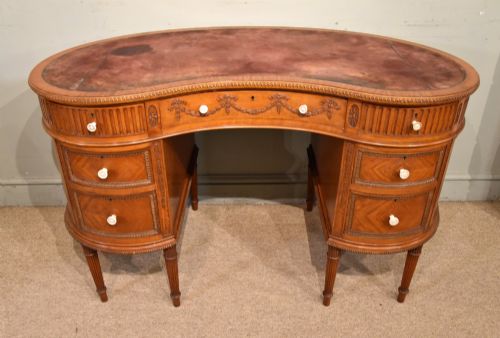
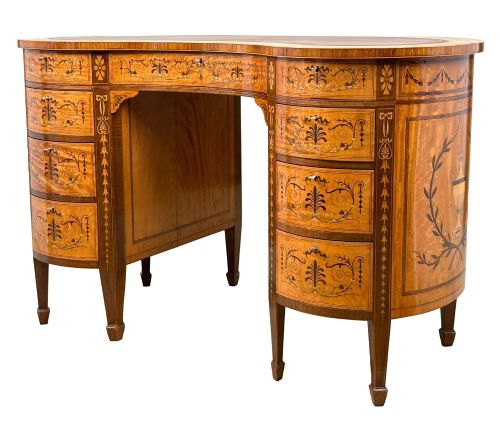
These satinwood kidney tables combine a curvaceous desktop with the pale, figured grain of exotic timber, offering a graceful surface for writing or display.
Satinwood Kidney Table
When you search for a satinwood kidney table, you are looking at a distinctive writing desk, occasional table, or display piece shaped like a bean to fit comfortably against the body. Most examples on this page date from the Victorian, Edwardian, and Sheraton Revival periods spanning the late nineteenth and early twentieth centuries.
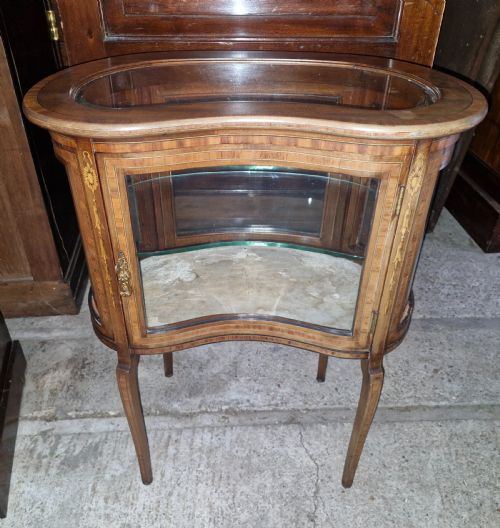
These pieces primarily function as writing desks, side tables, or glass-topped bijouterie cabinets and vitrines for small collections. The distinctive curved outline appears most frequently in inlaid mahogany or satinwood frames produced during the height of the Edwardian era.
How they were made
Cabinet makers constructed these curved forms using solid mahogany or satinwood carcasses overlaid with fine timber veneers and delicate boxwood stringing. The distinctive serpentine curves required skilled joinery to bend and shape the wooden frames accurately.
Surfaces were frequently embellished with marquetry detailing, brass mounts, and inset leather writing panels tooled with gold leaf. Glass-fronted display versions incorporated hinged lids or glazed panels for showcasing delicate objects.
Satinwood Kidney Table Retail Price Guide 2026
Typical asking prices for satinwood kidney table among the pieces listed under this phrase on Sellingantiques today, from the lower quarter to the upper quarter. They describe what is for sale here now, not the wider market.
Many of these tables include hidden compartments beneath their curved writing lids for concealing love letters.
What varies in quality
The distinction between standard production and superior work rests on the intricacy of the timber veneers and the precision of the marquetry inlay. Maker attribution, such as pieces bearing the mark of Edwards and Roberts or Maple and Co, elevates the standing of an individual table.
Structural integrity of the curved framework and the preservation of original brass hardware or leather inserts also determine the desirability of the piece. Subtle details in the boxwood stringing and the richness of the polished satinwood grain separate ordinary examples from the finest items.
Maple and Co·Edwards and Roberts
The Satinwood Kidney Table Glossary
- Satinwood
- A dense, lustrous timber with a pale yellow or golden sheen that accepts fine polish. It was favoured by cabinet makers for high-status decorative furniture during the eighteenth and nineteenth centuries.
- Kidney shaped
- A curved furniture profile resembling a bean, designed to wrap around the user when seated at a desk. This ergonomic form gained immense popularity during the Sheraton Revival period.
- Bijouterie table
- A glass-topped display table or cabinet designed for showing small precious objects, medals, or jewellery. These pieces often feature hinged velvet-lined compartments beneath the glass.
- Marquetry
- Decorative patterns formed by fitting together thin veneers of different coloured woods, ivory, or shell onto a carcase. The technique creates pictorial or geometric designs across tabletops and drawer fronts.
- Sheraton Revival
- A late nineteenth-century design movement inspired by the neoclassical furniture of George Sheraton. It is characterised by slender proportions, satinwood veneers, and delicate painted or inlaid decoration.
Satinwood Kidney Table: Frequently Asked Questions
What is a kidney table used for?
These tables served primarily as writing desks or occasional surfaces where a person could sit comfortably within the curve of the top. Glazed variants were specifically utilised for displaying small decorative items and collections.
The curved profile allowed the piece to occupy less visual space in a room while providing a practical surface for correspondence or needlework.
How do I identify a Sheraton Revival table?
Sheraton Revival pieces replicate the lighter proportions and neoclassical decoration associated with late eighteenth-century design. Look for satinwood veneers, delicate boxwood stringing, and symmetrical marquetry motifs.
Most examples found in this style date from the Victorian and Edwardian periods rather than the eighteenth century itself.
Are these desks comfortable to write at?
The curved indentation at the front places the user closer to the writing surface while keeping stationery within easy reach. Many feature fitted leather tops that provide a smooth, flat plane for handwriting.
Their compact proportions mean they were often placed away from walls as freestanding pieces in a boudoir or drawing room.
How do I care for satinwood veneer?
Satinwood requires protection from direct sunlight to prevent the golden grain from fading over time. Regular dusting with a soft, dry cloth maintains the polished finish without the need for heavy waxes.
Keep these tables away from direct heat sources and drastic humidity changes to prevent the delicate veneers from lifting or splitting.