
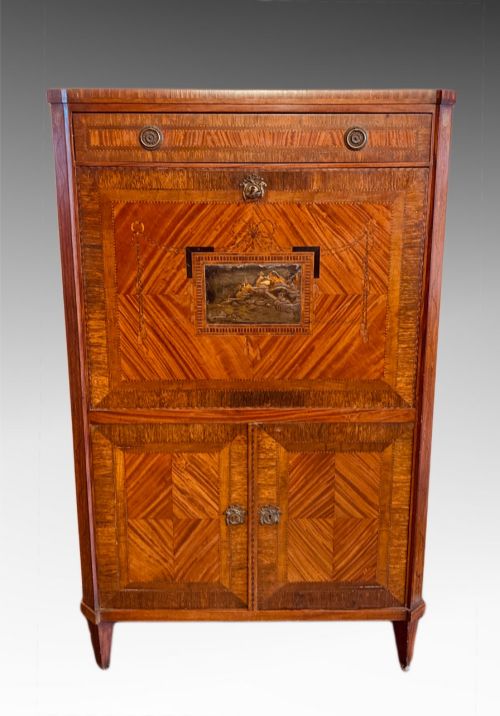


Satinwood French Bureau
These satinwood french bureau pieces are sophisticated writing furniture bringing continental elegance and fine timber grain into a room.
Satinwood French Bureau
A satinwood french bureau brings together continental styling and pale, figured timber to create a striking writing surface. These pieces span the nineteenth century, including Victorian interpretations and specific French revival styles.
The selection here encompasses fall front escritoires, bureau plat tables, and bonheur du jour cabinets. Marquetry inlays and contrasting woods frequently enhance the primary satinwood surface.
Buyers encounter freestanding writing desks and compact writing tables designed for refined domestic spaces. Ormolu mounts and leather or velvet writing surfaces often accompany these forms.
Construction and materials
Cabinet makers utilised satinwood as a primary veneer, often combining it with mahogany, rosewood, walnut, or kingwood for contrast. Parquetry and marquetry patterns demonstrate precise geometric and floral wood inlay techniques.
Ormolu mounts cast in brass provide gilded decorative accents along edges, feet, and key escutcheons. Internal compartments incorporate fine leather or velvet writing inserts alongside mirror glass details in cabinet backs.
Some nineteenth century writing boxes manage to conceal intricate stationery compartments beneath surprisingly modest outer lids.
Judging quality and craftsmanship
The crispness of the ormolu mounts and the complexity of the marquetry distinguish superior examples from simpler pieces. Hand-chased gilt bronze details and multi-timber parquetry require exceptional skill to execute cleanly.
The choice of secondary woods and the depth of figure in the satinwood veneer indicate the standing of the original workshop. Subtlety in grain alignment and harmonious timber contrast elevate the overall presence of the desk.
Donald Ross·Edwards & Roberts
The Satinwood French Bureau Glossary
- Satinwood
- A hard, yellow timber with a lustrous sheen that takes a high polish. It forms the defining visual characteristic of these desks.
- Ormolu
- Gilded bronze used for decorative mounts and furniture hardware. It provides metallic contrast against the pale timber.
- Marquetry
- Decorative veneer work forming pictorial or geometric patterns using various coloured woods. Master craftsmen cut these pieces to fit together precisely.
- Bureau Plat
- A flat-topped writing table, usually freestanding, lacking the superstructure of a cabinet bureau. These tables feature drawers beneath the writing surface.
- Bonheur du Jour
- A small, light lady's writing desk featuring a small cabinet or shelving superstructure above the table. These dainty pieces became popular during the nineteenth century.
Satinwood French Bureau: Frequently Asked Questions
How do I care for satinwood?
Satinwood benefits from minimal intervention, requiring only gentle dusting with a soft, dry cloth. Avoid placing these pieces in direct sunlight or near heat sources to protect the delicate veneers.
Applying a traditional beeswax polish occasionally helps preserve the natural lustre of the timber surface.
What is a bonheur du jour?
A bonheur du jour is a small, elegant writing desk featuring an upper cabinet or tiered shelving structure. These pieces were designed for correspondence and light domestic paperwork.
They combine cabinet work with a writing table, often incorporating drawers and small compartments within the superstructure.
How do I date these desks?
Dating relies on examining construction methods, timber choices, and stylistic revival influences. Pieces from the nineteenth century often combine Victorian cabinet-making traditions with French Louis XV and XVI revival motifs.
Hardware styles, secondary woods inside drawers, and the nature of the veneer work also offer strong clues to the decade of manufacture.