

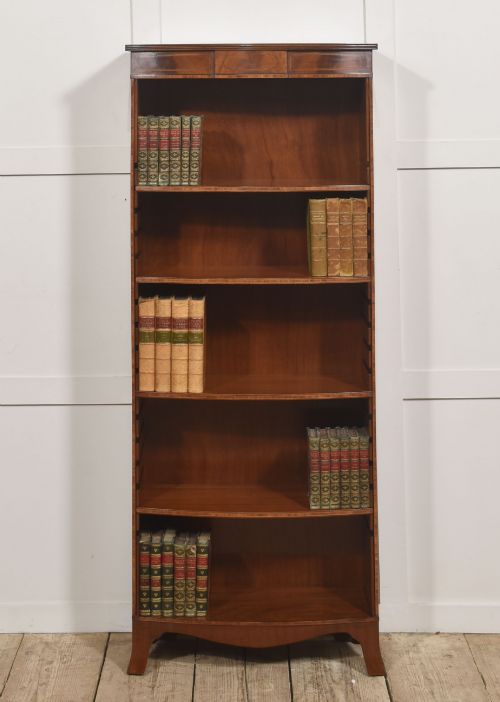


Satinwood Display Unit
A satinwood display unit brings radiant timber and refined shelving to a room, offering the ideal stage for prized books and collections.
Satinwood Display Unit
You are most likely to meet Edwardian and nineteenth-century furniture on this page, often featuring mahogany and satinwood construction with delicate inlay. These cabinets and bookcases serve both decorative and practical roles in period interiors.
How they were made
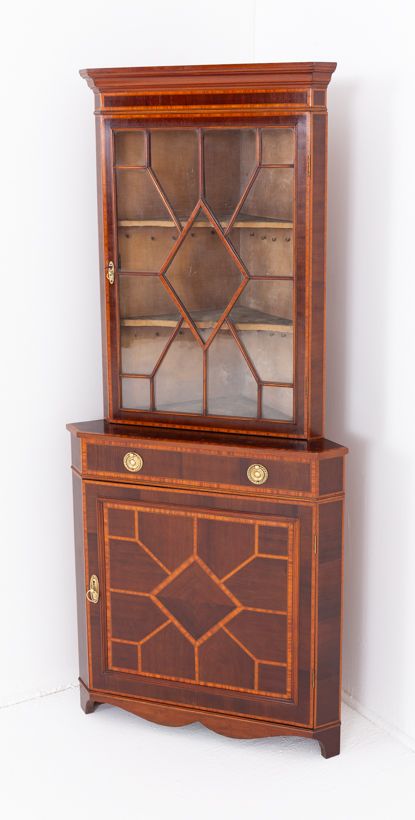
Cabinet makers utilised satinwood and mahogany as primary timbers, frequently enhancing surfaces with boxwood stringing and marquetry. Brass hardware secures glazed doors, whilst mirror glass often lines the interior backs of display cabinets to reflect light.
Makers constructed these units with careful attention to proportion, joining solid timbers and veneers to create sturdy shelving and structured display spaces. Painted finishes and detailed inlays reflect the Sheraton Revival and Aesthetic Movement styles seen across the period.
Satinwood Display Unit Retail Price Guide 2026
Typical asking prices for satinwood display unit among the pieces listed under this phrase on Sellingantiques today, from the lower quarter to the upper quarter. They describe what is for sale here now, not the wider market.
Several revolving bookcases allow you to browse your library with a gentle spin.
What varies in quality
The degree of refinement in the marquetry and the choice of timber grain dictate the distinction between standard examples and superior pieces. Skilled execution of boxwood inlay and balanced proportions demonstrate the hand of a more accomplished cabinet maker.
The integrity of the glass panels, the clarity of the mirror backs, and the preservation of the original polished surface determine the overall standing of an individual unit. Pieces retaining their original brass fittings and sound structural joinery command greater appreciation.
The Satinwood Display Unit Glossary
- Satinwood
- A lustrous timber with a pale yellow sheen used extensively for fine cabinet work and decorative veneers. It provides a bright surface that catches light effectively in display furniture.
- Marquetry
- The art of applying decorative pieces of veneer to a structure to form intricate patterns and pictures. Makers used contrasting woods like boxwood to achieve detailed floral or geometric motifs.
- Stringing
- A narrow strip of contrasting timber inlaid into the surface of furniture to create crisp borders. This technique frequently outlines the panels and shelves of Edwardian pieces.
- Étagère
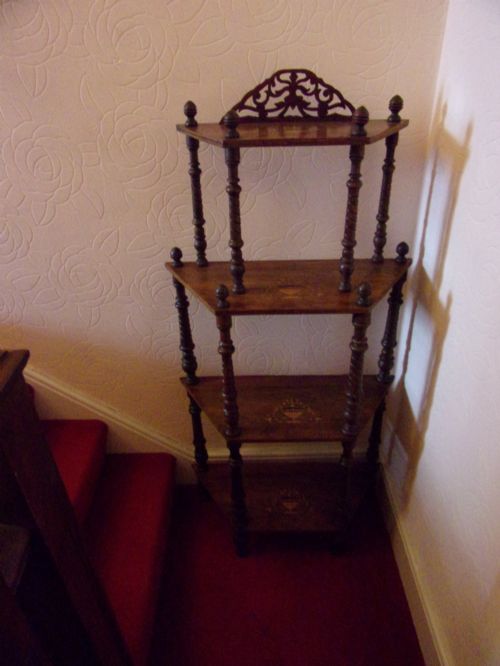
- A piece of furniture consisting of a set of open shelves for displaying small objects. Regency examples appear within this category as tiered tables.
Satinwood Display Unit: Frequently Asked Questions
What is a satinwood display unit?
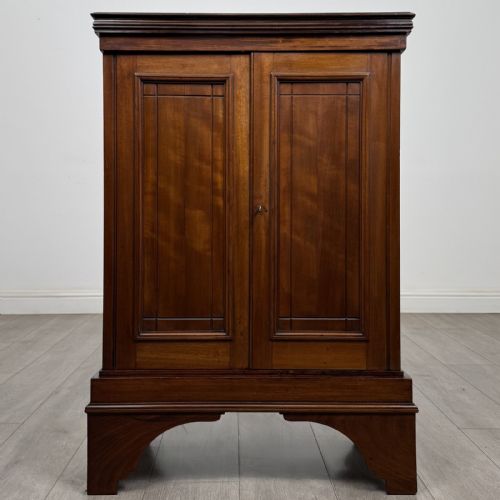
A satinwood display unit is a piece of furniture designed to showcase books, ceramics, or decorative objects behind glass or upon open shelves. These items utilise pale satinwood veneers and often feature intricate boxwood inlay.
Such furniture ranges from compact corner cabinets to tall standing cupboards. They bring lightness and refined craftsmanship to domestic spaces.
How were these units used originally?
Originally, these cabinets and bookcases housed treasured volumes, curiosities, and fine porcelain collections in reception rooms. The inclusion of glass doors and mirror backs helped protect delicate items whilst displaying them to visitors.
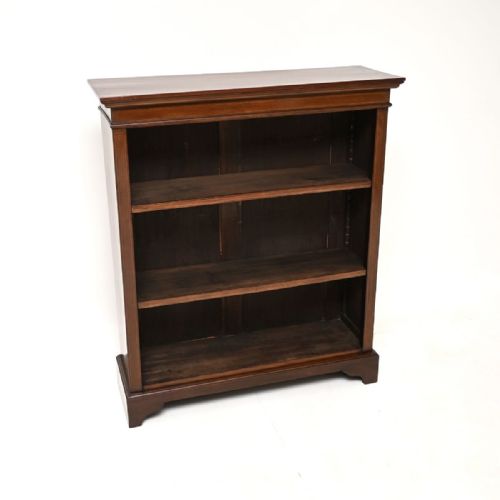
Open versions provided immediate access to frequently read books and writing materials. Hanging shelves utilised wall space efficiently in smaller drawing rooms.
How do I style one at home?
You can place a corner display unit in an unused angle of a room to add architectural interest and storage. Pairing them with traditional or eclectic interiors lets the warm timber tones stand out.
Keep the arrangement of objects inside uncluttered to highlight the figured grain of the satinwood. Ensure the room's lighting complements the reflective glass and polished surfaces.
How do I date an Edwardian display piece?
Dating relies on observing stylistic markers such as Sheraton Revival influences, specific inlay patterns, and construction methods characteristic of around nineteen hundred. Edwardian pieces often combine mahogany with satinwood panels and delicate stringing. Nail types, backboard construction, and hinge styles also offer physical clues to the exact period of manufacture. Comparing these elements with documented examples confirms the era.