

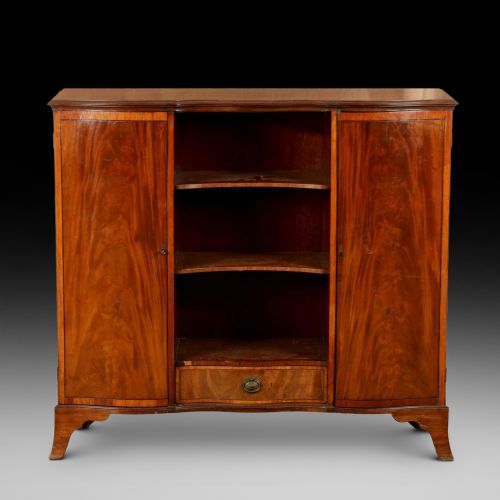
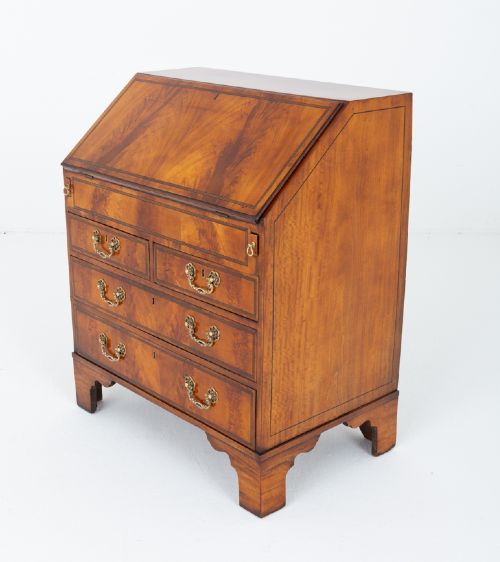
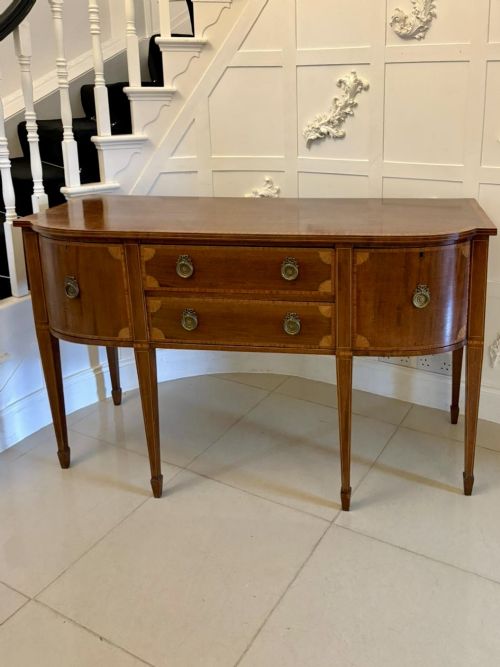
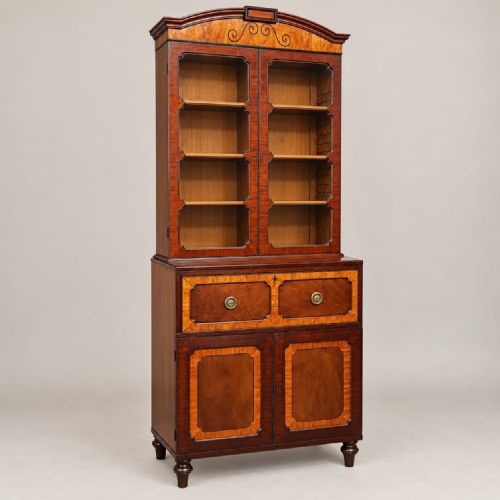
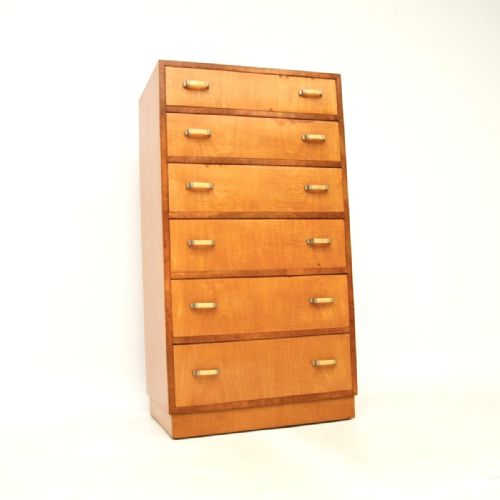


Satinwood Crossbanded Cabinet
These satinwood crossbanded cabinet pieces bring together figured timbers and precise borders, offering storage and display with genuine period character.
Satinwood Crossbanded Cabinet
A satinwood crossbanded cabinet provides storage through various forms including sideboards, chests of drawers, display cabinets, and writing desks. These pieces span multiple eras, appearing in 18th Century, Victorian, Edwardian, and Art Deco designs.
The aesthetic centres on the contrast between a primary timber such as mahogany or harewood and the pale, reflective quality of satinwood borders. Buyers encounter Sheraton Revival interpretations alongside earlier Georgian and later 20th-century variations.
How they were made
Craftsmen built these items using structural woods like mahogany and walnut, applying satinwood veneers and crossbanding to visible surfaces. Boxwood and harewood stringing often form fine geometric lines around the panels and drawer fronts.
Hardware such as brass handles and glass panes integrate into the design, particularly on display cabinets and bijouterie pieces. Joinery techniques reflect the period of origin, from 18th-century cabinet making to Edwardian and Art Deco production methods.
Satinwood Crossbanded Cabinet Retail Price Guide 2026
Typical asking prices for satinwood crossbanded cabinet among the pieces listed under this phrase on Sellingantiques today, from the lower quarter to the upper quarter. They describe what is for sale here now, not the wider market.
Bijouterie cabinets were originally built to showcase pocket watches and portrait miniatures, letting owners display their smallest treasures under glass.
What varies in quality
Quality depends upon the choice and figure of the satinwood timber and the precision of the crossbanding and inlay work. Finer examples display meticulous grain matching and crisp, clean borders that remain intact across the surface.
The harmony between the primary wood and the decorative veneer dictates the overall visual success of the piece. Subtlety in the stringing and proportion separates standard production items from finer Sheraton and Edwardian commissions.
The Satinwood Crossbanded Cabinet Glossary
- Crossbanding
- A strip of veneer applied perpendicularly to the grain of the surrounding surface. This technique frames panels and drawers with a contrasting border.
- Satinwood
- A hard, yellow-brown timber with a lustrous, reflective grain. It serves as the primary veneer or border material on many period pieces.
- Sheraton Revival
- A late 19th and early 20th century style inspired by the designs of Thomas Sheraton. It utilises classic proportions, light timbers, and delicate inlay.
- Bijouterie cabinet
- A glazed display case designed for smaller valuable items and curiosities. These cabinets often feature satinwood crossbanding and elevated stands.
- Stringing
- A narrow line of contrasting wood inlay used to outline drawers and doors. It adds subtle linear detail to the cabinet facade.
Satinwood Crossbanded Cabinet: Frequently Asked Questions
What periods do these cabinets come from?
The pieces span the 18th Century, Victorian era, Edwardian period, and the 1930s Art Deco movement. Each era brings distinct stylistic interpretations to the basic form.
Sheraton and Sheraton Revival influences appear frequently across Edwardian and earlier items, showing a consistent appreciation for lighter neoclassical aesthetics.
How do I style a satinwood cabinet?
The pale, reflective quality of satinwood allows these cabinets to brighten both traditional and contemporary interiors. They work well paired with darker mahogany or walnut furniture to create contrast in a room.
Placing them in living spaces or hallways lets the figured grain and crossbanding catch the light, serving as both storage and a visual focal point.
What is the difference between satinwood and mahogany?
Satinwood is a pale, golden timber with a high natural sheen and a tight grain, often utilised for veneers and decorative banding. Mahogany is a darker, reddish-brown wood valued for its structural stability and deep colour.
Many pieces combine both woods, using mahogany for the main carcase and drawers while reserving satinwood for the crossbanded borders and decorative panels.
How should I care for timber veneer?
Keep the wood away from direct sunlight and extreme temperature changes to prevent the veneer from drying out or lifting. Regular dusting with a soft, dry cloth maintains the finish without needing harsh polishes.
Applying a traditional wax occasionally helps preserve the lustre of the satinwood and protects the integrity of the crossbanding.