



Satinwood China Cupboard
A satinwood china cupboard brings light and gentle colour into a room, designed to showcase precious porcelain behind glazed doors.
Satinwood China Cupboard
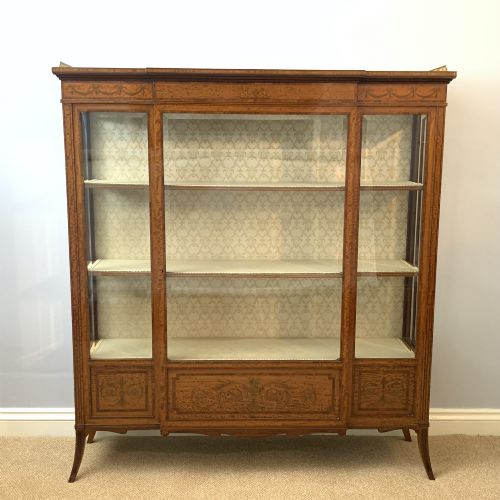
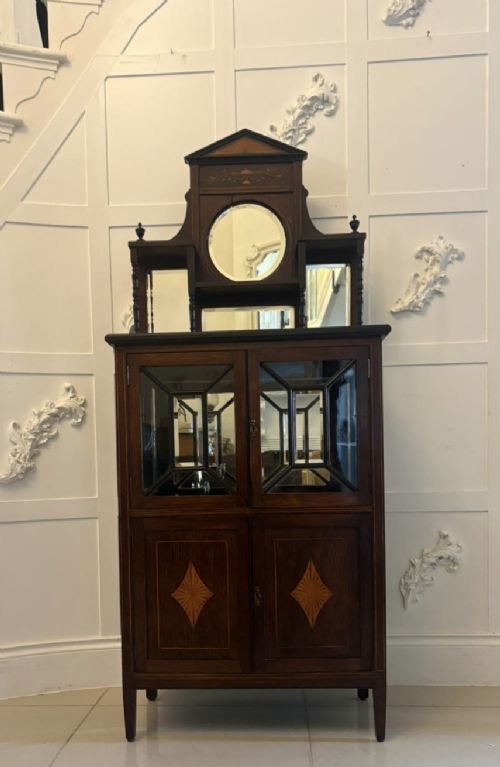
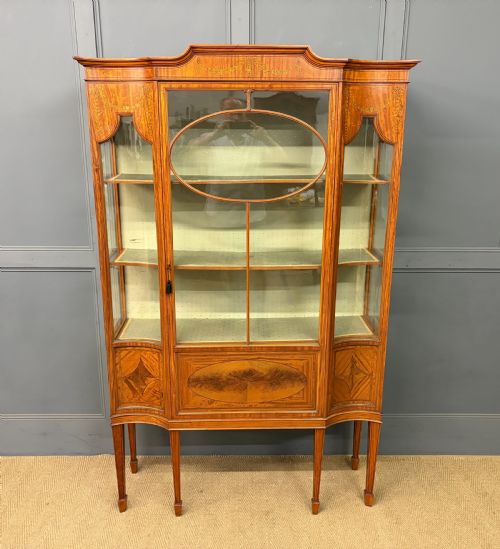
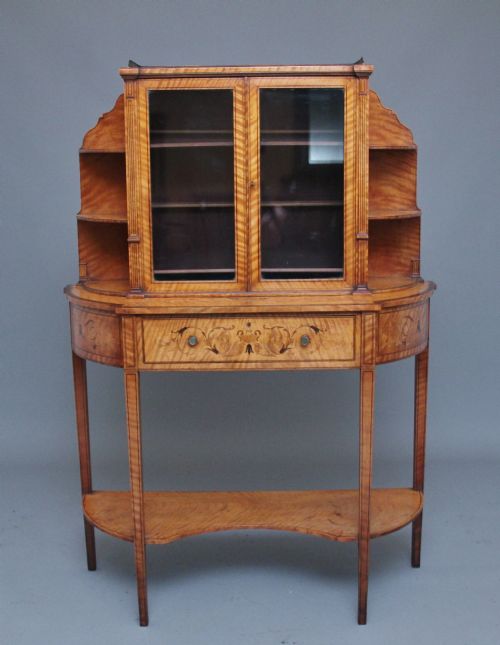
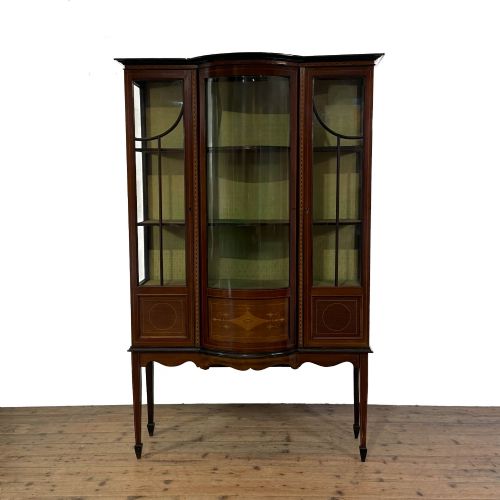
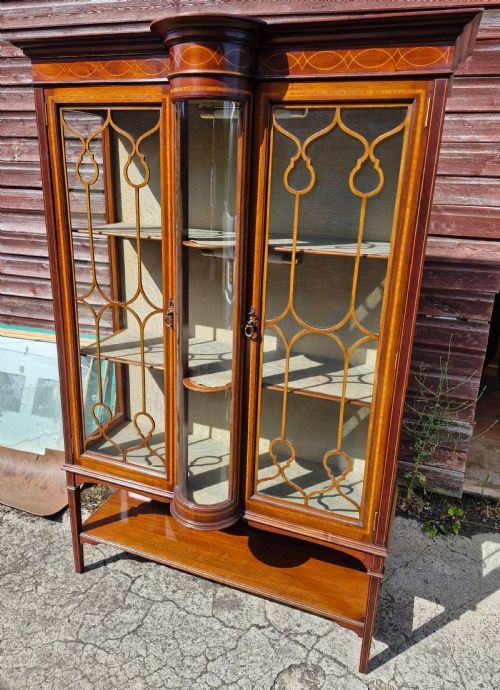
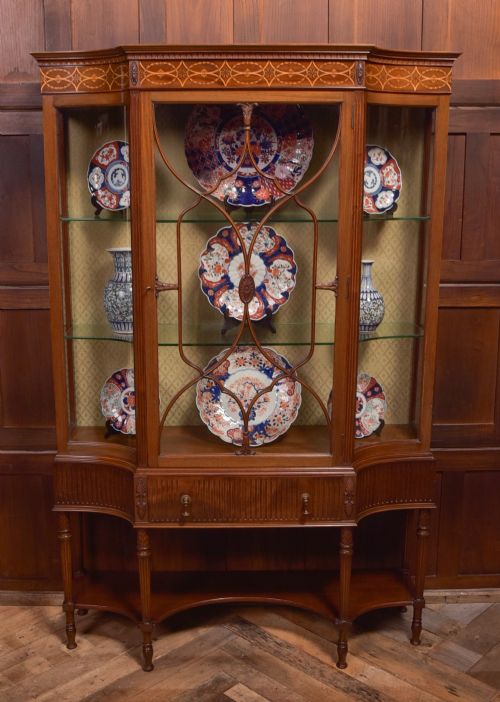
A satinwood china cupboard is typically encountered as a display cabinet, vitrine, or bookcase dating from the Victorian and Edwardian eras. These pieces serve to house and exhibit fine ceramics, utilising glass doors and mirrored backs to catch the light.
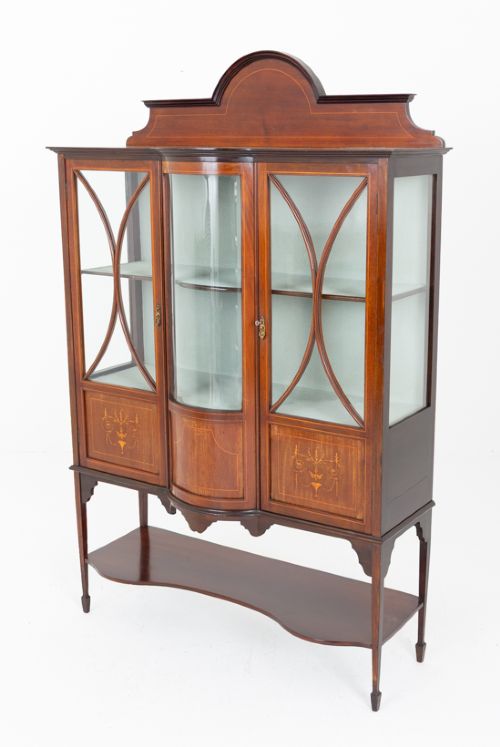
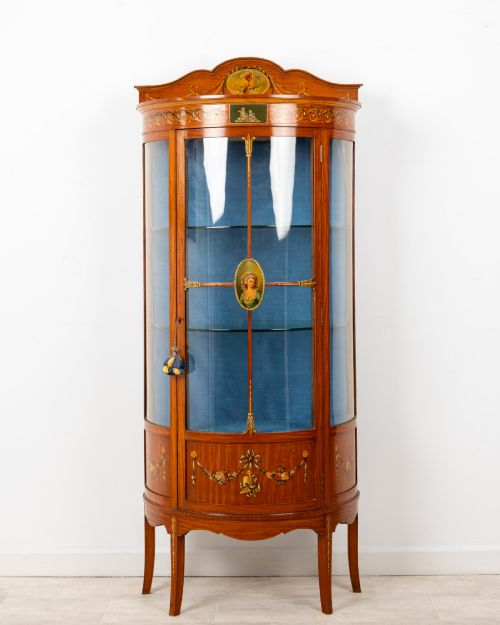
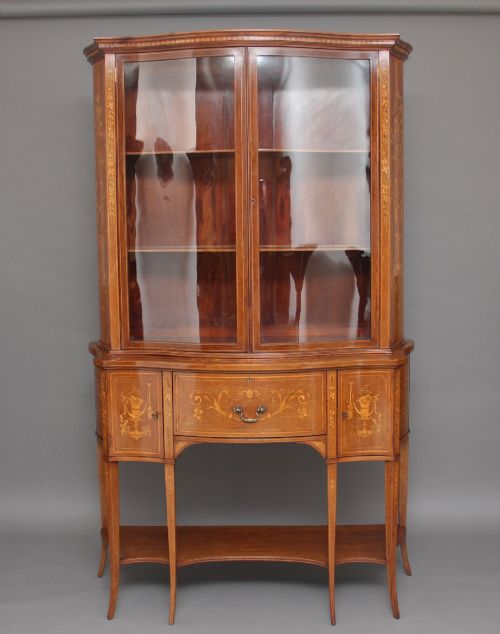
The prevailing aesthetic draws heavily on the Sheraton Revival and Adams styles, favouring classical proportions, bow fronts, and serpentine shapes. Alongside freestanding display cabinets, the listings include corner cabinets and tall standing double-height pieces.
Most examples originate from the late nineteenth century and the opening decades of the twentieth century. They combine utility with decorative presence, standing on slender legs or cabinet bases designed to anchor the room.
Materials and construction
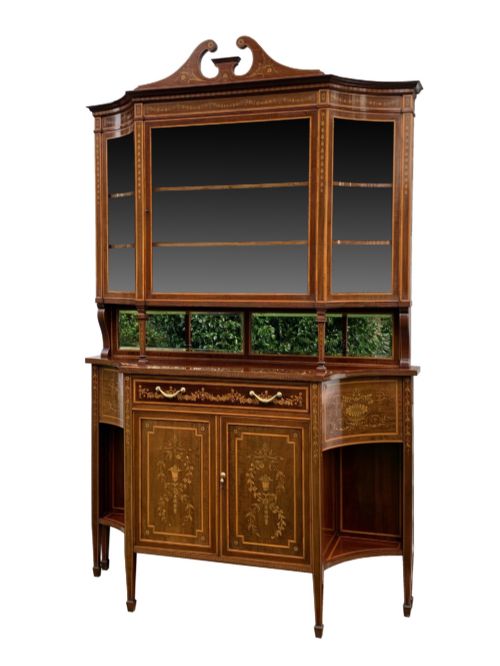
Makers built these cabinets using a foundation of mahogany or solid wood, overlaid with satinwood veneers to create a luminous, golden ground. Inlaid details in contrasting timbers, along with delicate marquetry and hand-painted motifs, decorate the exterior surfaces.
Glazing bars divide the glass door panels into geometric panes, while brass hardware secures the doors and interior shelves. Interior components frequently incorporate fabric linings and mirror glass to enhance the reflection of displayed objects.
Listings span from the Victorian and Edwardian eras, with a strong representation of Sheraton Revival styles utilising satinwood, mahogany, and intricate marquetry.
Distinguishing quality across pieces
The degree of refinement in the wood inlay and marquetry dictates much of the visual hierarchy among these cabinets. Crisp, intricate parquetry and subtle hand-painted panels separate ambitious workshop production from simpler commercial output.
Structural harmony also marks the difference between standard and superior pieces, seen in the balance of curved bow fronts, serpentine outlines, and the selection of figured satinwood veneers that catch the eye from across the room.
Edwards & Roberts·Maple & Co·Jewell of Holborn·S and H Jewell London
The Satinwood China Cupboard Glossary
- Satinwood
- A durable tropical timber known for its natural golden sheen and smooth, satiny texture. It provides the primary decorative veneer for many late nineteenth-century revival cabinets.
- Marquetry
- The art of applying small pieces of veneer to form decorative patterns and pictorial designs on furniture surfaces. Craftsmen use contrasting woods to achieve tonal depth.
- Sheraton Revival
- A late Victorian and Edwardian design movement inspired by the eighteenth-century furniture maker Thomas Sheraton. It relies on classical symmetry, light timbers, and delicate inlay.
- Vitrine
- A glass-fronted display cabinet designed specifically for showing porcelain and small curiosities. These pieces often feature glass on the sides as well as the front.
- Parquetry
- Geometric mosaic woodwork formed by small veneer tiles arranged in repeating patterns. It differs from marquetry by focusing on repeating abstract shapes rather than pictorial scenes.
- Bow Front
- A convex, outwardly curved front section on a cabinet or chest of drawers. This contour softens the rectangular lines of the furniture and reflects light dynamically.
Satinwood China Cupboard: Frequently Asked Questions
How do I care for satinwood furniture?
Satinwood benefits from placement away from direct sunlight and sudden temperature changes, which can dry out the delicate veneers. Regular dusting with a soft, dry cloth preserves the polished surface without the need for heavy waxes.
Keeping humidity stable prevents the timber and underlying joinery from moving or cracking over time.
Which period do most of these cabinets come from?
The majority of these pieces date from the Edwardian era and the late Victorian period, spanning the late nineteenth and early twentieth centuries. This timeframe saw a strong revival of eighteenth-century neoclassical design.
Maker signatures and construction methods help narrow the date of manufacture within this broad span.
Are mirror backs original to these cabinets?
Many Edwardian and Victorian cabinets incorporate original mirror glass inside the back panel to amplify light through the glass shelves. The silvering on these mirrors often shows authentic ageing that matches the era of the cabinet.
Checking the rebate and backing boards confirms whether the mirror glass dates from the original construction.