
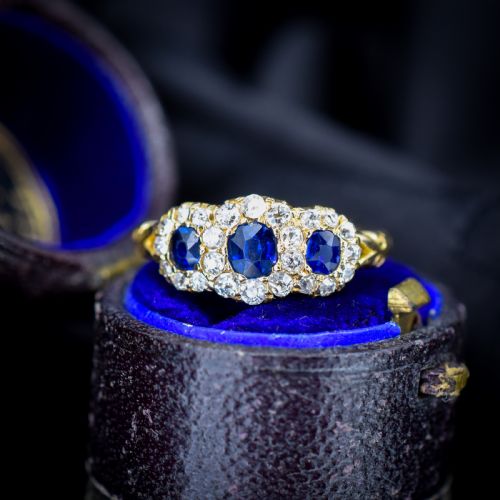
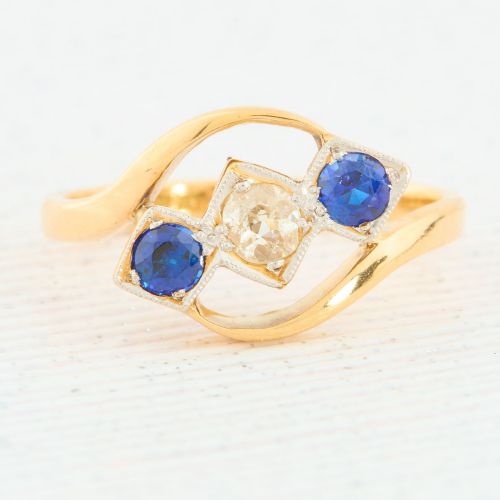

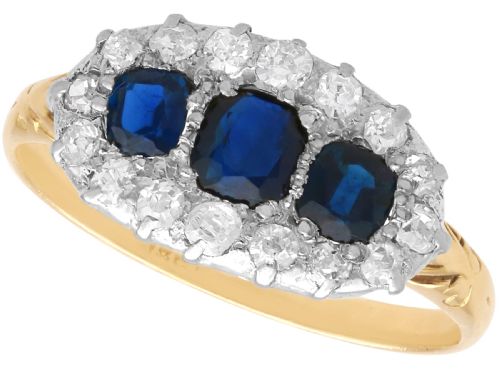


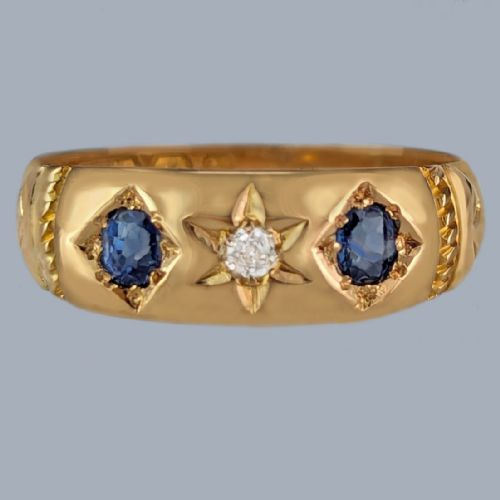


Sapphire Diamond Trilogy Ring
A sapphire diamond trilogy ring brings together three stones representing past, present, and future in enduring precious metal.
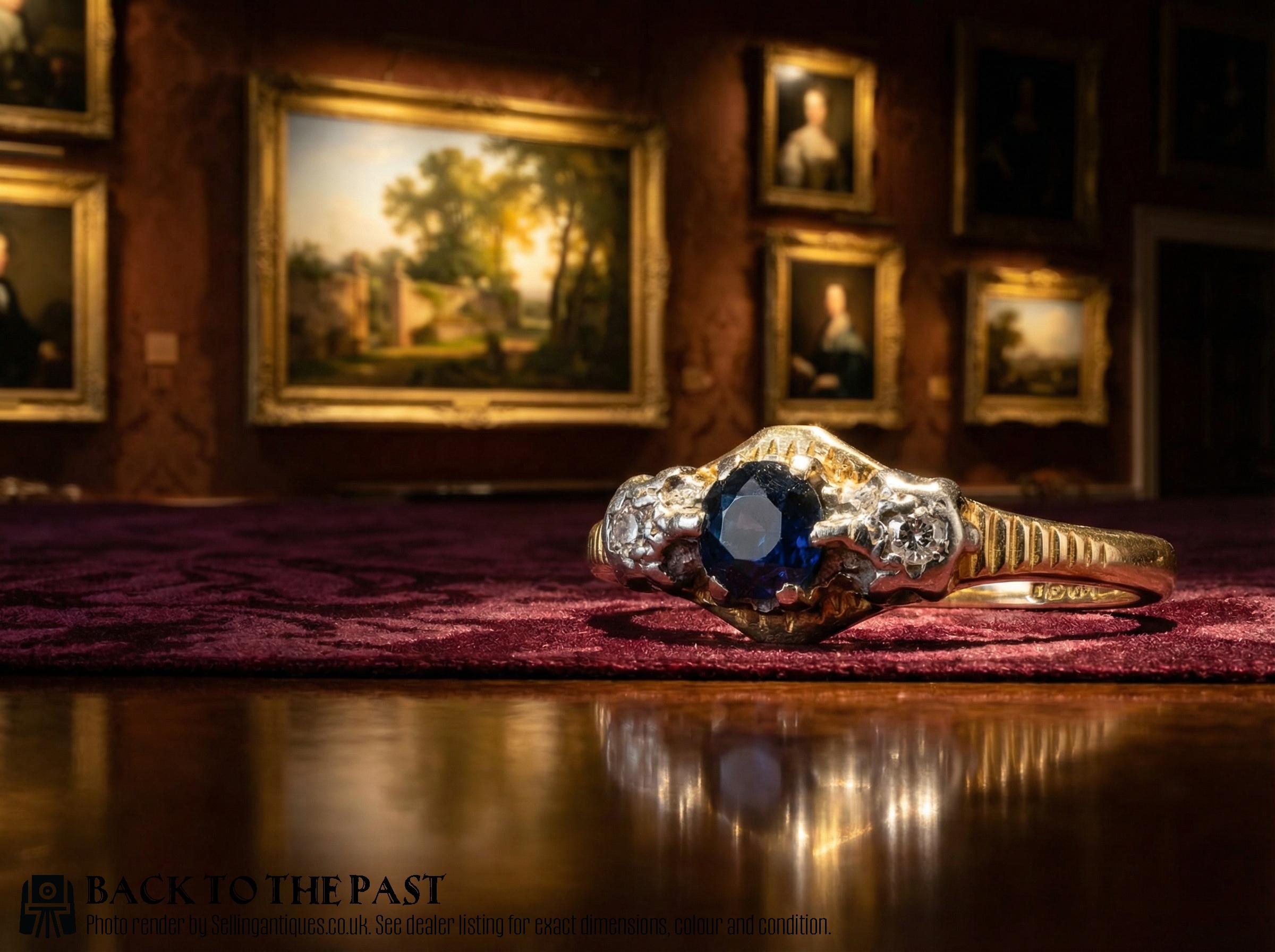
Sapphire Diamond Trilogy Ring
A sapphire diamond trilogy ring unites a central gemstone flanked by two diamonds, or a central diamond flanked by two sapphires, forming a classic three-stone configuration. Buyers searching this phrase encounter examples spanning the late Victorian and Edwardian eras through the Art Deco period and into mid-century designs.
The surviving pieces include yellow gold bands from the late nineteenth century alongside platinum settings from the 1920s and 1930s. Art Deco geometric motifs and Edwardian delicate detailing appear frequently alongside later mid-century interpretations.
How They Were Made
Goldsmiths constructed these rings using platinum or varieties of gold including 9ct, 15ct, and 18ct yellow gold, often combining gold shanks with platinum claw settings to secure the stones. Gemstones received period-specific cuts such as old mine cuts, transitional cuts, and baguette cuts alongside standard round facets.
Setting techniques evolved from early claw and gypsy mounts toward intricate geometric rubover and milgrain borders during the Art Deco decades.
Listings feature 18ct gold, platinum, and 9ct gold materials across Victorian, Edwardian, Art Deco, and mid-century periods.
What Varies in Quality
The distinction between tiers rests upon the origin, saturation, and natural treatment state of the sapphires, alongside the cut and clarity of the accompanying diamonds. Stones originating from Burma, Ceylon, or Kashmir command greater attention than basaltic alternatives.
Execution of the metalwork, from hand-carved shoulders on Victorian bands to precise milgrain edges on platinum mountings, determines the overall refinement of the piece.
The Sapphire Diamond Trilogy Ring Glossary
- Trilogy ring
- A ring featuring three principal gemstones set in a row, traditionally symbolising the past, present, and future. These designs remain a popular choice for engagement and anniversary jewellery.
- Old cut diamond
- A diamond cut by hand before modern machinery standardised proportions, typically featuring a small table, high crown, and open culet. These stones display a softer candlelight sparkle.
- Milgrain
- A decorative edging technique consisting of a line of tiny raised metal beads along the setting borders. This finish is characteristic of Edwardian and Art Deco jewellery.
- Unheated sapphire
- A natural sapphire that has undergone no thermal enhancement to improve its colour or clarity. Such stones retain their genuine geological formation.
- Transition cut
- A diamond cut used roughly between 1910 and 1930 that bridges the older antique cuts and the modern round brilliant cut.
Sapphire Diamond Trilogy Ring: Frequently Asked Questions
What periods do these rings come from?
The selections span from late Victorian and Edwardian periods through Art Deco design eras up to mid-century modern pieces.
Craftsmanship reflects the prevailing aesthetic of each decade, shifting from heavier yellow gold mountings to geometric platinum settings.
How do I wear a trilogy ring daily?
Trilogy rings pair well with plain wedding bands or fit comfortably as standalone pieces on the hand.
Consider the setting height and metal durability when selecting a ring for everyday wear.
What stone shapes are common?
Round faceted stones dominate the surviving inventory, accompanied by occasional baguette or transitional cuts.
Symmetrical arrangements balance central diamonds with side sapphires or vice versa.
How do I identify an Art Deco ring?
Art Deco pieces utilise platinum settings, geometric lines, and calibration-cut stones alongside milgrain detailing.
These designs emerged prominently during the 1920s and 1930s.