







Sapphire Diamond Marquise Ring
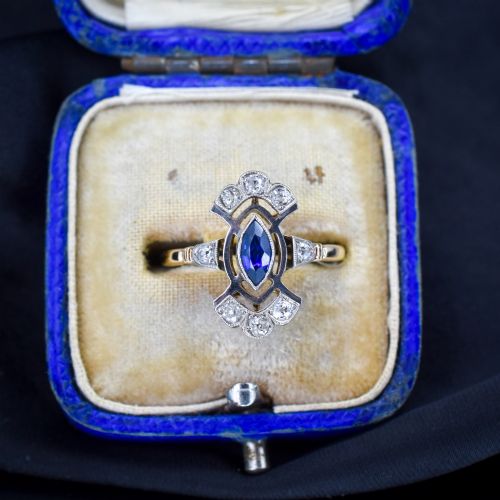
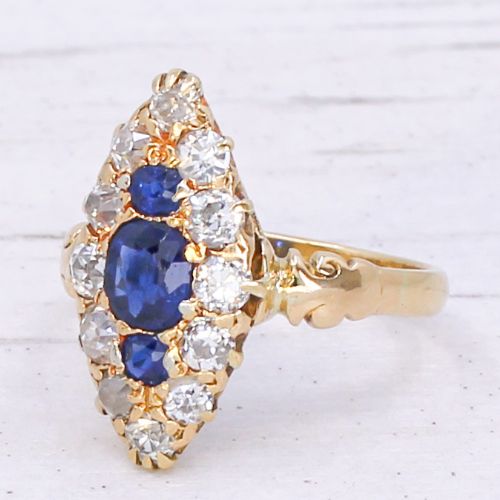
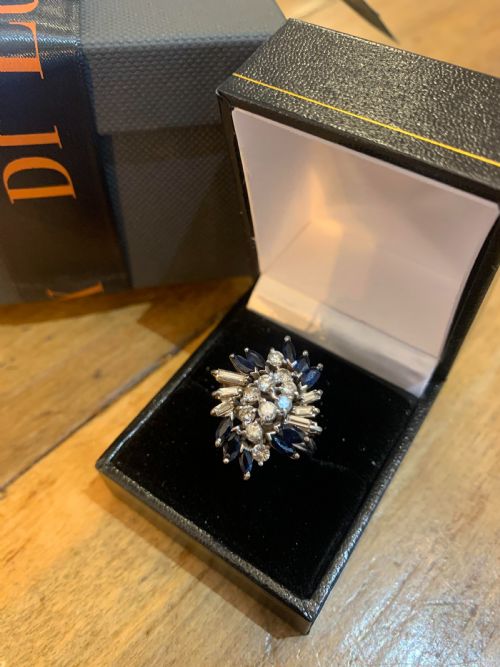
A sapphire diamond marquise ring commands the hand with its elongated, boat-shaped silhouette and brilliant cluster work.
Sapphire Diamond Marquise Ring
A sapphire diamond marquise ring presents an elongated boat-shaped or navette face set with blue sapphires and diamonds. These pieces span from the late Victorian and Edwardian eras through the Art Deco period and into the mid-century. The design flatters the hand by stretching slender lines across the finger, making it a distinct choice for a cocktail or dress ring.
The version most commonly encountered on this page pairs platinum or 18ct white gold with crisp geometric arrangements, particularly from the 1920s and 1930s. Yellow gold mountings also appear, especially in earlier Victorian and Edwardian examples where warm metal contrasts with old cut diamonds. Simpler cluster and boat ring formats sit alongside intricate openwork navette mountings.
How they were made
Jewellers constructed these rings using durable precious metals such as platinum and 18ct gold, often combining yellow gold shanks with white metal settings to enhance the brilliance of the stones. Platinum gained favour in the early twentieth century for its strength, allowing for fine millegrain edges and delicate pierced galleries that hold closely set stones securely.
Gemstones including natural sapphires and old cut diamonds were hand-set into clustered or navette configurations. The stones are secured with precise claw or bead settings designed to maximise the play of light across the elongated face of the ring.
Sapphire Diamond Marquise Ring Retail Price Guide 2026
Typical asking prices for sapphire diamond marquise ring among the pieces listed under this phrase on Sellingantiques today, from the lower quarter to the upper quarter. They describe what is for sale here now, not the wider market.
Some nineteenth-century makers hid tiny ventilation holes beneath the stones so the ring could breathe during polishing.
What varies in quality
The calibre of the central sapphires and accompanying diamonds dictates the distinction between standard and exceptional pieces. Stones with strong saturation and lively light return elevate the character of the mounting.
The crispness of the metalwork defines the craftsmanship. Fine hand-pierced platinum galleries, even millegrain borders, and precise stone alignment separate master jewellers from standard commercial workshops.
The Sapphire Diamond Marquise Ring Glossary
- Marquise
- A boat-shaped gemstone cut or ring mounting featuring pointed ends and an elongated silhouette. This shape sits horizontally across the finger to create a striking visual presence.
- Navette
- French for little boat, this term describes the same pointed, elongated shape as a marquise. It frequently appears in descriptions of Art Deco and Edwardian cluster rings.
- Millegrain
- A decorative technique involving tiny raised metal beads along the edges of a setting. It adds a refined texture typical of Edwardian and platinum jewellery.
- Old cut
- A diamond facet style cut by hand before modern machinery standardised proportions. These stones typically feature smaller tables and larger culets that catch candlelight warmly.
- Cluster ring
- A design grouping multiple smaller stones around a central focal point or arranging them closely together. This format maximises overall brilliance and colour across the finger.
Sapphire Diamond Marquise Ring: Frequently Asked Questions
How do I care for my ring?
Precious metals and gemstones require gentle handling to preserve their settings and stone security over time. Regular inspection of the claws helps prevent stone loss during daily wear.
Professional cleaning keeps platinum and gold bright while removing accumulation from beneath closely set cluster stones. Removing the ring during heavy manual tasks protects both the gold and the softer sapphire surface.
Are these rings comfortable to wear?
The elongated profile sits flat against the finger despite its visual span. Most designs taper smoothly toward the back of the band for a secure fit.
Larger cocktail versions require slight mindfulness during daily activities due to their extended length. Choosing the correct size ensures the boat-shaped head remains centred on the hand.
What periods do these rings come from?
These pieces originate from the Victorian, Edwardian, and Art Deco eras, extending through the mid-century decades. Each period brings distinct mounting styles and metal preferences to the basic marquise form.
Early pieces often feature yellow gold and old cut stones, while later twentieth-century examples embrace platinum and geometric arrangements.