





Sabre Leg Games Table
A sabre leg games table brings the architectural grace of the early nineteenth century into a modern interior.
Sabre Leg Games Table
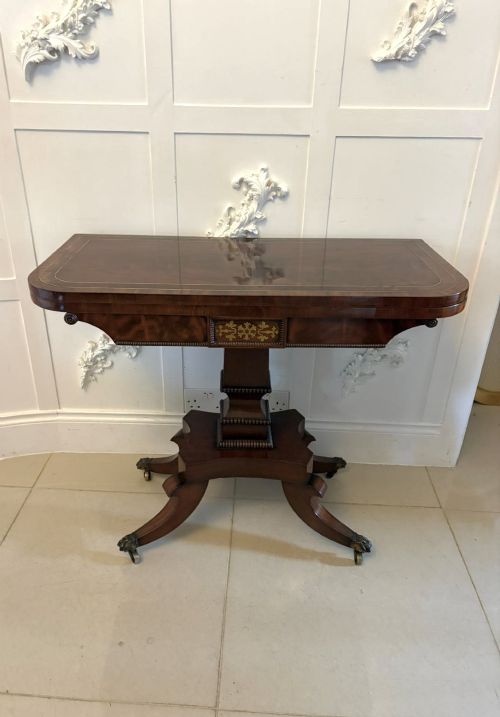
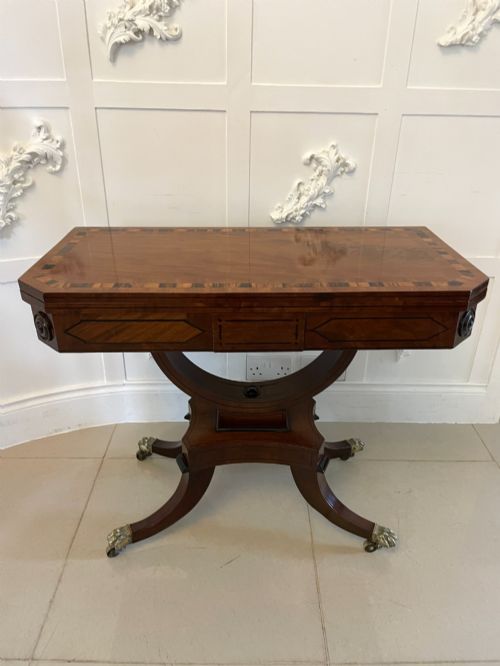
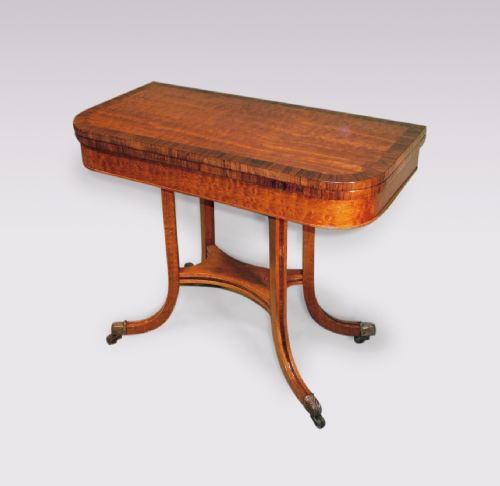
A sabre leg games table is a versatile folding piece designed for card playing or tea drinking, most commonly encountered from the Regency and Georgian periods. These tables typically feature a rotating or pivoting top that opens to reveal a baize-lined playing surface, supported by distinctive curved legs that sweep outward.
The form appears in various timber configurations, notably figured mahogany and richly grained rosewood. Makers of the period often incorporated intricate brass inlay, contrasting stringing, and gilt mounts to elevate the visual appeal of these multifunctional items.
While many examples function as card or gaming tables, related forms include tea tables and console tables sharing the characteristic sabre leg architecture. These pieces demonstrate the ingenuity of period cabinet makers in creating adaptable furniture for domestic entertainment.
Materials and construction
Cabinet makers utilised dense tropical hardwoods such as mahogany and rosewood for the primary carcases, often selecting timber with highly figured grain for the fold-over tops. These surfaces were painstakingly polished to a deep lustre that accentuates the natural patterns of the wood.
Decorative embellishments relied on precise marquetry inlay, boxwood stringing, and satinwood or ebony banding to create geometric or floral motifs. Brass inlay and cast gilded brass mounts were frequently applied to the frieze and legs, adding striking metallic contrast to the dark timber.
The defining sabre legs were shaped with a continuous outward curve, sometimes tapering smoothly toward the floor or terminating in brass paw feet and castors. This structural curve required skilled carpentry to ensure the table remained stable when bearing weight on the extended leaf.
Sabre Leg Games Table Retail Price Guide 2026
Typical asking prices for sabre leg games table among the pieces listed under this phrase on Sellingantiques today, from the lower quarter to the upper quarter. They describe what is for sale here now, not the wider market.
Current listings feature pieces primarily from the Regency and Georgian eras, constructed from rosewood and mahogany with brass inlay.
Distinctions in craftsmanship
Superior examples of a sabre leg games table display exceptional control in timber selection, where the grain of the fold-over top matches seamlessly when opened. Lesser pieces may use plain veneers with less cohesive grain matching across the hinged joints.
The precision of the brass inlay and timber stringing marks the division between standard workshop production and master cabinet work. Finely executed pieces show meticulous hand-cutting where contrasting woods meet without visible gaps.
Structural integrity in the pivoting mechanism and the tapering of the sabre legs determines the overall refinement of the piece. Rigidity in the folding top and smooth operation of the under-frame indicate higher standards of original construction.
William Trotter·George Oakley
The Sabre Leg Games Table Glossary
- Sabre leg
- A curved furniture leg that sweeps outward in a concave profile, resembling the blade of a cavalry sabre. This form is a defining characteristic of Regency furniture design.
- Fold-over top
- A hinged wooden surface that doubles in area when opened, frequently used on card and games tables to reveal a baize-lined playing interior. It allows the table to function as a console when closed against a wall.
- Marquetry inlay
- Decorative patterns formed by fitting small pieces of veneer into a prepared recess in the carcase wood. This technique creates complex pictorial or geometric designs using contrasting timbers.
- Stringing
- Thin strips of contrasting wood inlaid into channels cut into the surface of furniture. It creates fine border lines that frame drawer fronts, tabletops, and friezes.
- Figured mahogany
- Timber cut from mahogany trees that exhibit natural grain anomalies such as curl, flame, or fiddleback. Cabinet makers prized these boards for their decorative movement under polished finishes.
Sabre Leg Games Table: Frequently Asked Questions
How did people use these tables?
These tables served multiple functions in the Regency drawing room, transitioning easily from a modest side console to an active gaming surface. Owners opened the hinged top to accommodate guests for cards, chess, or social tea.
When closed, the compact footprint allowed the furniture to sit flat against a wall as a decorative console. The concealed well beneath the folding top often stored playing pieces, cards, or small accessories.
How do I date a Regency table?
Dating relies on observing the combination of timber species, secondary woods used in the carcase, and specific decorative motifs. The Regency period spans the early nineteenth century, characterised by classical revival influences and dark exotic timbers.
Evidence of hand-cut dovetails, distinct brass inlay techniques, and specific leg profiles helps separate genuine Regency pieces from later nineteenth-century revivals. Examining the construction underneath often reveals the age of the mechanics.
Can I use it as a desk?
While originally built for social entertainment and card playing, many examples adapt well to modern writing use. The height of a standard games table aligns closely with antique writing desks.
Consider the kneehole clearance beneath the frieze and whether the baize or polished wood surface suits daily paperwork. Fold-over leaves provide ample workspace when opened against a wall.