



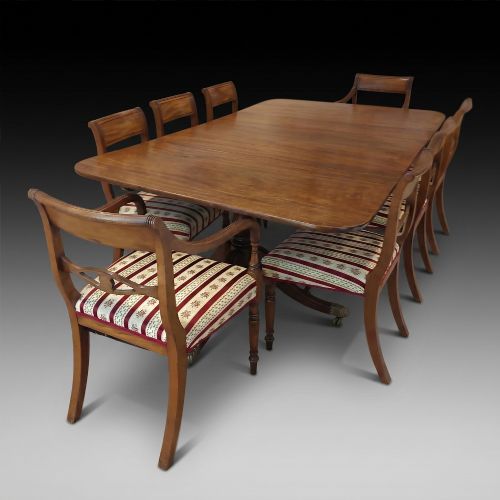


Saber Leg Table
A saber leg table brings the distinct outward-curving line of the Regency period into a room with quiet elegance.
Saber Leg Table
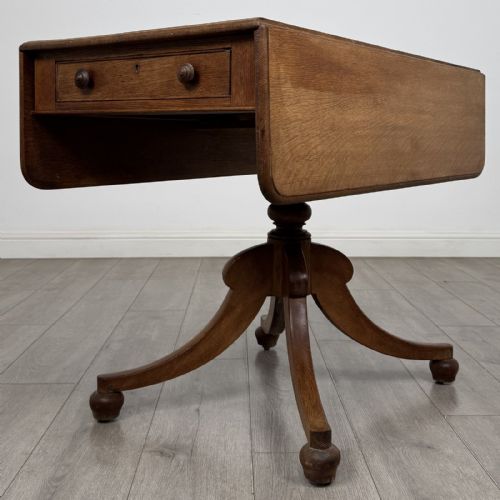
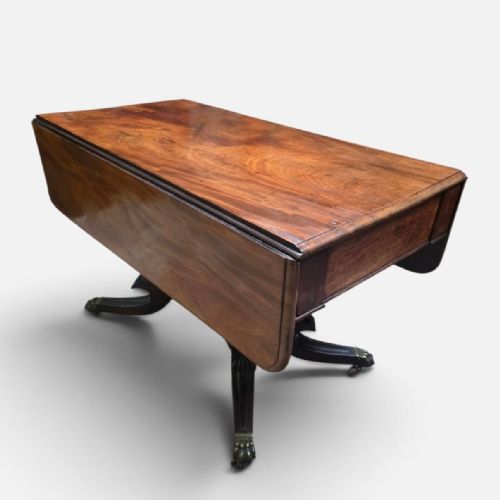
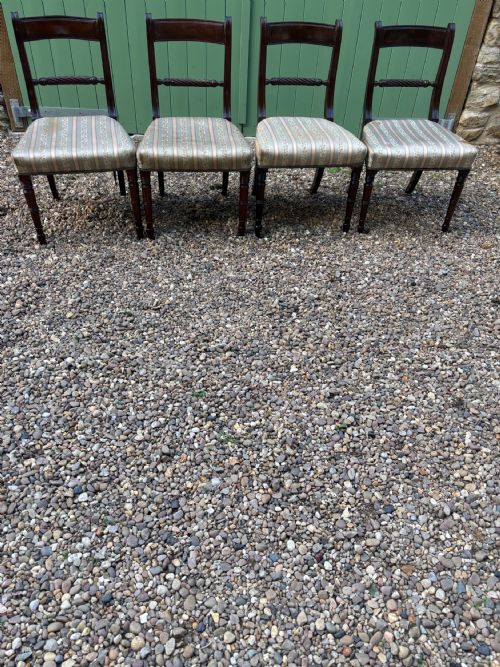
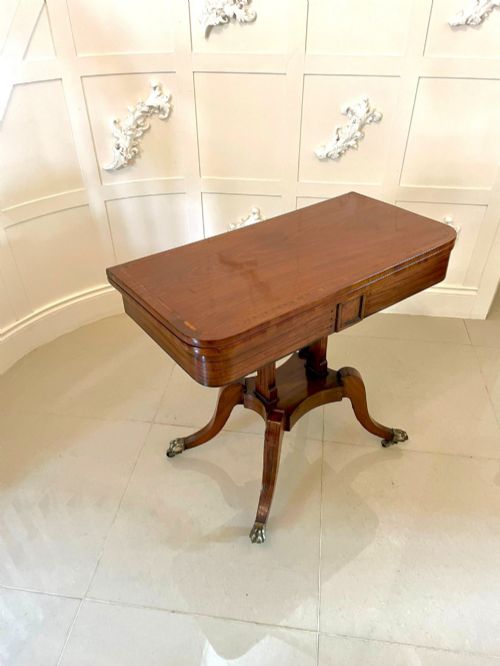
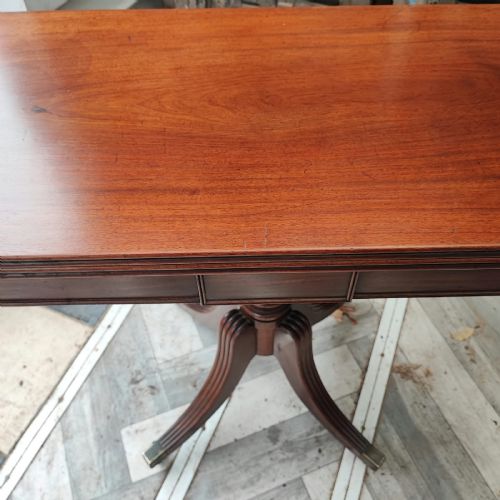
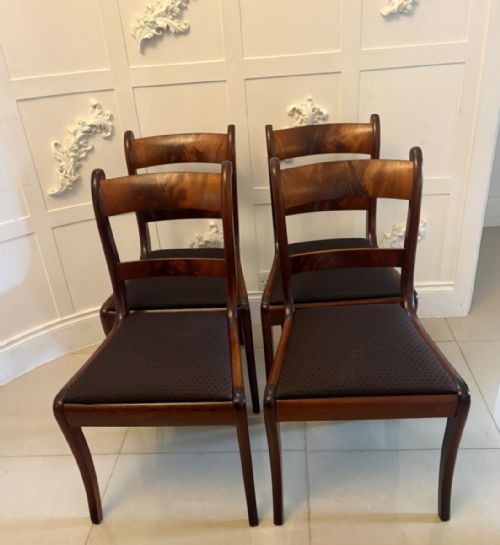
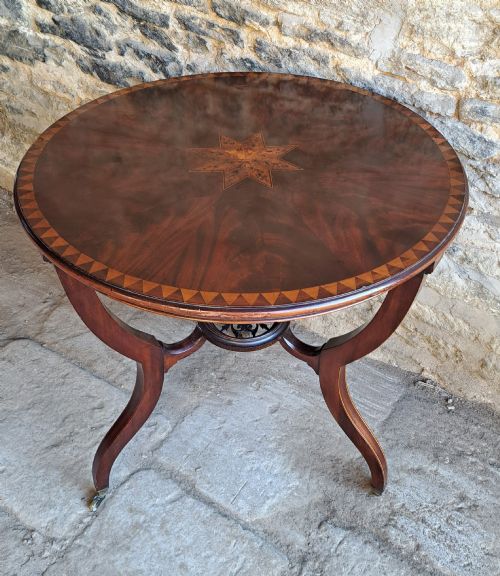
The form embraces practical domestic roles, functioning as foldover card tables, drop-leaf Pembroke tables, or dining and breakfast tables supported by pillars or end supports. The selection here also extends to occasional tables and seating such as bar-back dining chairs incorporating the same sweeping leg profile.
Originating predominantly from the Regency period, these tables appear alongside later revivals from the twentieth century, maintaining a consistent focus on classical proportions and clean horizontal surfaces.
Materials and construction
Makers relied heavily on dense tropical hardwoods like mahogany and rosewood, often enhanced with contrasting satinwood or ebony inlays and crossbanded borders. Figured veneers provide rich surface patterns on table tops and Pembroke flaps.
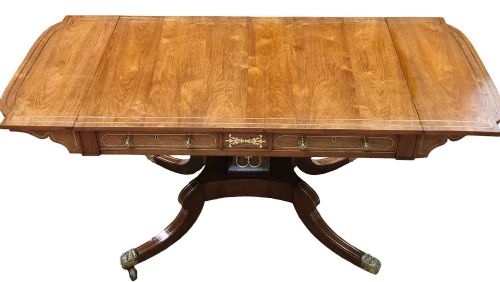
Metal mounts in gilded brass often accent the structural lines of card and sofa tables, while fabric and textile upholstery feature on related seating items. Solid timber construction underpins the pedestals, pillars, and sweeping leg profiles.
Saber Leg Table Retail Price Guide 2026
Typical asking prices for saber leg table among the pieces listed under this phrase on Sellingantiques today, from the lower quarter to the upper quarter. They describe what is for sale here now, not the wider market.
Listings span the Regency, Georgian, and Art Deco periods, predominantly utilising mahogany, rosewood, and brass.
Assessing quality
The refinement of the leg profile largely dictates quality, separating stiffly cut timber from a fluid, graceful curve that tapers correctly toward the floor. Superior examples show careful selection of figured mahogany or rosewood where the grain patterns mirror each other across the top.
The integration of brass inlays, fine crossbanding, and well-executed joinery on drop-leaves and foldover mechanisms marks the distinction between standard workshop production and master cabinet work.
William Trotter·George Oakley·Gillingtons Dublin
The Saber Leg Table Glossary
- Sabre leg
- A concave curving support tapering smoothly toward the foot, inspired by classical Greek and Roman furniture forms. This profile is a hallmark of Regency design.
- Sofa table
- A rectangular side table fitted with drop leaves on either end and frequently featuring double pedestals or trestle supports. It was originally designed to stand in front of a sofa.
- Crossbanding
- A narrow strip of veneer applied to the border of a table top so that the grain runs at right angles to the central panel. This technique frames the primary timber.
- Pembroke table
- A small occasional table featuring two hinged drop leaves on opposite sides and usually a single drawer. It offers flexible surface area for tea or writing.
- Tilt-top
- A hinged table top that pivots to a vertical position when not in use, allowing the piece to stand flat against a wall. This format saves space in smaller rooms.
Saber Leg Table: Frequently Asked Questions
What is a saber leg table?
A saber leg table is a piece of furniture characterised by outward-curving legs shaped like a cavalry sabre, most commonly dating from the Regency and Georgian periods.
These tables include dining, card, and sofa formats designed for domestic use in drawing rooms and parlours.
How do I use a sofa table?
A sofa table functions well behind a sofa, against a hallway wall, or as a compact writing desk when the leaves are raised.
The drop leaves allow the surface area to expand or contract depending on the needs of the room.
Are these tables made of solid mahogany?
Most examples combine solid timber frames and legs with figured mahogany or rosewood veneers applied to the top surfaces.
Cabinetmakers utilised veneers to display rich grain patterns and decorative inlays that solid planks alone could not achieve.
How do I date a saber leg table?
Dating relies on identifying stylistic markers such as the crispness of brass inlays, the species of timber used, and the geometry of the leg curve.
Pieces from the Regency era display classical restraint, while later nineteenth-century and twentieth-century revivals often incorporate different secondary woods and manufacturing marks.