



.jpg)
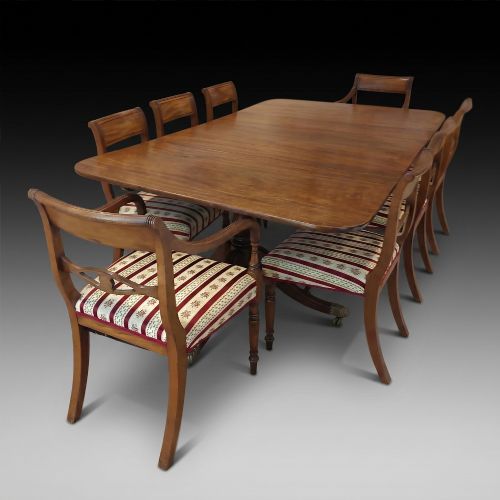
Saber Leg Dining Table
A saber leg dining table brings the clean, outward-sweeping line of the Regency period straight into the dining room.
Saber Leg Dining Table
A saber leg dining table is defined by its characteristic curved supports that taper gracefully outwards, echoing the form of a cavalry saber. These pieces primarily appear across the Regency and Georgian periods, anchored firmly in mahogany timber.
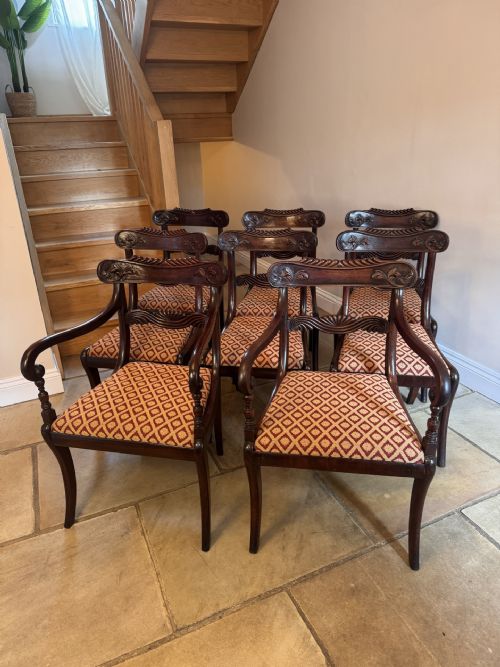
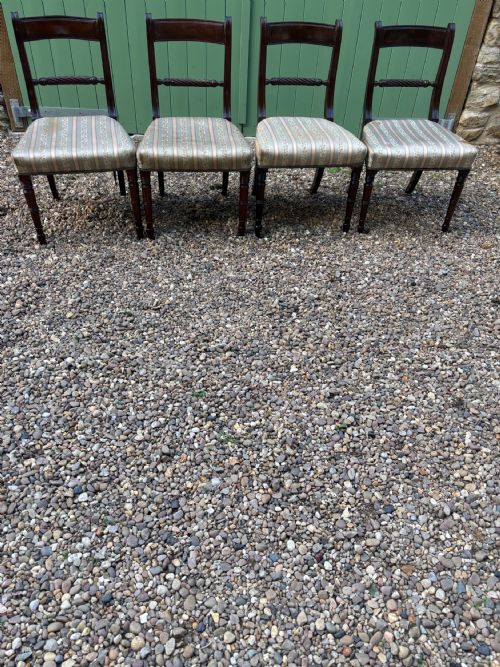
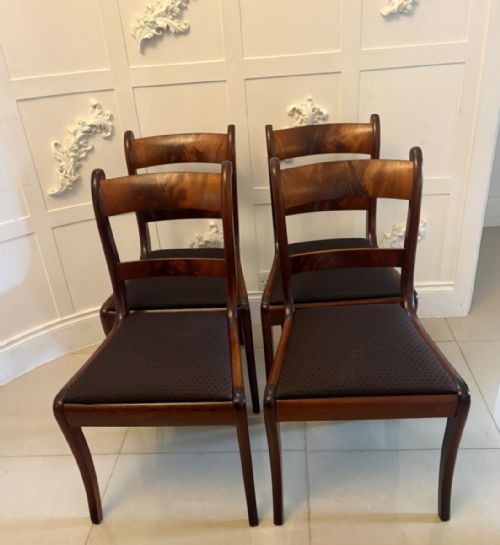
Buyers will most frequently encounter twin pillar dining tables, extension formats, and breakfast tables featuring these swept legs. Alongside the tables themselves, related seating such as bar back dining chairs also surface, carrying the same distinctive leg profile.
The aesthetic leans toward classical restraint, heavily tied to the Regency and Grand Regency styles. These tables range from single tilt-top breakfast pieces to large extending pedestal formats designed for expansive dining rooms.
How they were made
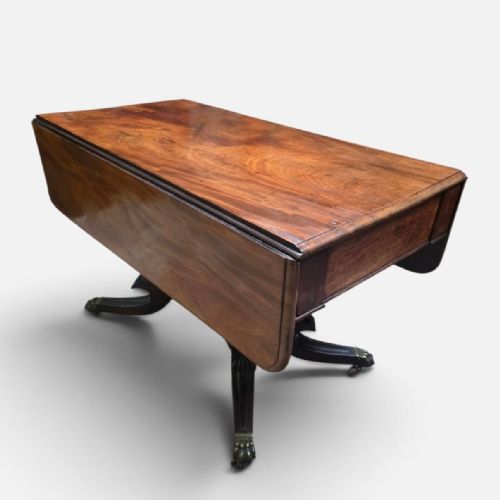
Cabinetmakers relied heavily on rich mahogany and plum pudding mahogany to construct these tables, often enhancing the timber with crossbanded borders. The wood was selected for deep grain patterns and finished to a smooth, warm sheen.
Pedestal formats utilised robust central pillars, sometimes resting on brass castors to aid movement across heavy floors. The distinctive saber legs were shaped to ensure stability while maintaining a light, curved profile.
Saber Leg Dining Table Retail Price Guide 2026
Typical asking prices for saber leg dining table among the pieces listed under this phrase on Sellingantiques today, from the lower quarter to the upper quarter. They describe what is for sale here now, not the wider market.
Listings span the 19th Century, Regency, and Georgian periods, predominantly utilising mahogany with occasional brass and textile elements.
What varies in quality
Quality rests in the selection of the mahogany and the crispness of the timber's figure. Finer examples display carefully matched grain veneers and subtle crossbanding that elevate the visual depth of the top.
The execution of the curved leg is paramount, requiring balanced proportions that support the weight of the table without appearing clumsy. Superior pieces maintain elegance and structural harmony across large extending pillar formats.
The Saber Leg Dining Table Glossary
- Saber leg
- A curved furniture support that tapers outwards in the manner of a cavalry sword. This form defines the characteristic silhouette of many Regency dining tables and chairs.
- Twin pedestal
- A table construction featuring two central columns supporting the top, often allowing leaves to be added for extension. This format provides stability while offering generous legroom.
- Crossbanded
- A border technique where thin strips of veneer are laid perpendicular to the main grain of the tabletop. It creates a neat framing effect common on better-quality mahogany pieces.
- Plum pudding mahogany
- A highly figured variety of mahogany showing dark, mottled markings resembling the fruit in a traditional Christmas pudding. It was prized for luxury surfaces.
- Tilt-top
- A hinged tabletop mechanism that allows the surface to be folded vertical when not in use. This was common on breakfast and occasional tables to save space in smaller rooms.
Saber Leg Dining Table: Frequently Asked Questions
What is a saber leg dining table?
A saber leg dining table is a formal dining or breakfast table characterised by its outward-curving legs, which taper towards the foot. These pieces date predominantly from the Georgian and Regency eras and are typically constructed from solid mahogany.
The design draws inspiration from classical Greek and Roman klismos furniture, adapted by Regency cabinetmakers to create a lighter, more dynamic silhouette than earlier straight-legged styles.
How do I date a Regency dining table?
Dating these tables involves examining the timber selection, construction methods, and leg profiles. Regency and Georgian pieces generally show dense mahogany grains, hand-cut joinery, and specific stylistic cues like reeding or brass castors.
Tables from the nineteenth century often incorporate pillar and scroll supports or the distinctive swept saber leg, evolving from heavier eighteenth-century dining formats.
Can I use an antique tilt top table daily?
A tilt top breakfast or occasional table functions well for everyday dining provided the mechanism and pedestal remain stable. Many of these pieces were built robustly to handle regular use in period homes.
Care should be taken with the hinge mechanism when lowering the top, and using heat-resistant mats protects the polished mahogany surface from moisture and hot dishes.
What chairs match a saber leg table?
Dining chairs featuring matching saber legs and bar backs pair naturally with these tables. Regency and Georgian seating designs share the same classical proportions and timber tones.
Matching a suite involves looking for consistent mahogany framing, similar patination, and complementary textile or upholstery fabric on the seat pads.