


Saber Leg Console Table
A saber leg console table is a graceful classic from the Regency and Georgian periods that brings a refined architectural line to any room.

Saber Leg Console Table
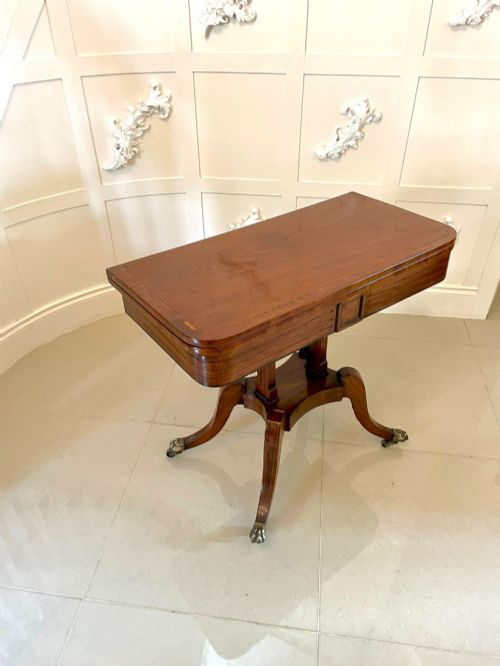
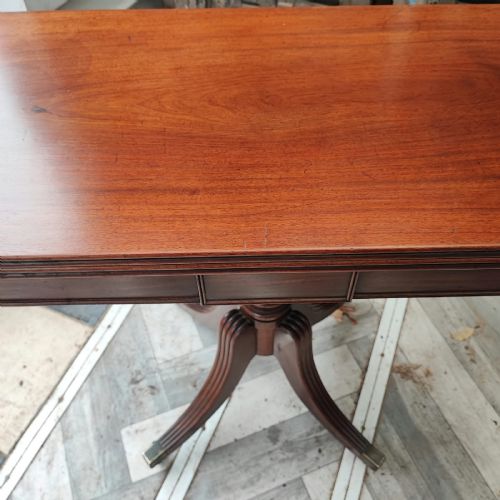
When you search for a saber leg console table, you are looking at sophisticated timber tables originating predominantly from the Regency, Georgian, and nineteenth-century periods. These pieces often overlap in form with sofa tables, tea tables, card tables, and side tables that share the distinctive sweeping outward curve of the support.
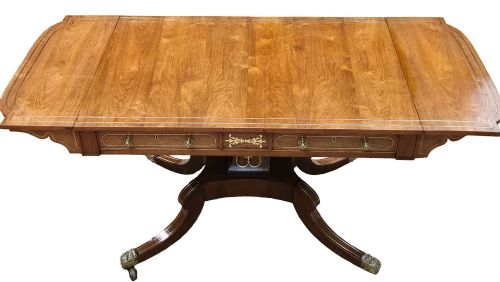
The version you are most likely to meet on this page is a mahogany or rosewood example from the Regency era, featuring drop leaves, fold-over tops, or inlaid decorative borders. Makers of the period utilised these outward-curving legs to impart a sense of lightness and forward momentum to heavier timber frames.
Beyond standard side and console formats, the selection includes games and library tables designed for specific domestic pastimes in affluent nineteenth-century homes. Their enduring appeal lies in this combination of compact versatility and strong classical geometry.
How they were made
Cabinet makers constructed these tables primarily using dense hardwoods such as mahogany and rosewood, frequently enhanced by contrasting veneers of satinwood, ebony, and boxwood. Timber inlay and brass stringing define the surface decoration, outlining the edges of tops and drawers with geometric precision.
Gilded brass mounts and intricate brass inlay are common embellishments on finer pieces, contrasting sharply against the dark grain of rosewood or ebonised wood. Structural stability relied on traditional joinery, allowing drop leaves and fold-over mechanisms to operate smoothly while supporting the characteristic outward-curving legs.
Forms on this page range from simple drop-leaf sofa tables to elaborate brass-inlaid card and games tables.
What varies in quality
The distinction between ordinary and exceptional pieces rests upon the choice of timber figures and the crispness of the brass detailing. Figured mahogany and richly grained rosewood command greater attention, especially when paired with intricate boxwood or ebony inlay rather than plain surfaces.
Proportion and the fluidity of the leg curve determine the visual success of the piece, separating standard workshop production from finer cabinet work. Attributed pieces and those bearing specific regional characteristics, such as Irish Regency or specific maker signatures, represent the upper echelon of the craft.
William Trotter·George Oakley·Gillingtons Dublin
The Saber Leg Console Table Glossary
- Saber leg
- An outward-curving furniture leg shaped to resemble a cavalry sabre, tapering smoothly toward the foot. This form provides structural support while lightening the silhouette of Regency and Georgian tables.
- Console table
- A table designed to stand against a wall, frequently secured to it or supported by front legs. In this selection, they often double as card, tea, or side tables with fold-over tops.
- Sofa table
- A rectangular occasional table originally designed to sit directly in front of a sofa, typically featuring drop leaves on either side and drawers beneath the top.
- Fold-over table
- A table with a hinged top that doubles its surface area when unfolded for dining, card games, or tea. These are commonly supported on pivoting frames or swing legs.
- Brass inlay
- The technique of embedding thin strips or motifs of brass into recesses cut into the wood surface. It is a hallmark of Regency cabinet work, often highlighting borders and central medallions.
- Ebonised wood
- Timber treated with a dark stain or finish to imitate true ebony. It provides a stark, dark contrast to lighter fruitwoods and brass details.
Saber Leg Console Table: Frequently Asked Questions
What is a saber leg console table?
A saber leg console table is a nineteenth-century timber table featuring distinctive outward-curving legs that taper toward the floor. These pieces frequently incorporate drop leaves or fold-over tops for versatile use against a wall or beside seating.
They bridge the gap between decorative side furniture and functional tables used for tea, card games, or reading during the Regency and Georgian eras.
How were these tables used originally?
In period homes, these tables served multiple domestic functions depending on their top construction. Fold-over versions accommodated card games and tea drinking, while drop-leaf sofa variants sat comfortably in living spaces.
Their flexible design allowed servants to move them easily for different social activities throughout the day.
How do I live with a antique table?
Living with these pieces involves placing them out of direct sunlight and away from heat sources to protect nineteenth-century wood finishes and veneers. Regular polishing with appropriate wax preserves the depth of the mahogany or rosewood grain.
Their compact scale makes them suitable as hallway consoles, desk surfaces, or living room side tables in modern interiors.
How do I tell Regency from Georgian pieces?
Regency pieces often display bolder classical motifs, brass inlay, and exotic woods like rosewood with sharper curves on the legs. Georgian examples tend to lean toward heavier proportions and traditional mahogany construction with more restrained ornamentation.
Overlapping stylistic periods mean construction details and leg profiles offer the clearest guide to a piece's specific era.