
Rustic Wooden Kitchen Seating
These rustic wooden kitchen seating options bring functional domestic utility and honest craftsmanship to the heart of the home.
Rustic Wooden Kitchen Seating
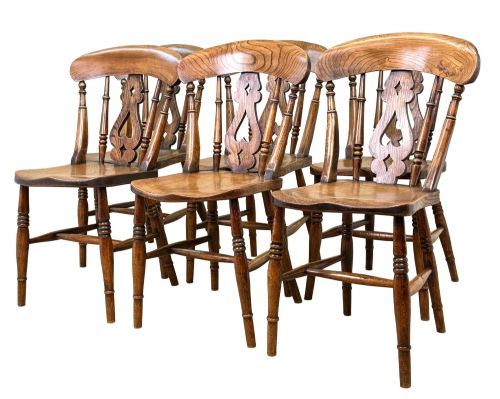
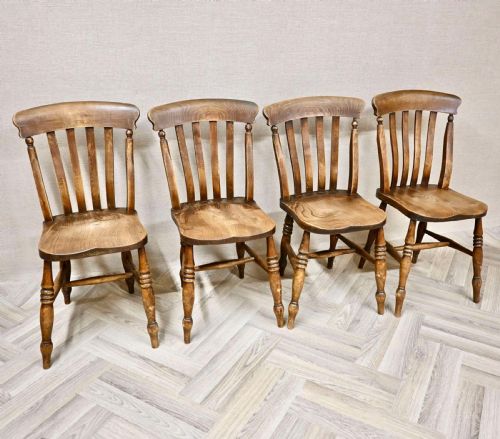
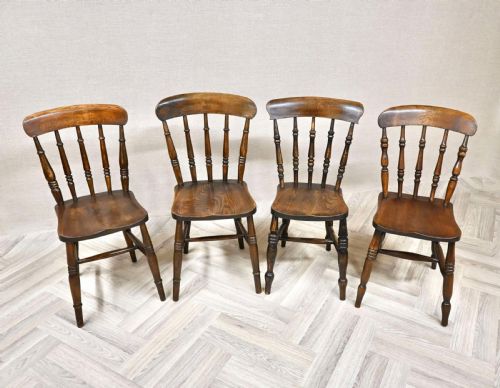
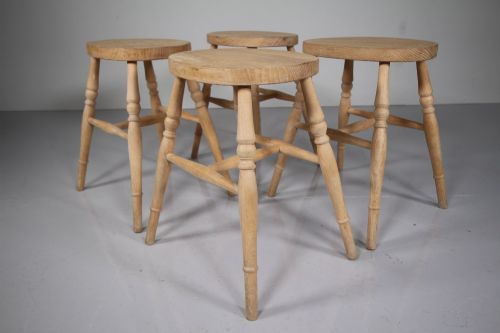
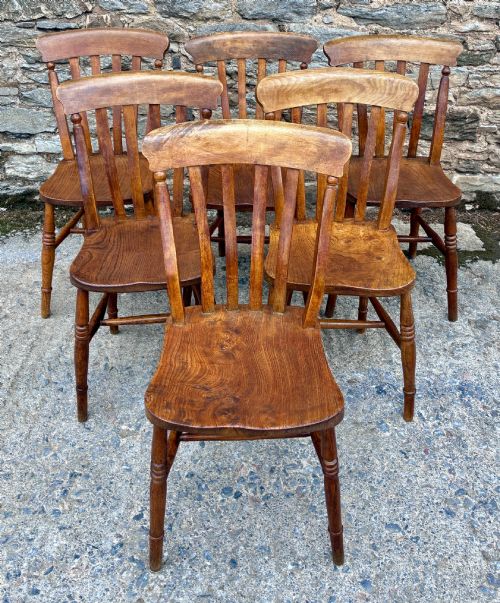
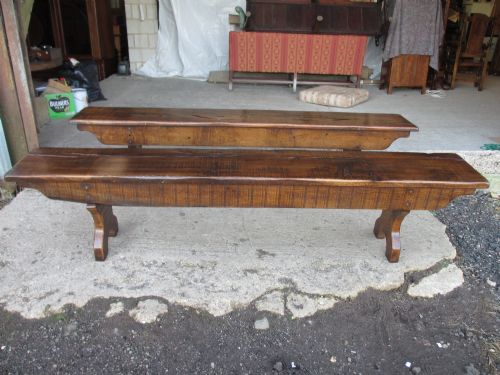
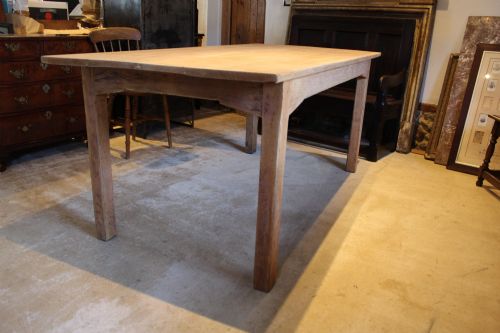
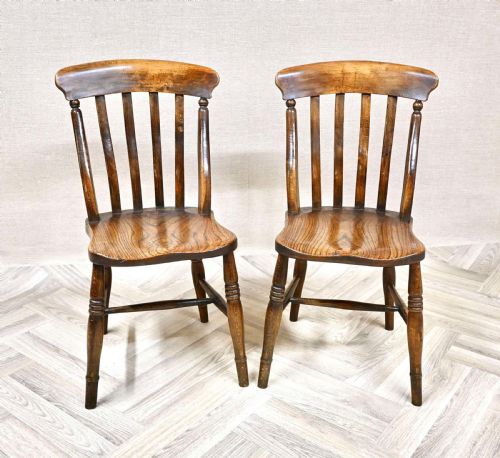
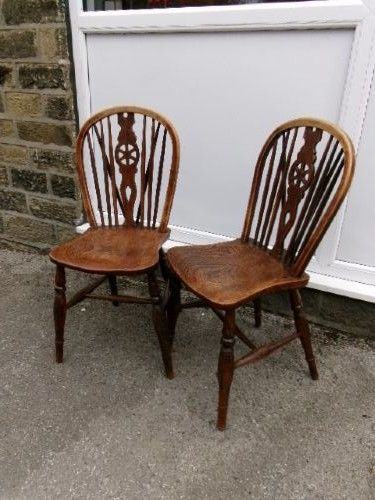
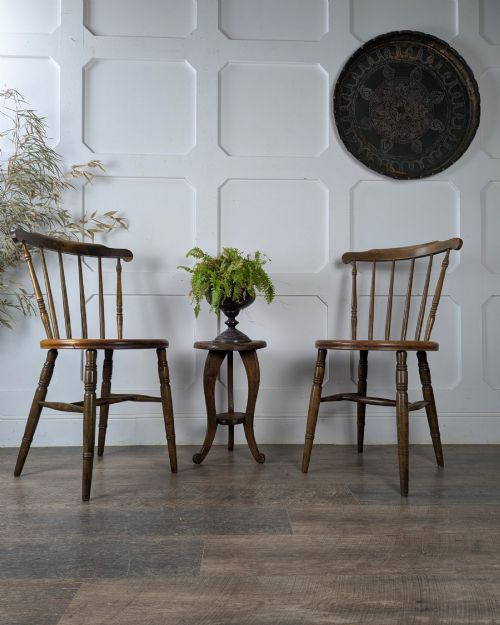
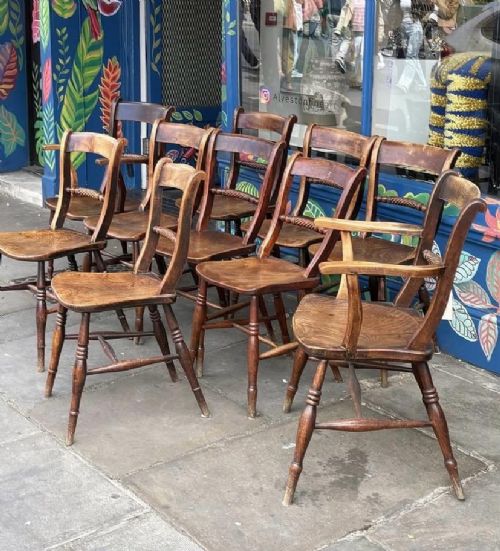
Rustic wooden kitchen seating encompasses hard-wearing chairs, benches, stools and dining tables shaped for daily use in domestic spaces. These pieces span the nineteenth century through to the early twentieth century, taking forms such as Windsor chairs, ladder backs, refectory tables and long benches.
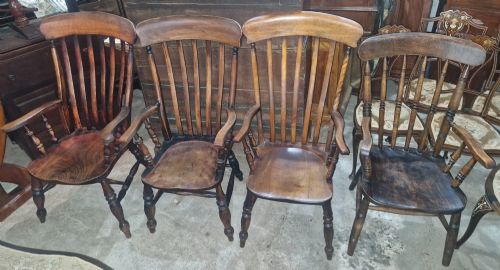
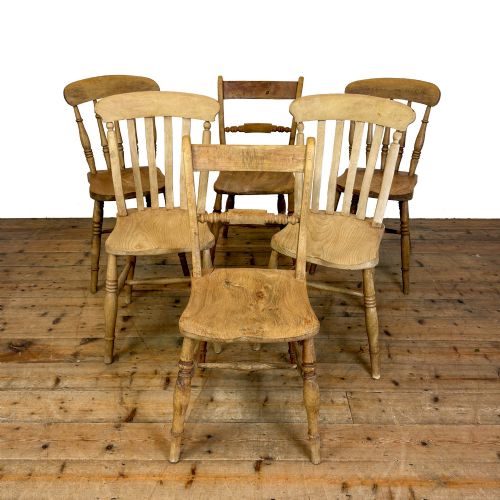
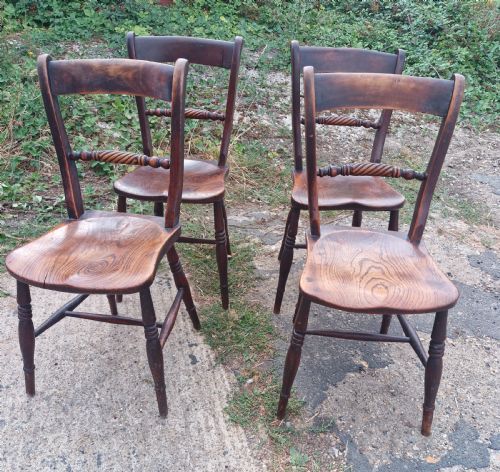
The most common items met on this page are matched and harlequin sets of Windsor kitchen dining chairs alongside solid oak and pine benches or tables. They originate from traditional English country workshops and utility spaces, reflecting utilitarian design.
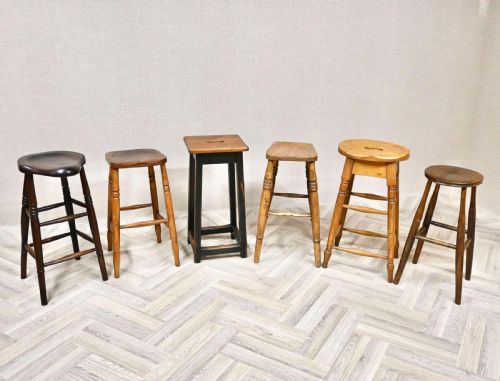
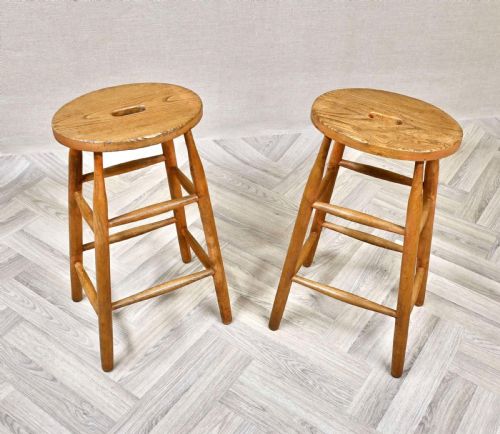
Makers focused on practical durability rather than courtly ornament, producing sturdy furniture designed to withstand heavy household demands. Buyers encounter everything from single bar stools to large sets of dining chairs meant for daily gatherings.
Materials and construction methods
Carpenters constructed these items using native timbers such as elm, beech, oak, ash and pine, frequently combining woods within a single piece for strength. Elm frequently provided durable shaped seats, whilst ash or beech formed flexible spindles and bendable hoop backs.
Joinery techniques relied on traditional methods including turned legs, wedged through-tenons and steam-bent components that held together under constant pressure. Surfaces were often left bare, scrubbed clean or finished with early paint layers that accrued patination through generations of domestic service.
Listings feature items built from elm, beech, oak, ash, pine and cherry wood across the nineteenth and early twentieth centuries.
Distinctions in quality
Quality rests upon the integrity of the original construction and the survival of matching sets without excessive timber replacement. Chairs with deeply saddled solid elm seats and well-preserved turning demonstrate superior workshop origin compared to simpler utility alternatives.
The balance of proportions and the tightness of historical joints dictate the structural stability of each piece over time. Sets that retain their original matched appearance and honest surface wear hold greater uniformity than assembled harlequin groupings.
The Rustic Wooden Kitchen Seating Glossary
- Windsor chair
- A wooden chair built with a heavy solid timber seat into which the legs and back spindles are separately bored and wedged. This design provides robust support through a triangulated frame.
- Ladder back
- A chair featuring horizontal wooden slats arranged between two upright rear posts. The design draws on traditional vernacular joinery.
- Refectory table
- A long narrow dining table designed for communal eating spaces. These sturdy tables utilise trestle ends or stout legs connected by stretchers.
- Harlequin set
- A collection of chairs that share a similar style, period or general form but vary in minor details rather than originating as a single workshop batch.
Rustic Wooden Kitchen Seating: Frequently Asked Questions
What defines rustic kitchen seating?
These pieces comprise solid timber chairs, benches and tables built for utilitarian domestic tasks rather than formal entertaining. They utilise sturdy domestic hardwoods and straightforward joinery.
Craftsmen prioritized practical utility, creating robust furniture designed to withstand generations of daily service in kitchens and dining rooms.
How do I care for old wooden seating?
Maintain these wooden surfaces by keeping them away from direct heat sources and sudden humidity shifts that cause timber to split. Regular dusting preserves the aged patina.
Apply occasional traditional wax polish to nourish exposed grain without sealing the surface beneath modern synthetic varnish.
Are these chairs comfortable for daily dining?
Many Windsor and ladder-back designs feature ergonomically shaped wooden seats and supportive high backs tailored for prolonged sitting. Their proportions suit standard dining tables.
Harlequin sets may vary slightly in seat height, so checking individual dimensions ensures uniform comfort around the kitchen table.
How do I date a rustic wooden chair?
Dating relies on observing tool marks, timber selection, turning profiles and the specific method used to secure the back spindles into the seat. 19th-century examples often display hand-turned components.
Later pieces from the early 20th century incorporate standardised turnings and machine-sawn elements whilst retaining traditional vernacular forms.