

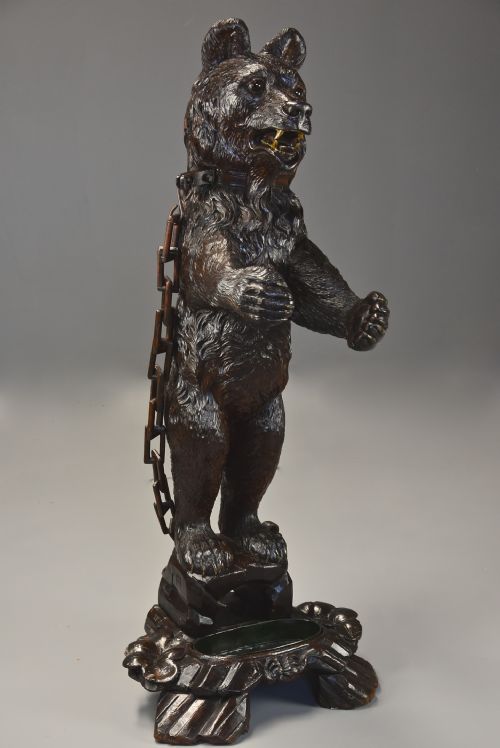


Rustic Wood Umbrella Stand
A rustic wood umbrella stand brings tactile character to an entrance, offering a sturdy vessel carved or hewn from natural timber.
Rustic Wood Umbrella Stand
A rustic wood umbrella stand functions as both a practical hallway accessory and a piece of sculptural woodwork. When exploring options for a rustic wood umbrella stand, buyers encounter pieces that range from primitive carved trunks to elaborate continental carvings.
The selections on this page span the Victorian and Edwardian eras, encompassing both British country styles and continental Black Forest workshop pieces. These items frequently double as hall stands or stick stands designed to hold walking canes alongside umbrellas.
The most prevalent forms include carved bears and woodland animals alongside hollowed tree trunks. Each specimen reflects the natural grain and irregular contours of the timber from which it was fashioned.
Materials and construction
Construction relies heavily on solid timber such as oak, linden wood, and general forest wood. Artisans worked directly with the natural form of the material, utilising tree trunks for dug-out vessels.
Carving techniques define the sculptural examples, where craftsmen used hand chisels to shape detailed figures of bears, foxes, and eagles. Metal components occasionally appear as liners or trays to catch moisture from wet umbrellas.
Rustic Wood Umbrella Stand Retail Price Guide 2026
Typical asking prices for rustic wood umbrella stand among the pieces listed under this phrase on Sellingantiques today, from the lower quarter to the upper quarter. They describe what is for sale here now, not the wider market.
Listings feature oak, linden wood, and general timber across the Victorian and Edwardian periods.
Judging quality in rustic wood pieces
Quality rests primarily on the depth and animation of the carving, distinguishing casual country workmanship from skilled studio output. Finer examples display lifelike anatomical detail in animal figures and well-defined fur texture.
The integrity of the original timber surface dictates overall appeal. Pieces retaining a warm, patinated finish without heavy modern intervention demonstrate superior preservation.
The Rustic Wood Umbrella Stand Glossary
- Black Forest
- A style of ornate wood carving originating from the Brienz region of Switzerland and the Black Forest region of Germany. It is characterised by realistic depictions of wildlife, particularly bears.
- Dug-out
- A method of construction where a single solid log or tree trunk is hollowed out from the top. This technique forms a seamless vessel.
- Hall stand
- A large piece of hallway furniture that combines coat hooks, a mirror, and a base compartment for umbrellas and walking sticks. Many examples incorporate a drip pan at the base.
- Linden wood
- A pale, fine-grained timber frequently chosen by carvers for its soft consistency and ease of detailed shaping. It is prominent in continental European woodwork.
Rustic Wood Umbrella Stand: Frequently Asked Questions
What is a rustic wood umbrella stand?
A rustic wood umbrella stand is a hallway accessory fashioned from natural timber, tree trunks, or carved wood. These pieces serve to hold wet umbrellas and walking sticks while adding a decorative woodland element to an interior.
Designs vary from simple hollowed tree sections to elaborate continental carvings featuring animals such as bears and foxes.
How do I care for antique wood stands?
Keep wooden umbrella stands away from direct heat sources and radiators to prevent the timber from splitting. Regular dusting with a dry cloth maintains the surface.
Ensure that wet umbrellas placed inside are paired with a suitable waterproof liner or drip tray to protect the interior base from moisture damage.
Are these stands suitable for daily use?
Most antique stands remain robust enough for everyday hallway use. Solid timber and carved tree trunks offer substantial weight and stability.
Consider adding a modern plastic or metal insert inside the base if the original liner is absent, protecting the antique wood from standing water.
What periods do these pieces come from?
The pieces available here date predominantly from the nineteenth and early twentieth centuries, spanning the Victorian and Edwardian eras. Stylistic influences include traditional British country work and continental European carving traditions.
Dates range from the late Victorian decades up to nineteen-ten.